


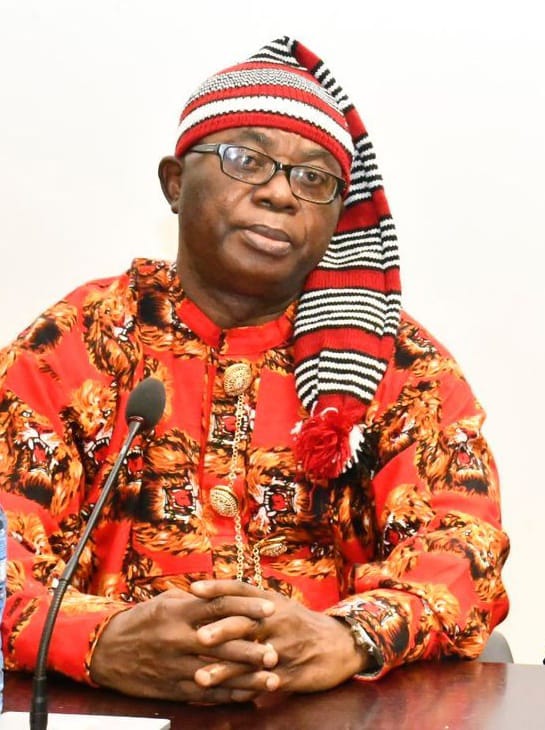
By Rt. Hon. Sam Onuigbo
The recent visit of Nigeria’s First Lady, Senator Oluremi Tinubu, CON, to Abia State has turned out to be a major boost for rural women in the state and an unprecedented public relations success for the Akwete weaving community.
It will be recalled that Dada Nwakata, the legendary nineteenth-century master weaver, is credited with founding and revolutionising the traditional handwoven Akwete cloth produced in Igboland, specifically in Akwete, Ndoki, Ukwa East Local Government Area of Abia State. Historical accounts also show that women from the community had become highly skilled in weaving Akwete cloth as far back as the eighteenth century.
₦2 Billion and More
“On my own, I told the Governor that I’m donating ₦2 billion to the project. I don’t know how you want to use it. The fund is easy for me to give to you, and I believe that that fund will be in good hands.” – Senator Oluremi Tinubu
By donating ₦2 billion to the project, the First Lady demonstrated her commitment to scaling up the Akwete weaving industry. As a strong advocate of women’s empowerment, she understands that inadequate funding has remained one of the greatest obstacles preventing women from maximising their potential in politics, commerce and industry.
Beyond the financial support, the First Lady also challenged the women to elevate their craft, particularly in this era of technology and Artificial Intelligence (AI). With the generous financial backing, Akwete weavers now have an opportunity to explore how technology can support design innovation, improve loom efficiency and enhance productivity.
As an Abian, a grassroots politician as well as Igbo cultural ambassador, who lived and worked within the area before it was split into Ukwa East and Ukwa West Local Government Areas, I can personally attest to the ingenuity and creativity of the women engaged in Akwete weaving.
Cultural Diplomacy
The First Lady was not merely making a speech when she said: “There is nowhere I stand in the world; even the white person is always in awe of my personality. You saw when we went to the palace; we’ve been to places and I wear African dress. We should not let our children forget that.”
Embedded in that statement is the enormous potential of Akwete cloth to strengthen Nigeria’s cultural diplomacy alongside Aso-Oke and Adire. Through her visit and the exchange of ideas it inspired, the First Lady challenged Igbo women, especially Akwete weavers, to emulate their counterparts in Ogun State and other parts of the South-West, who have successfully elevated Aso-Oke and Adire beyond symbols of cultural identity into fabrics of national and international recognition.
Gender Inclusivity
One of the strongest messages from the First Lady’s Akwete declaration is that when women are equipped with creative skills and given the necessary support, their inclusion in national economic development becomes inevitable.
By expressing her intention to wear Akwete as buba and wrapper, Senator Oluremi Tinubu was opening the minds of the weavers to the enormous economic opportunities their craft offers in advancing Nigeria’s economic diversification and increasing foreign exchange earnings.
As a widely travelled and elegant public figure, the First Lady was also engaging in subtle but effective promotion when she described Akwete as “a very soft, breathable cotton.” In doing so, she underscored the fabric’s potential for wider patronage and global appeal.
Sustaining the Momentum
Perhaps the most profound aspect of the First Lady’s message was her appeal to preserve the uniqueness of the craft. She observed that Akwete weaving is a tradition passed from one generation to another with love, patience and endurance, cautioning that its cultural and spiritual significance should not be lost.
She further encouraged innovation by suggesting that Akwete should evolve beyond its traditional use into products such as gele, ipele, bedspreads and other modern applications capable of expanding its market and appeal.
Her remarks constitute a challenge not only to the Akwete weavers and the people of Abia State but also to the entire Igbo nation. She reminded Nigerians that the country’s rich diversity should also find expression in fashion, arguing that just as Aso-Oke has gained national acceptance,
Akwete should equally enjoy widespread recognition.
Encouragingly, efforts to expand the reach of Akwete weaving had already begun. Records show that the former Vice-Chancellor of Alex Ekwueme Federal University, Ndufu-Alike (AE-FUNAI), Professor Chinedu Nwajiuba, established a Centre for Indigenous Clothing dedicated to Akwete weaving. The centre promotes cultural pride among the Akwete people and offers a year-long training programme in the craft. The university also encourages students to wear Akwete on “Traditional Dress Mondays” and presents locally produced Akwete cloth to distinguished visitors.
Following the First Lady’s visit, the challenge before the wives of South-East governors is to ensure that the renewed national attention given to Akwete does not fade. With the annual August Meeting fast approaching, Igbo women should seize the opportunity to re-examine how Akwete weaving and other indigenous cottage industries can become stronger platforms for women’s economic empowerment.
I recall that during our time in the National Assembly, when I chaired the House Committee on Climate Change and Senator Oluremi Tinubu chaired the Senate Committee on Environment, she consistently demonstrated leadership, vision and the ability to inspire collaboration, both within Nigeria and at the annual Conferences of the Parties (COP) organised under the United Nations Framework Convention on Climate Change (UNFCCC).
Many Nigerians also remember her work as First Lady of Lagos State through the Committee of Wives of Lagos State Officials (COWLSO), where she mobilised women to share ideas, address common challenges and contribute meaningfully to community development.
The First Lady’s visit to Akwete reflects the same philosophy. It is a call to empower women, preserve Nigeria’s cultural heritage and unlock the economic value of indigenous enterprise.
The message is clear: Akwete is more than a fabric. It is a symbol of identity, resilience, creativity and opportunity. By supporting the women who have preserved this heritage for generations, Nigeria can demonstrate that its cultural assets, when properly nurtured, can become powerful drivers of inclusive economic growth and sustainable national development.
- Rt. Hon. Sam Onuigbo is President of GLOBE Legislators International and a former Member of the House of Representatives. He writes from Abuja