


By Amb. Musa Muhammad Tsoken
The Federal Government has called on stakeholders in Nigeria’s extractive sector to leverage the 2026 Extractive Industries Transparency Initiative (EITI) Validation Exercise to deepen transparency, accountability and institutional reforms in the industry.
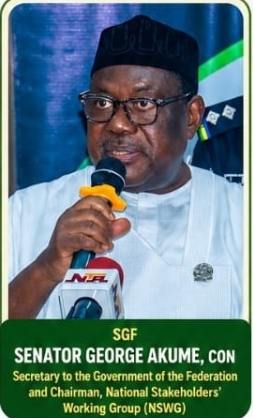
The Secretary to the Government of the Federation (SGF) and Chairman of the National Stakeholders’ Working Group (NSWG), Senator George Akume, CON, made the call while declaring open a three-day Joint Strategic Retreat of the NSWG and senior management of the Nigeria Extractive Industries Transparency Initiative (NEITI) in Abuja.
The retreat, with the theme, “Strengthening EITI Implementation: From Extractive Sector Reporting to Impact,” focused on strengthening Nigeria’s implementation of the EITI framework and ensuring that transparency initiatives translate into tangible improvements in governance and national development.
Akume commended members of the NSWG and the NEITI Secretariat for their commitment to promoting openness and responsible governance in Nigeria’s extractive industry.
He also applauded the progress made in preparations for the forthcoming international validation exercise, noting that Nigeria’s continued engagement with relevant stakeholders demonstrated the country’s commitment to maintaining a transparent and credible process.
The SGF said the success of EITI implementation should not be measured solely by the production of reports, but by the extent to which transparency strengthens public institutions, improves investor confidence, promotes public trust and contributes to sustainable national development.
He noted that the 2023 EITI Standard places greater emphasis on critical areas, including beneficial ownership, contract transparency, state-owned enterprises, anti-corruption measures, environmental reporting, energy transition and active stakeholder participation.
According to him, these priorities are consistent with the Federal Government’s Renewed Hope Agenda.
Akume described the forthcoming validation exercise as an opportunity for Nigeria to showcase the reforms it has undertaken while addressing outstanding recommendations.
He reaffirmed President Bola Ahmed Tinubu’s commitment to providing the leadership and coordination required to ensure effective implementation of the EITI framework across government institutions.
The SGF urged participants at the retreat to strengthen collaboration, review progress made so far and develop practical strategies capable of delivering lasting improvements in governance across the extractive sector.
Reacting to the development, the National Coordinator of the Asiwaju Again Renewed Hope Support Initiative 2027 and National President of the APC Initiative for Good Governance (APC-IGG), Amb. Musa Muhammad Tsoken, commended Senator Akume for what he described as his visionary leadership and commitment to transparency, accountability and good governance in Nigeria’s extractive sector.
Tsoken described the SGF’s position as timely and consistent with the Renewed Hope Agenda of President Tinubu, expressing optimism that ongoing reforms would strengthen public confidence, attract investment and promote sustainable national development.
Earlier, the Executive Secretary of NEITI, Hon. Musa Sarkin Adar, described the retreat as an important platform for assessing Nigeria’s implementation of the EITI framework and charting the course for the next phase of reforms.
Sarkin Adar said the validation exercise presented an opportunity not only to demonstrate Nigeria’s compliance with international standards but also to assess governance reforms, corrective actions and institutional progress in the extractive sector.
He disclosed that consultations with government agencies, extractive companies, civil society organisations and the media had revealed broad support for the validation process, while also highlighting the need for stronger coordination, improved documentation and more effective implementation of audit recommendations.
He expressed confidence that the strategic retreat would help stakeholders identify practical measures to strengthen EITI implementation and ensure that transparency in the extractive sector produces measurable benefits for Nigerians.