


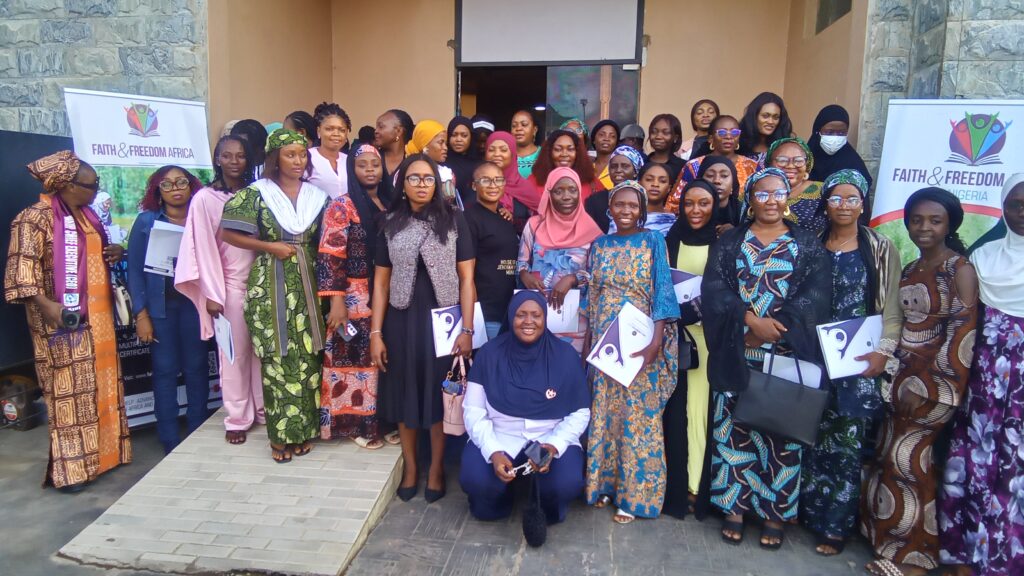
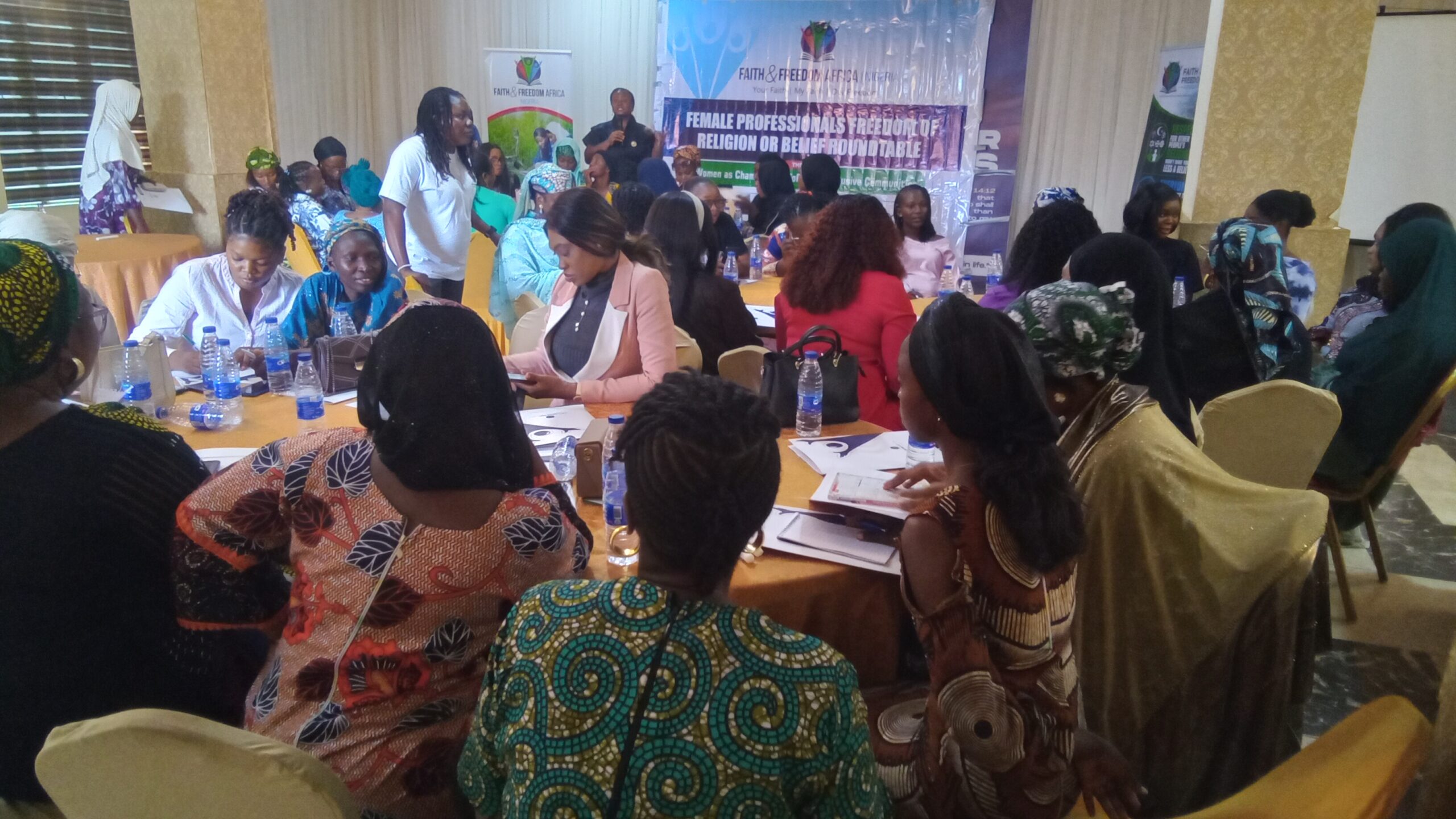
Participants at the Female professionals roundtable to champion a course for freedom of religion or belief in Abuja.
By Abdulrahman Aliagan,
Abuja became the meeting point of some of Nigeria’s most influential female professionals, faith advocates, legal practitioners, civil society actors and development experts as Faith & Freedom Africa (FFA) Nigeria convened a landmark Freedom of Religion or Belief (FoRB) Roundtable for Female Professionals with the theme, “Women as Champions of FoRB and Inclusive Communities.” Held at Candlelux Hotel, Abuja.
The one-day national dialogue brought together participants drawn from different states of the federation to examine the growing challenges confronting religious freedom, particularly as they affect women, while developing practical solutions capable of strengthening peaceful coexistence and inclusive communities across Nigeria.
The roundtable was more than a conference; it was a strategic intervention aimed at empowering women to become frontline advocates for religious tolerance, mutual respect and social inclusion at a time when religious stereotypes, intolerance and identity-based discrimination continue to threaten national cohesion. Throughout the day’s deliberations, participants demonstrated remarkable enthusiasm, openness and commitment to building bridges across religious divides.
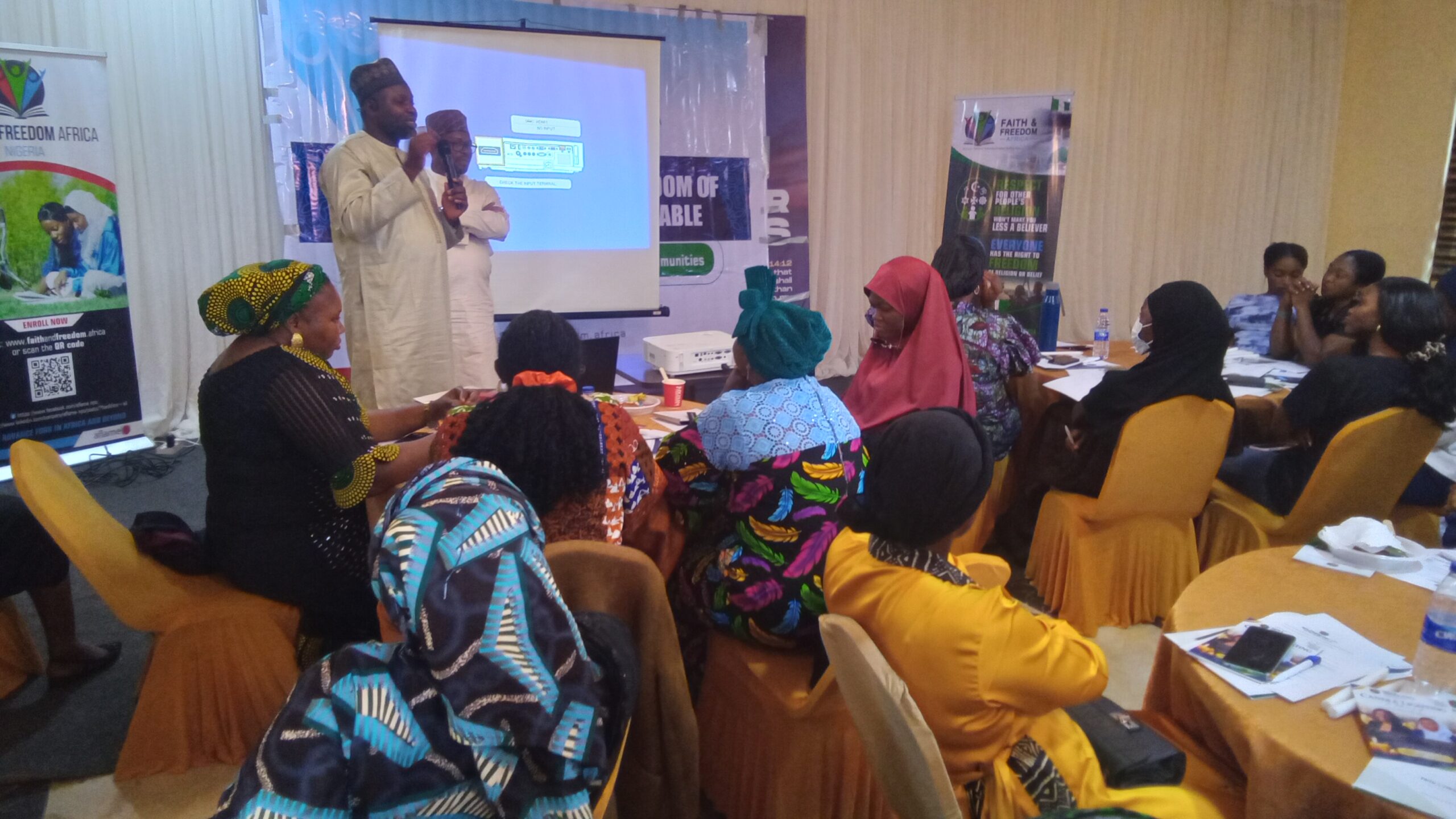
Sheikh Ibrahim Habeebullahi of the National Mosque facilitating participants on Islamophobia during the programme in Abuja.
The programme commenced with registration, opening prayers, welcome remarks and the introduction of participants before setting the tone for a robust engagement through a keynote address on “Women as Champions of Freedom of Religion or Belief and Inclusive Communities.” The keynote emphasised the indispensable role of women in shaping peaceful families, communities and institutions where every individual enjoys the right to practise, change or express his or her religious belief without fear, intimidation or discrimination.
In his opening remarks, the Country Representative of Faith & Freedom Africa (FFA), Mr. Felix Joseph Samari, warmly welcomed and appreciated the distinguished participants, respected facilitators, faith leaders, development partners and women professionals who had travelled from different parts of Nigeria to attend the roundtable.
A Candlelight session was observed in honour of the two departed foundation members of Freedom of Religion or Belief (FoRB) during the programme in Abuja
He described the gathering as an important platform for dialogue, learning and collaboration, stressing the critical role of women in promoting Freedom of Religion or Belief (FoRB), peace and inclusive communities.
“Today, we have gathered not simply for another conference, but to engage in meaningful dialogue on an issue that is central to our shared humanity. Freedom of Religion or Belief is a fundamental right, and its protection requires the collective commitment of all of us.
“We are particularly encouraged to have women from different faiths, professions and parts of Nigeria gathered here to share experiences, challenge prejudice and explore practical ways of building more inclusive communities.”
Samari expressed confidence that the openness and diversity of perspectives represented at the roundtable would contribute significantly to strengthening mutual understanding and peaceful coexistence.
“Faith & Freedom Africa is deeply encouraged by your presence, your openness and your willingness to contribute thoughtfully to this important conversation. Your participation demonstrates that when we create safe spaces for dialogue, we can overcome stereotypes, build trust and discover the common values that unite us despite our differences.”
He urged the participants to approach the discussions with open minds and a shared commitment to becoming champions of religious freedom and social inclusion in their respective communities.
“I encourage each of you to participate actively, listen with empathy and engage with one another in the spirit of mutual respect. Let us use this opportunity to strengthen our relationships across faith lines and to identify practical actions that will make a difference in our workplaces, families and communities.”
One of the major highlights of the roundtable was an illuminating presentation by Sheikh Ibrahim Habeebullahi of the National Mosque, Abuja, who delivered an extensive lecture on Islamophobia and Freedom of Religion or Belief.
Mr Felix Joseph Samari, Country Representative of Faith and Freedom Africa addressing the participants during the event.
The Islamic scholar explained that Freedom of Religion or Belief extends beyond merely professing one’s faith. According to him, FoRB encompasses the absolute freedom to hold, practise, change and publicly express one’s religious beliefs while respecting the rights of others to do the same. He stressed that genuine defenders of FoRB are those who protect the rights of everyone—including people whose beliefs differ from theirs.
He reminded participants that defending only members of one’s own faith amounts to religious advocacy rather than genuine human rights advocacy.
Drawing from Islamic teachings, Sheikh Habeebullahi urged participants to approach discussions on religion with sincerity, positive intentions and mutual respect. Quoting both the Holy Qur’an and the Bible, he demonstrated that both faith traditions encourage love, compassion and peaceful coexistence.
He referenced Mark 12:31, “Love your neighbour as yourself,” reminding participants that every Nigerian—regardless of religious affiliation—deserves dignity and respect.
Confronting Islamophobia and Religious Prejudice
A significant portion of his presentation examined the concept of Islamophobia, which he described as a combination of prejudice, hostility and unfounded fear directed at Muslims or even individuals perceived to be Muslims because of their appearance or mode of dressing.
Referencing the United Nations Secretary-General’s position, he explained that Islamophobia manifests through threats, harassment, abuse, discrimination, intimidation and hate directed not only at Muslims but also at non-Muslims who resemble them culturally or physically.
He further explained that in Nigeria, Islamophobia often appears through biased public discourse, sweeping generalisations, exclusionary workplace policies, discriminatory hiring practices, social avoidance, media stereotypes and unfair assumptions linking Islam with terrorism.
According to him, one dangerous consequence of Islamophobia is the reversal of the legal principle of innocence.
“In law,” he explained, “everyone is presumed innocent until proven guilty. Under Islamophobia, however, a Muslim is often presumed guilty until proven innocent.”
He illustrated how Muslims are frequently judged through prejudice where electoral victories are interpreted as hidden religious agendas, hijab is viewed solely as oppression, and acts of violence committed by individuals are automatically attributed to Islam itself.
Sheikh Habeebullahi cautioned against religious superiority, urging participants to appreciate their respective faiths without condemning others.
Sharing an encounter involving a Hindu professor, he illustrated how misunderstanding religious symbols often creates unnecessary hostility. He observed that ignorance about another person’s beliefs frequently leads to stereotyping and discrimination.
He maintained that every religion contains sacred symbols which deserve respect and understanding rather than ridicule.
Participants listened attentively as he urged women to become ambassadors of peace rather than amplifiers of division.
Throughout the dialogue sessions, speakers consistently emphasised that women occupy a unique position within families, workplaces and communities, making them powerful agents of reconciliation and peacebuilding.
Participants observed that mothers often shape children’s earliest perceptions of people from different religious backgrounds, making women indispensable in promoting tolerance from childhood.
They also noted that female professionals possess significant influence within public institutions, educational establishments, corporate organisations and civil society, positioning them to transform workplace cultures and promote inclusion.
Following extensive deliberations, participants identified numerous obstacles confronting women’s religious freedom in Nigeria.
Among the major concerns raised were discrimination based on religious identity and appearance, particularly regarding the wearing of hijab and other religious attire.
Other identified challenges included cultural practices limiting women’s participation in leadership, gender-based violence, religious extremism, insecurity, prejudice, family pressure, economic discrimination, political exclusion, restrictions on freedom of expression and inadequate public understanding of Freedom of Religion or Belief.
Participants agreed that these issues require sustained advocacy involving government institutions, faith communities, civil society organisations and the media.
One of the defining moments of the roundtable was the unanimous adoption of the Abuja Communiqué, a comprehensive roadmap outlining practical steps towards strengthening religious freedom and inclusive communities.
The communiqué urged female professionals to promote awareness of Freedom of Religion or Belief within workplaces and communities, encourage mutual respect among different faiths, build interfaith relationships, eliminate discrimination in professional environments and mentor younger generations on peaceful coexistence.
Participants also resolved to organise women-focused networking events, retreats, dialogue sessions and step-down trainings that would deepen understanding of FoRB nationwide.
The communiqué further encouraged research, digital advocacy, mentorship, leadership development, opportunity sharing among women and the reporting of violations of religious rights through appropriate legal channels.
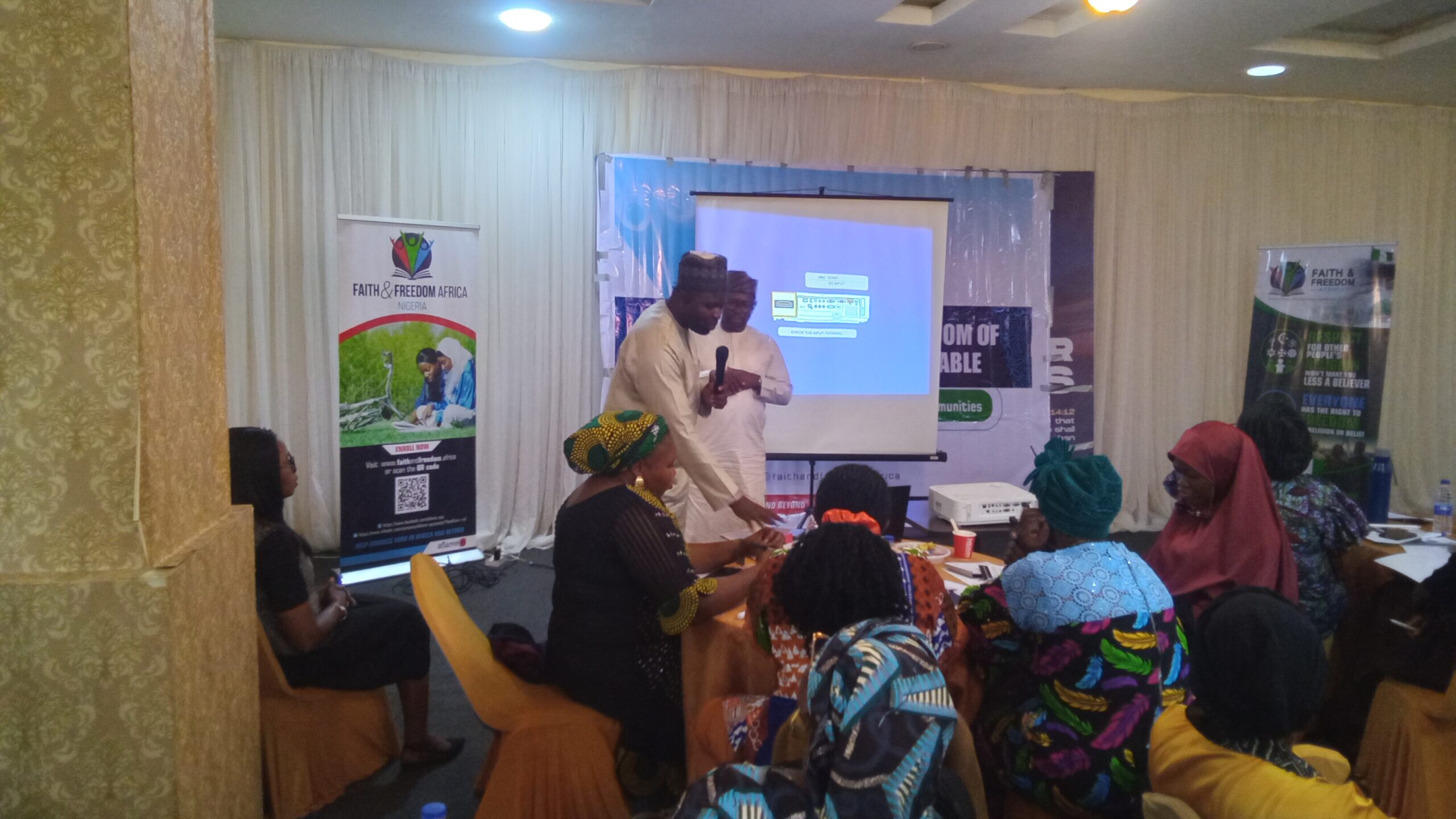
Beyond lectures and presentations, organisers introduced an innovative learning approach by dividing participants into three interactive working groups.
Each group examined practical community-based strategies for promoting Freedom of Religion or Belief within families, workplaces and public institutions.
The group discussions enabled participants to exchange personal experiences, identify local challenges and develop context-specific recommendations.
Observers noted that the interactive sessions significantly deepened participants’ understanding of FoRB while strengthening collaboration among women from different religious and cultural backgrounds.
As the programme drew to a close, Dr. Ahmad of the Department of History and Diplomatic Studies of the University of Abuja presented Certificates of Attendance to all participants in recognition of their commitment to advancing Freedom of Religion or Belief and peaceful coexistence.
The presentation attracted enthusiastic applause as participants celebrated a successful day of learning, networking and renewed commitment to promoting religious harmony.
The event concluded with the traditional group photograph, warm exchanges among participants and renewed pledges to become ambassadors of tolerance within their respective communities.
Participants travelled from different states across Nigeria, reflecting the national character of the initiative and reinforcing the message that religious freedom is a collective responsibility.
By the close of proceedings, there was a visible atmosphere of optimism, friendship and renewed determination.
Many participants described the programme as transformative, expressing appreciation for the opportunity to interact openly with women from diverse faith backgrounds while developing practical tools for promoting inclusion.
As participants departed Abuja, they carried not only certificates but also a shared commitment to building a Nigeria where diversity is celebrated rather than feared, where religious differences become sources of strength instead of division, and where women stand at the forefront of advancing freedom, justice, peace and national unity.