


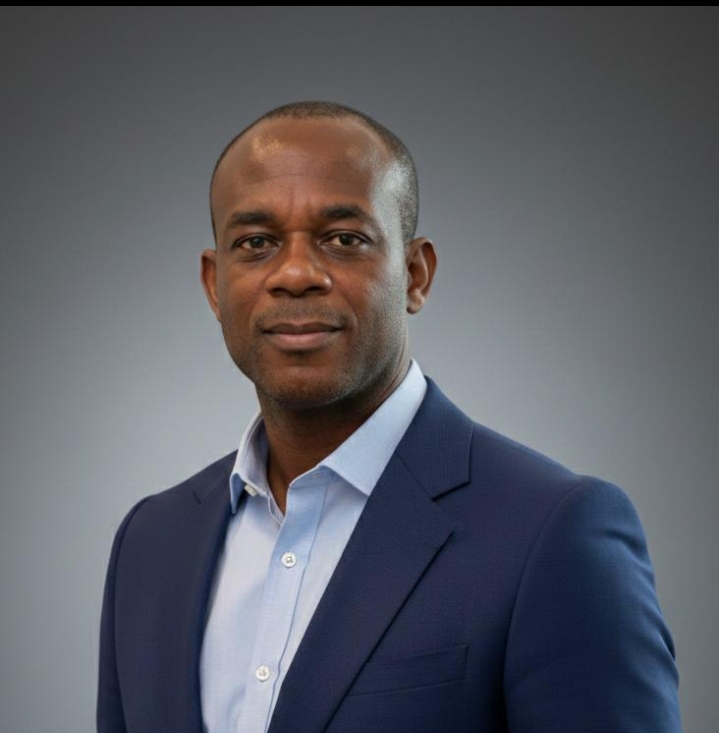
By Chidi Nwafor
Before bridges rise across rivers or railways disappear beneath cities, there is a quieter story that almost no one tells.
Every great bridge is celebrated for what people can see: the soaring arches, elegant spans, and engineering that appears to defy gravity. Photographs capture steel, concrete, and cables. Politicians inaugurate the finished structure. Economists measure the traffic it carries.
Yet the bridge’s true strength lies somewhere invisible. Hidden beneath the waterline are foundations few people will ever examine. They absorb pressure, distribute weight, and anchor the structure against seasonal forces. Remove them, and the bridge does not simply weaken; it ceases to be a bridge at all.
Infrastructure works the same way. We admire power plants, transmission lines, batteries, ports, railways, hospitals, and industrial parks as visible symbols of progress. But history repeatedly shows that infrastructure rarely succeeds because of the assets alone. Between technology and impact lies an invisible architecture of institutions, governance, finance, regulation, and operational capability. When that architecture is weak, even the most sophisticated infrastructure struggles to fulfil its promise.
This invisible architecture is what I have come to describe as the Missing Middle.
The Systems Behind Infrastructure
When this series began, I set out to examine what appeared to be unrelated challenges facing the global energy transition: unreliable electricity grids, stranded natural gas, off-grid solar, battery storage, mini-grids, and industrial self-generation. Each seemed to belong to a different technical discipline, with its own policy debates and investment priorities.
Looking back, I now realise they were all telling the same story. None of those articles was fundamentally about electricity. They were about systems. The deeper I explored, the more I encountered the same structural weakness beneath them: different technologies, different countries, different institutions, yet the same recurring constraint separating investment from impact. That constraint is the Missing Middle: a framework for understanding why societies so often struggle to translate promising ideas into lasting economic transformation.
Infrastructure succeeds not because assets exist, but because institutions enable those assets to work together. A power plant depends on market rules, payment discipline, regulatory certainty, and competent operators. A battery delivers value only when electricity markets reward flexibility. A mini-grid transforms communities only when financing and replication systems allow it to scale. Technology creates possibility. Systems determine reality.
Six Manifestations of One Pattern
Across the first six articles in this series, the Missing Middle appeared in different forms.
The first challenged the assumption that electricity shortages result primarily from inadequate generation. Grid performance depends just as much on transmission, distribution, market discipline, and institutional coordination. Grid failure is rarely the failure of a single asset; it is usually the failure of an interconnected system.
The second examined Nigeria’s gas-to-power paradox. Vast gas reserves coexist with chronic electricity shortages not because gas is unavailable, but because processing infrastructure, transport networks, commercial contracts, and regulatory certainty fail to connect resources to consumers. The resource was never the constraint. The missing systems were.
The third explored Africa’s growth in off-grid solar. Panels became transformative not simply because costs declined, but because innovative financing, digital payments, distribution networks, and entrepreneurial business models made the technology accessible to millions of households.
The fourth considered battery storage, often presented as the missing piece of renewable integration. Yet batteries alone cannot stabilize electricity systems; their value depends on market design, dispatch protocols, and revenue certainty. Integration, not storage capacity, is the real challenge.
The fifth focused on Africa’s expanding mini-grid sector. Thousands of projects have shown that decentralized electricity can transform communities, yet national transformation has remained limited because successful projects have rarely been aggregated into standardized, financeable portfolios. Project success has struggled to become system success.
The sixth examined why manufacturers across Africa increasingly generate their own electricity. Often celebrated as entrepreneurial resilience, self-generation actually reflects something more troubling: businesses adapting to institutional failure rather than benefiting from institutional strength.
Viewed individually, these appear to be separate challenges. Viewed together, they reveal a single pattern. None is fundamentally a technology problem. Each is a systems problem, a gap between invention and implementation, investment and performance.
Beyond Energy
If the Missing Middle explains why power systems underperform despite technological progress, could the same invisible architecture explain persistent failures across other sectors?
Transport offers an obvious example: governments invest billions in highways, ports, and railways, yet freight costs remain high because customs procedures and institutional governance fail to evolve alongside physical infrastructure. Healthcare tells a similar story: modern hospitals cannot consistently deliver quality care if procurement systems are weak or financing is fragmented. Digital infrastructure follows the same pattern: broadband may cover entire regions, but without affordable devices and enabling regulation, connectivity alone does not produce transformation.
Across every sector, public attention focuses on visible investment. Actual performance depends on invisible systems. Once this becomes apparent, the Missing Middle begins appearing everywhere: in industrial zones, water systems, education reform, housing, and urban development. It is the institutional architecture that converts technical possibility into sustained economic value, and, once you begin to see it, it becomes difficult not to recognize it across almost every major development challenge.
The Infrastructure Translation Layer
This points to a broader conclusion. The defining challenge of development may never have been the absence of ideas, technologies, or even capital. More often, it has been our tendency to invest heavily in visible assets while underestimating the invisible systems that make those assets work. Infrastructure rarely fails because engineering knowledge is unavailable, or because technology or finance is absent. It fails because there is an overlooked process between possibility and performance, what I have come to call the Infrastructure Translation Layer.
Every society generates ideas. Many develop transformative technologies. Some even mobilize significant investment. Yet only a few consistently translate those ingredients into infrastructure that transforms economies over decades. That translation is built, not automatic.
Between an idea and a project lies preparation and project development. Between a project and an operational asset lie procurement, contracting, and financing. Between an asset and a reliable public service lie governance, regulation, and commercial discipline. Between reliable services and sustained prosperity lie productivity, industrial competitiveness, and public confidence. Development follows a sequence rarely acknowledged:
Ideas → Projects → Assets → Services → Productivity → Prosperity
Every stage requires institutions capable of carrying ambition into execution. When any link breaks, ideas remain conference presentations, projects remain feasibility studies, and assets sit underutilized. Countries rarely fail because they lack ambition. They fail because they struggle to translate ambition into execution.
Institutions as Competitive Advantage
This helps explain one of the greatest paradoxes of modern development. Never before have so many transformative technologies been available at once: renewable energy, artificial intelligence, digital platforms, carbon markets, advanced manufacturing. Yet infrastructure outcomes often remain stubbornly inconsistent, and the explanation cannot simply be a shortage of innovation. Innovation is accelerating; institutional adaptation is not. Technology evolves exponentially. Institutions evolve incrementally. That widening gap is where the Missing Middle lives.
This also changes how national competitiveness and success itself should be measured. Countries are often compared by the resources they possess, the capital they attract, or the installed capacity they announce. These are milestones, but they are inputs, not outcomes. The most successful economies distinguish themselves differently: they build institutions capable of repeatedly converting opportunity into reliable outcomes. Roads deteriorate, power plants become obsolete, and technologies evolve, but institutions that consistently produce investable projects and durable services create advantages that compound across generations, long after the inauguration ceremonies have ended. The infrastructure challenges of the future will therefore be less technological than institutional.
The Next Frontier: Finance
If invisible systems determine whether power plants succeed, batteries integrate, and mini-grids scale, then surely the same invisible systems determine whether investment capital becomes infrastructure. For decades, development debates have focused on mobilizing finance. Far less attention has gone to what happens after capital expresses interest. What determines whether investor appetite becomes signed transactions? What institutional architecture transforms financial commitments into operational infrastructure? Could finance itself possess a Missing Middle?
Governments continue announcing climate commitments, DFIs expand their mandates, and infrastructure funds raise billions for climate investment, yet deployment repeatedly struggles to match ambition. The conventional explanation is that the world suffers from a shortage of climate finance. But what if that diagnosis is incomplete? What if the principal constraint is not the availability of capital, but the institutional systems required to convert it into bankable projects?
If that proves true, the Missing Middle extends beyond electricity networks into project preparation, investment structuring, risk allocation, and capital markets themselves. The previous six articles were never isolated observations; they were evidence. Each examined a different manifestation of the same underlying principle: societies succeed not simply because they possess resources, technologies, or capital, but because they build the institutional systems capable of connecting them.
The Missing Middle was never simply an energy framework. It is a framework for understanding how societies transform ideas into enduring prosperity.
In the next article, we leave substations and industrial plants behind and enter boardrooms, sovereign wealth funds, development finance institutions, and infrastructure funds. The units of measurement will no longer be megawatts or transmission kilometres; they will be project pipelines, bankability, risk allocation, and financial close. There we will confront one of the most enduring assumptions in international development: that the world’s climate challenge is constrained primarily by a shortage of money.
The evidence increasingly points somewhere else. Capital, in many cases, is already waiting. The unanswered question is whether our institutions can build projects worthy of it.
Chidi Nwafor is the Founder and Lead Strategist at De-Lazuli Consult, an advisory practice specializing in energy transition, project finance, development finance institution (DFI) engagement, and carbon market strategy. He writes from Lagos and Abuja, Nigeria. +2348036761032, chidi.nwafor@de-lazuliconsult.com