


By Abdulrahman Aliagan
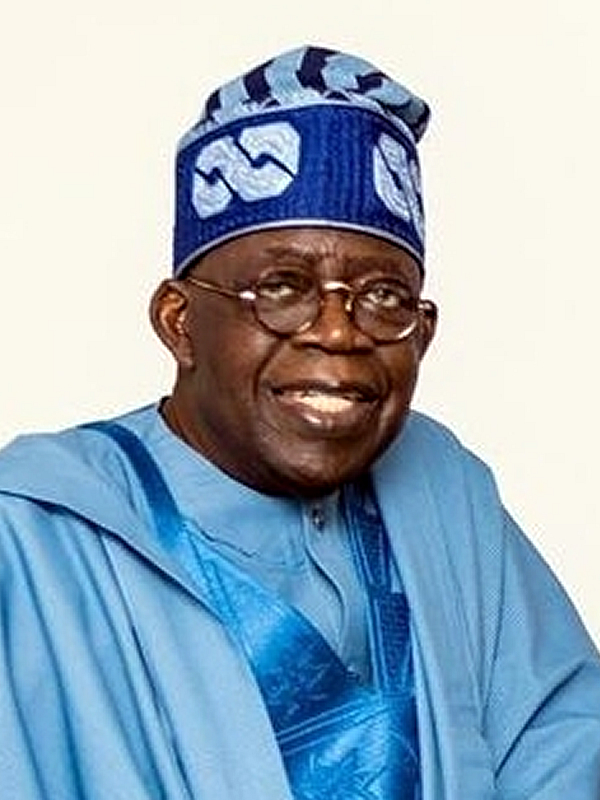
As Nigeria inches closer to the 2027 general elections, the political atmosphere is beginning to assume the character of a major national contest, with opposition parties and political blocs intensifying efforts to overcome their traditional divisions and forge a common front against President Bola Ahmed Tinubu and the ruling All Progressives Congress (APC).
At the centre of the emerging opposition strategy is an increasingly familiar proposition: that fragmented opposition votes could hand the incumbent another advantage, while a united political platform could present a formidable challenge to the APC.
The latest indication of this determination came on Monday, August 31, when a coalition of opposition politicians under the banner of G-100 converged on Abuja to deliberate on strategies for the 2027 presidential election.
Representatives of six political parties and blocs — the African Democratic Congress (ADC), Allied Peoples Movement (APM), Nigeria Democratic Congress (NDC), a faction of the Peoples Democratic Party (PDP) led by former Minister of Special Duties and Inter-Governmental Affairs, Kabiru Turaki, Peoples Redemption Party (PRP) and Social Democratic Party (SDP) — participated in the meeting.
Although some of the country’s most prominent opposition figures, including former Vice President Atiku Abubakar and former Anambra State governor Peter Obi, were absent, the meeting nevertheless produced a significant political signal.
The participants agreed to establish standing committees and working groups to develop proposals on opposition cooperation, a national reform programme and, perhaps most significantly, a roadmap towards producing a common presidential candidate for the 2027 election.
For an opposition camp that has historically struggled to translate public dissatisfaction into electoral cohesion, the development could represent an important step towards building a coordinated political machine capable of confronting the incumbent.
Turaki Faction Throws Its Weight Behind Unity
The Turaki-led faction of the PDP has now openly endorsed the idea of a single opposition presidential candidate.
In a statement issued by its National Publicity Secretary, Ini Ememobong, the faction argued that the circumstances confronting Nigerians require opposition forces to move beyond partisan interests and unite around a credible alternative.
According to the faction, the objective is not merely to create another electoral alliance, but to construct a political platform capable of offering Nigerians a different direction.
The faction said its participation in the G-100 initiative was driven by what it described as the hardships and insecurity experienced under the Tinubu administration.
Turaki, as quoted in the statement, said any opposition collaboration must be based on transparency, equality, data-driven decision-making and egalitarian principles.
The emphasis is significant.
Rather than simply negotiating who should receive the presidential ticket, the opposition groups are attempting to frame the emerging alliance around a broader political proposition — a national reform agenda that could become the foundation of a common campaign.
The Turaki faction described its participation as consistent with its earlier position of building relationships with political parties and organisations that share its objective of changing the political direction of the country.
It also declared its readiness to contribute to an opposition platform aimed at taking power from the incumbent and rebuilding Nigeria.
The Arithmetic Behind the Alliance
The growing enthusiasm for opposition unity is rooted partly in electoral mathematics.
Nigeria’s presidential elections are won not simply by securing the largest number of votes nationally, but by satisfying constitutional requirements involving both the overall vote and geographical spread.
In a highly competitive election, therefore, opposition fragmentation can become decisive.
Several opposition candidates drawing votes from broadly similar constituencies could collectively secure millions of votes while allowing the eventual winner to emerge with a relatively modest plurality.
This is the strategic calculation behind the renewed campaign for a single candidate.
The argument is straightforward: rather than having several opposition politicians competing against one another and dividing the anti-APC vote, the opposition could pool its political resources behind one candidate and create a direct electoral confrontation with Tinubu.
But translating that arithmetic into political reality remains the more difficult task.
From Ibadan to Abuja: Another Attempt at Opposition Consolidation
The Abuja initiative is not the opposition’s first attempt to achieve such unity.
On April 25, opposition leaders and representatives of political parties gathered in Ibadan, Oyo State, and produced what became known as the Ibadan Declaration.
The objective was similar: prevent the opposition vote from being divided and work towards presenting a common presidential candidate against Tinubu in 2027.
That gathering attracted several heavyweight political figures, including Atiku Abubakar, Peter Obi, Rabiu Kwankwaso and former Rivers State governor Rotimi Amaechi.
At the time, the initiative generated considerable political interest and appeared to offer the possibility of a historic realignment of opposition forces. But the optimism did not last.
Political parties and factions subsequently questioned the legitimacy, inclusiveness and ownership of the agreement.
The Labour Party rejected the Ibadan process, insisting that it was not part of the meeting and would produce its own presidential candidate.
The Accord Party similarly distanced itself from the declaration, saying it had neither authorised the use of its name nor endorsed the resolutions.
The Wike-aligned faction of the PDP also rejected the proposal for a single opposition presidential candidate, while the African Action Congress (AAC), led by Omoyele Sowore, indicated that it would pursue its own presidential candidacy.
The disagreements exposed perhaps the greatest obstacle confronting the opposition: every political bloc wants unity, but few are prepared to surrender their individual political ambitions in the process.
The Atiku-Obi Question
Perhaps the biggest test of the new initiative will be whether the major opposition personalities can eventually be brought under one umbrella.
The absence of Atiku and Obi from the August 31 G-100 meeting inevitably raises questions about the extent to which the latest initiative can evolve into a truly national opposition coalition.
Both men command substantial political followership, organisational networks and electoral constituencies.
Any opposition arrangement that excludes either of them could face serious limitations.
At the same time, bringing them — and other presidential hopefuls — into a common arrangement would require difficult negotiations over the most contentious issue in Nigerian opposition politics: who gets the presidential ticket?
It is one thing for political parties to agree that President Tinubu should be challenged.
It is another to agree on who should lead that challenge.
That distinction could ultimately determine whether the current negotiations become a historic political realignment or another chapter in Nigeria’s long history of unsuccessful opposition coalitions.
APC Faces a More Organised Challenge
For the APC, the emerging developments offer both a warning and an opportunity.
President Tinubu is seeking a second term, and the ruling party is expected to deploy the advantages of incumbency, its nationwide political structure and its control of substantial political machinery.
But the emergence of a coordinated opposition would fundamentally alter the electoral landscape.
Rather than facing several presidential candidates competing independently, the APC could find itself confronting a single candidate backed by multiple parties, political movements and influential personalities.
Such an arrangement could also facilitate resource mobilisation, voter coordination, grassroots mobilisation and strategic deployment of campaign structures.
The opposition would, however, have to demonstrate that its unity extends beyond Abuja political negotiations.
A successful presidential coalition would require local structures across Nigeria, credible candidates for legislative and state-level contests, shared messaging and, above all, disciplined supporters willing to accept compromises made by their political leaders.
Beyond Anti-Tinubu Politics
There is another question the opposition will have to answer.
Can it sell Nigerians a programme that is bigger than “Anybody But Tinubu”?
Political history suggests that alliances built solely around defeating an incumbent can become unstable once electoral victory is achieved.
The emerging opposition coalition therefore faces the challenge of articulating a convincing alternative on the economy, security, unemployment, poverty, infrastructure, education, healthcare and institutional reform.
The G-100’s decision to establish working groups on a national reform programme suggests an awareness of this challenge.
If the groups succeed in producing a coherent national agenda and a transparent mechanism for selecting a presidential candidate, the opposition may have an opportunity to transform its current discussions into a serious electoral movement.
The Road to 2027
With the 2027 election approaching, Nigeria’s opposition appears to be entering another phase of political experimentation.
The August 31 Abuja meeting demonstrates that the idea of a common opposition candidate has survived the setbacks suffered by the earlier Ibadan initiative.
But survival is not the same as success.
The coming months will test the willingness of opposition leaders to compromise, negotiate and subordinate individual ambitions to a collective strategy.
For the APC and President Tinubu, the development is a reminder that the 2027 contest may not be a conventional incumbent-versus-multiple-candidates election.
For the opposition, it is perhaps the clearest warning yet that time is running out.
The battle for 2027 is gradually moving beyond individual parties and towards the construction of political alliances.
Whether those alliances can hold when presidential ambitions, party structures, regional interests and personal calculations collide remains the central question.
One thing, however, is becoming increasingly clear: Nigeria’s opposition is no longer merely talking about challenging Tinubu. It is beginning to organise for the battle.
And if the disparate opposition forces succeed in turning their latest negotiations into a genuine political coalition, the 2027 presidential election could become one of the most consequential and closely fought contests in Nigeria’s democratic history.