


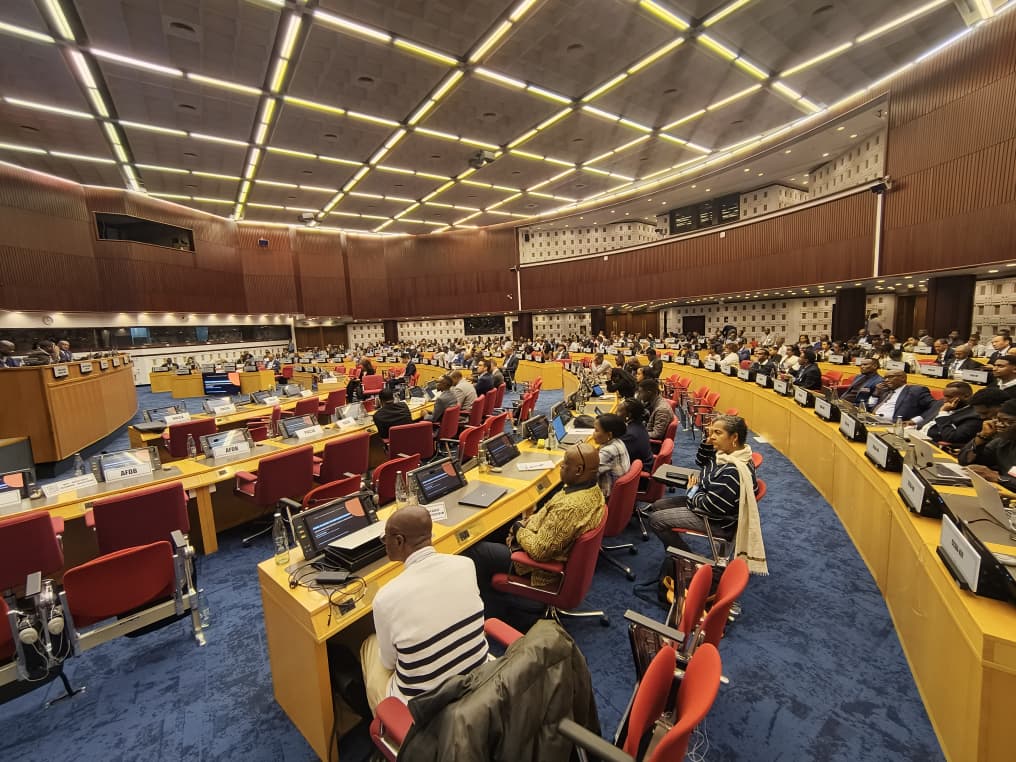
View of the participants at the Conference
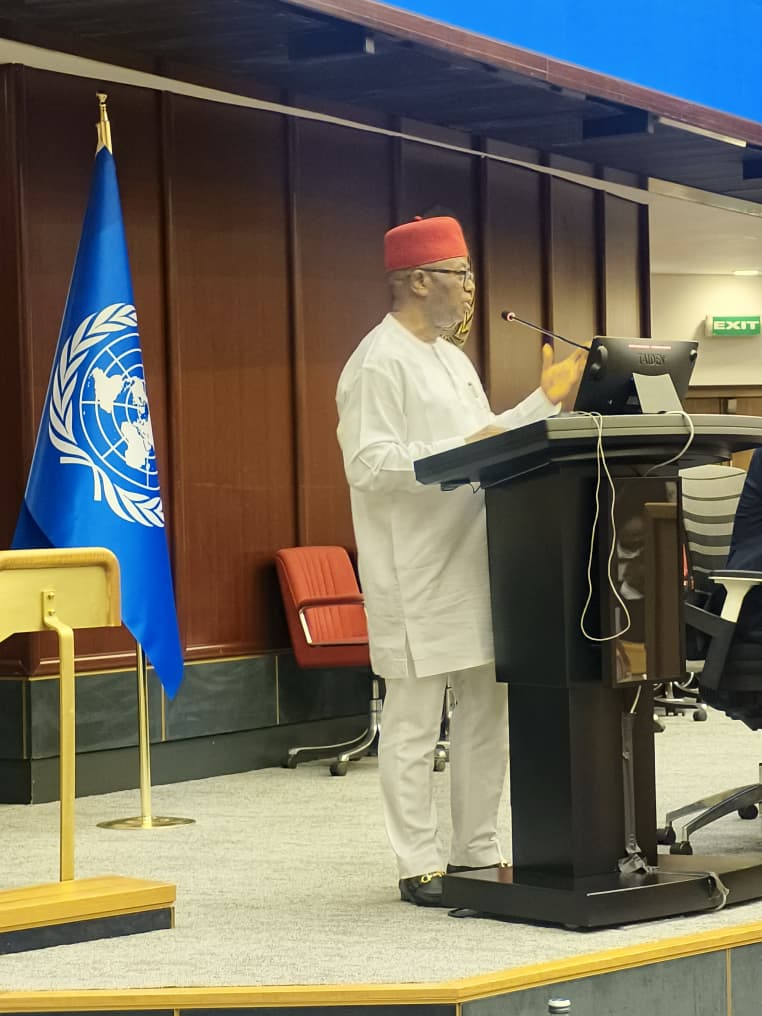
President of GLOBE Legislators and sponsor of Nigeria’s Climate Change Act 2021, Rt. Hon. Sir Sam Onuigbo, has called on African countries to move from climate pledges and negotiations to implementation, insisting that the continent must take greater control of the institutions, financing and policies shaping its climate future.
Onuigbo made the call on Monday while delivering a presentation titled “From Pledges to Implementation: African Agency and the Belém–Antalya-Addis Roadmap” at the 14th Conference on Climate Change and Development in Africa (CCDA-XIV) at the United Nations Conference Centre, Addis Ababa, Ethiopia.
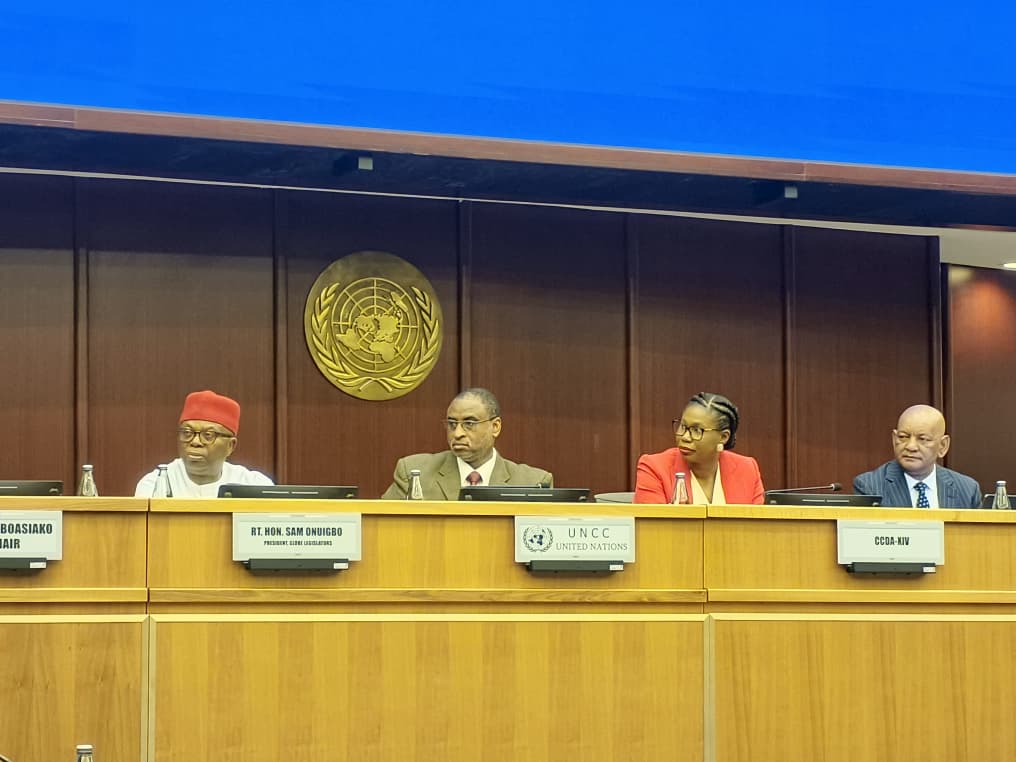
Members of High-table including Rt. Hon. Sam Onuigbo Onuigbo who made the call on Monday while delivering a presentation titled “From Pledges to Implementation: African Agency at the Belém–Antalya-Addis Roadmap” during the 14th Conference on Climate Change and Development in Africa (CCDA-XIV) at the United Nations Conference Centre, Addis Ababa, Ethiopia.
According to him, Africa is home to critical mineals and is surrounded by oceans and seas stressing that the continent must move from climate participation to climate agency by setting the tone and shaping the rules, institutions, agencies, finance, and implementation pathways that affect its future.
Quoting former Nigerian Head of State, General Murtala Muhammed, who spoke in Addis Ababa on January 11, 1976, Onuigbo recalled: “Mr. Chairman, Africa has come of age, the fortunes of Africa are in our hands to make or mar.”
Fifty years later, he said, the statement remains relevant, arguing that Africa’s climate future “will be built, financed, governed and defended by Africans, on terms Africa itself has written.”
The former National Assembly member disclosed that Africa has rightly demanded climate justice because it has contributed the least to historical greenhouse gas emissions while suffering some of the most severe climate impacts. He said the continent must now move from simply presenting its climate priorities to exercising “climate agency.”
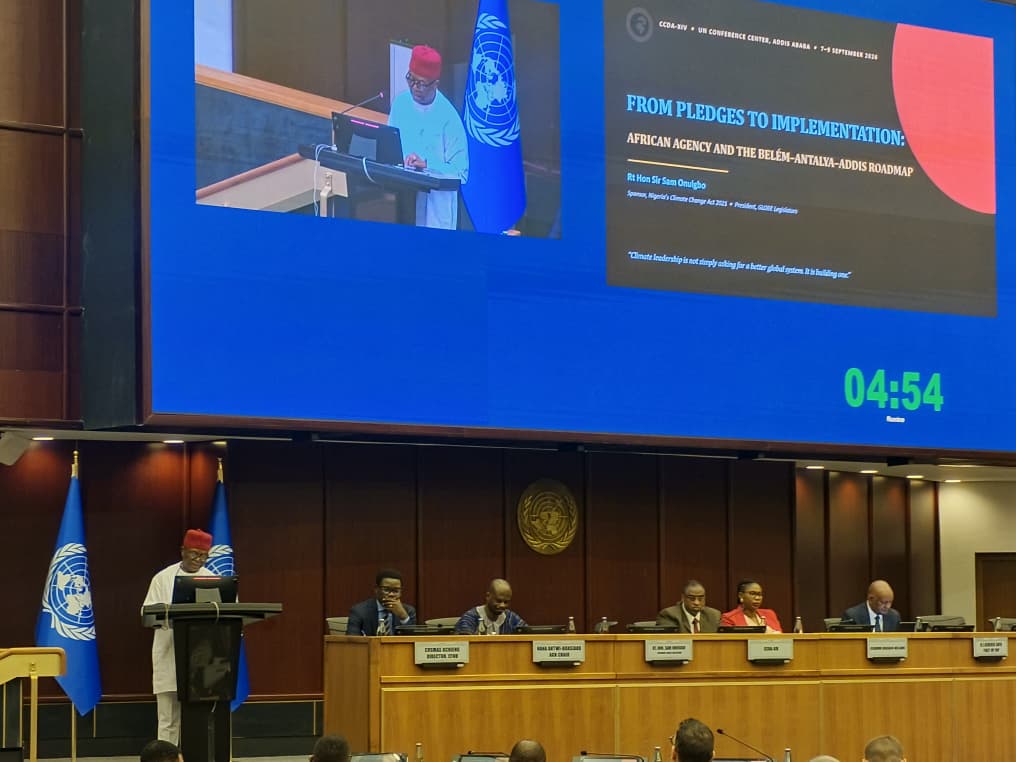
Rt. Hon. Sam Onuigbo on Monday delivering a presentation titled “From Pledges to Implementation: African Agency and the Belém–Antalya-Addis Roadmap” at the 14th Conference on Climate Change and Development in Africa (CCDA-XIV) at the United Nations Conference Centre, Addis Ababa, Ethiopia.
Onuigbo explained that participation means being present at global climate negotiations, while representation means having African interests reflected in agreements and declarations. Agency, he said, means designing the rules, institutions, financing mechanisms and implementation pathways that determine Africa’s future.
In his words: “A continent can be well represented in a system it does not shape, African climate leadership must mean moving from being consulted to being the author.”
Onuigbo said that after more than three decades of international climate diplomacy, the critical issue was no longer the number of conventions, agreements, NDCs, netzero commitments and finance pledges, but whether the institutions, finance, technologies and political will required to implement them actually existed and who controlled them.
He called for African Nationally Determined Contributions to become implementation architectures, investment frameworks, sectoral plans, accountability tools and pipelines of bankable projects, backed by laws, budgets, institutions, oversight and technical capacity.
Citing Nigeria’s Climate Change Act 2021, which he sponsored, Onuigbo said the legislation demonstrated how climate ambition could be converted into law and institutional responsibility.
The Act established the National Council on Climate Change (NCCC), with the President as chairman, providing high-level coordination for an issue that cuts across virtually every sector of the economy.
He said the arrangement was also designed to tackle what he described as “peer jealousy”, where ministries and agencies compete for authority, budgets and visibility rather than coordinating climate action.
Onuigbo said the need for stronger climate governance had been reinforced by Nigeria’s 2012, 2022 and 2024 floods, which caused deaths, displaced millions, destroyed crops, damaged infrastructure and resulted in severe economic losses.
He called for a shift from reactive disaster management to anticipatory climate-risk management through flood-risk mapping, improved drainage, dam safety, wetlands protection, land-use planning, early-warning systems and resilient infrastructure.
“Adaptation should be judged not by projects announced, but by whether vulnerability and losses are actually reduced,” he said.
On global climate governance, Onuigbo identified five areas where Africa must exercise greater influence: the accreditation and disbursement rules of multilateral climate funds; the structure and definition of climate finance; carbon-market rules under Article 6 of the Paris Agreement; climate-related trade rules; and the measurement of adaptation, resilience and loss and damage.
He called for African development banks, national climate funds and regional institutions with the necessary capacity to have greater direct access to international climate finance.
Onuigbo argued that climate finance should be assessed not merely by headline figures but by whether it is grant-based, the cost of capital, who controls access and whether it reduces Africa’s risk premium.
“Climate finance that leaves African countries more indebted, or dependent on intermediaries outside the continent, cannot be considered just,” he said.
On carbon markets, he warned that Africa should not become merely a supplier of cheap carbon credits while value is captured elsewhere.
Onuigbo urged coordination between African climate negotiators, trade ministries and the AfCFTA Secretariat to ensure that climate-related trade measures do not become “a new tariff wall against African industrialisation.”
He proposed an African Climate Implementation Compact, project preparation facility, continental adaptation investment pipeline, climate intelligence network, green industrialisation compact, energy-access and transition compact, fair climate-trade framework and blue-economy investment initiative.
Onuigbo also urged Africa to mobilise its own capital to complement international finance, using public resources strategically to attract pension funds, sovereign wealth funds, commercial banks, development finance institutions and private investors.
On energy transition, the President of GLOBE Legislators said that in a continent where hundreds of millions still lack reliable electricity, climate action must deliver more than emissions reductions. It must also provide affordable and reliable electricity, clean cooking, productive power, industrialisation and jobs.
He called for Africa’s renewable energy, natural gas transition resources, critical minerals, agriculture, forests, oceans and youthful population to be developed into value chains that create wealth within the continent rather than leaving Africa to export raw materials and import finished products.
Onuigbo stressed the importance of parliamentarians in converting climate commitments into legislation, budgets, oversight and accountability, noting that negotiation without implementation capacity produces declarations, while implementation without legislative backing risks fragmentation.
The former National Assembly member said Africa was vulnerable to climate change but also possessed the people, resources, markets, minerals, ecosystems and renewable energy potential needed to become a major contributor to global climate solutions.
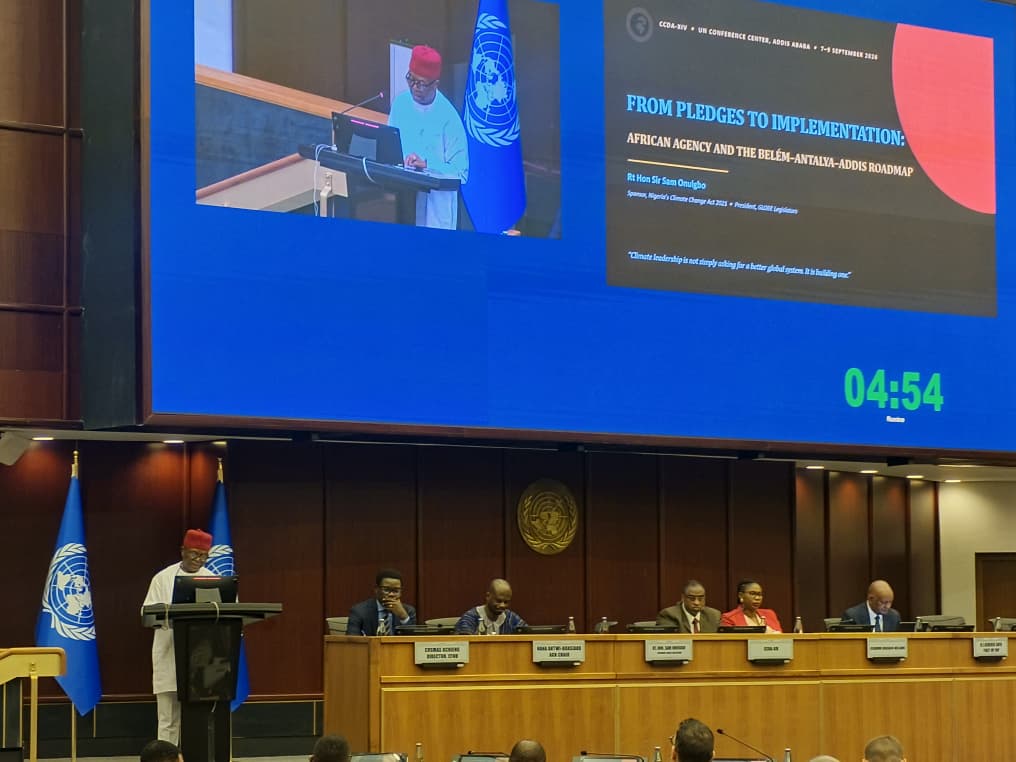
Participants at the Belém–Antalya-Addis Roadmap” during the 14th Conference on Climate Change and Development in Africa (CCDA-XIV) at the United Nations Conference Centre, Addis Ababa, Ethiopia.
“The real test of climate ambition is not the quality of the pledge, but the quality of implementation. The ultimate measure of success should be whether farmers are better protected from drought and flooding, communities have reliable energy, young Africans can build green enterprises, cities are resilient, industries are competitive and Africa’s natural resources create value for Africans.
“Climate leadership is not simply asking for a better global system. It is building one with African institutions, African decisions, African capital, and African authority at the centre,” he said