


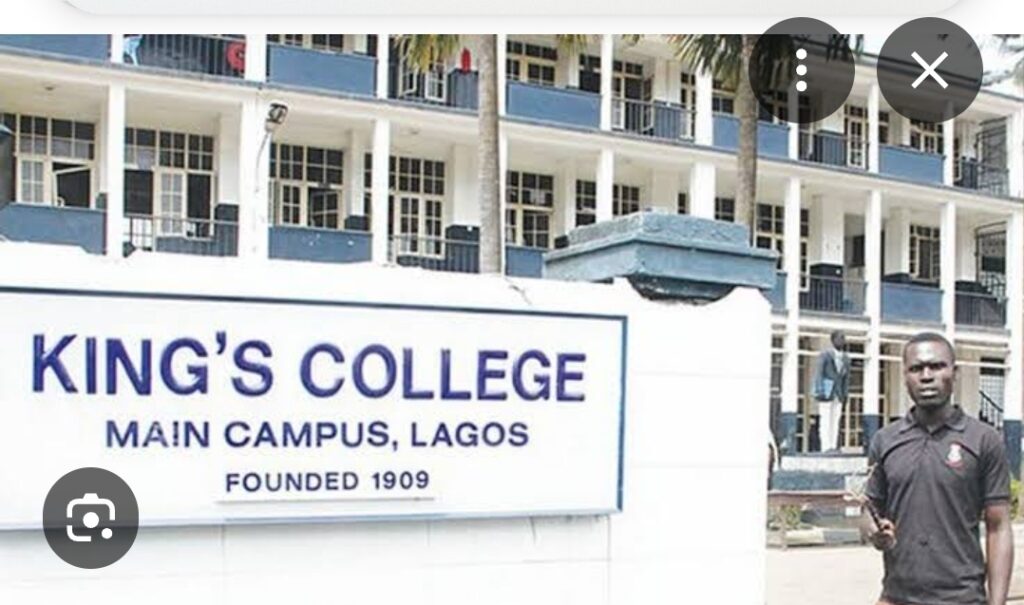
The Committee for the Defence of Human Rights (CDHR) has condemned the Federal Government’s decision to concession King’s College, Lagos, to the King’s College Old Boys’ Association (KCOBA), describing the move as a threat to public education and the country’s educational heritage.
The human rights organisation, in a statement issued on Tuesday, September 8, 2026, and signed by its National President, Comrade ‘Yinka Folarin, and General Secretary, Comrade Idris Afees, called on the Federal Government to immediately suspend and reverse the concession.
CDHR’s reaction followed correspondence dated September 4, 2026, from the Office of the Permanent Secretary, Federal Ministry of Education, which, according to the organisation, stated that King’s College had been concessioned to KCOBA and that the Ministry was proceeding with the handover of the institution.
The organisation also expressed concern over the reported plan for Federal Government funding of the college to cease six months after the transition.
CDHR said the development raised several questions regarding the nature, duration and financial terms of the concession, as well as the responsibilities of KCOBA, the future of teachers and other workers, and the protection of students from possible increased fees or exclusion.
“Who authorised the concession? What exactly has been conceded—management, assets, operational control or the institution itself? For how long? On what financial terms?” the organisation asked.
It urged the Federal Government to make the full concession agreement public, including its duration, financial obligations, governance structure, asset arrangements, funding commitments and termination provisions.
The organisation acknowledged the contributions of alumni associations to the development of schools across Nigeria but maintained that supporting a public institution through infrastructure, scholarships and other interventions was different from taking over its management.
According to CDHR, King’s College is part of Nigeria’s educational heritage and should continue to serve the national purpose for which Federal Unity Schools were established.
It warned that concessioning the institution could set a precedent for similar arrangements involving other Federal Unity Schools.
The group particularly faulted the proposed withdrawal of government funding six months after the transition, arguing that underfunding of public schools should not be used as justification for transferring government responsibility to private entities.
CDHR called on the Federal Government to guarantee that King’s College remains a public institution accessible to children irrespective of their social or economic background.
It also demanded protection of the jobs, rights and welfare of teachers and other workers who may be affected by the proposed arrangement.
The organisation further called for broad consultations involving students, parents, teachers, workers, alumni, education experts, organised labour and civil society organisations before any decision concerning the future of the college is implemented.
CDHR also urged the government to properly fund and rehabilitate Federal Unity Colleges rather than transferring public responsibility to private entities.
The group said its opposition was not directed at KCOBA or alumni contributions to education but against what it described as the “creeping commercialisation” of public education and the abdication of government responsibility.
It called on parents, students, teachers, workers, alumni, organised labour, civil society organisations and other education stakeholders to oppose policies that could undermine the public character and accessibility of Federal Unity Schools.
“King’s College belongs to the Nigerian people. The Federal Unity Schools belong to the Nigerian people. Public education is a public trust, not a marketplace,” CDHR stated.
If you want, I can also give you �3 stronger headline options and a punchier newspaper-style intro for publication.