


At the 2026 Peace and Dialogue Awards in Abuja, policymakers, security chiefs, diplomats, academics, civil society actors and community leaders converged around one compelling message: Nigeria cannot continue to spend billions responding to violence while investing little in preventing it.
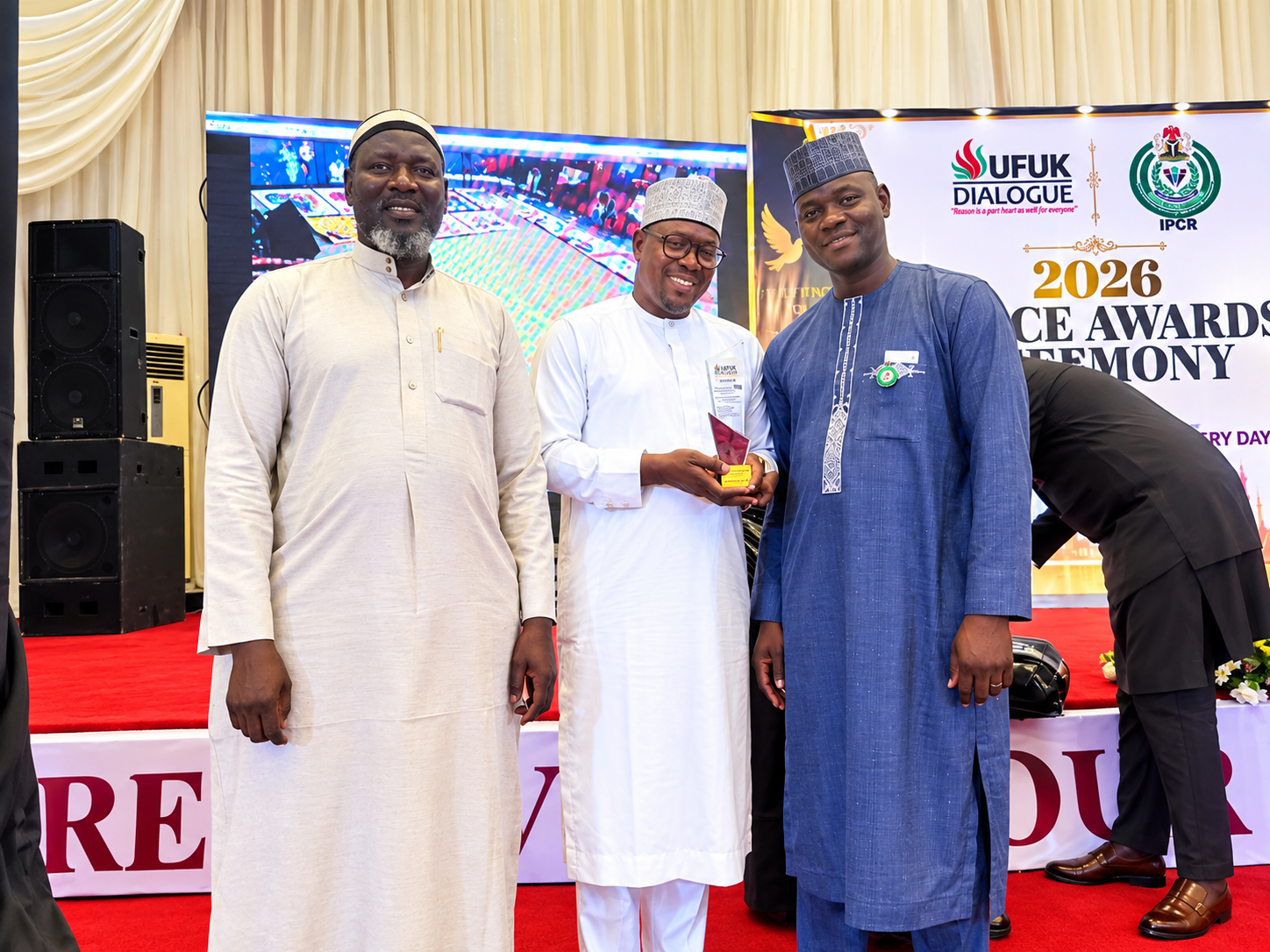
The Country Representative of FFA, Mr Felix Joseph Samari (middle holding the Plaque), Senior Lecturer at the Department of History and Diplomatic Studies, University of Abuja, Dr. Ahmad Dahiru (right) and Mallam Abdulrahman Aliagan, President, Nigerian Guild of Investigative Journalists in a group photographat the event.
By Abdulrahman Aliagan
When Mr Felix Joseph Samari walked to the podium in Abuja to receive the Peace Award on behalf of Faith and Freedom Africa, the moment represented more than recognition for an organisation. It was an acknowledgement of a growing understanding that peaceful coexistence in Nigeria cannot be separated from the freedom of citizens to live, worship and express their beliefs without fear, discrimination or violence.
Samari, the Country Representative of Faith and Freedom Africa, led the organisation’s delegation to the 2026 Peace and Dialogue Awards, where FFA was recognised in the category of Civil Society Organisations Working to Ensure Peaceful Coexistence in Nigeria.
He was accompanied by members of the FFA team, including Dr Ahmad Dahiru, Elizabeth Duyile and Mallam Abdulrahman Aliagan, as the organisation received the honour at a ceremony that brought together senior government officials, security and military officers, diplomats, religious and traditional leaders, academics, civil society actors, development practitioners, youth representatives and other stakeholders in Nigeria’s peacebuilding space.
Organised by the Ufuk Dialogue Foundation Nigeria in collaboration with the Institute for Peace and Conflict Resolution, IPCR, the awards were held in Abuja under the theme, “Investing in Peace for Everyone, Everywhere, Every Day.”
For Faith and Freedom Africa, the recognition came at a significant point in its expanding work across Nigeria, particularly its advocacy for Freedom of Religion or Belief, interfaith dialogue, religious tolerance and inclusive communities.
The award also offered a wider opportunity to examine the relationship between religious freedom and peace in a country where religious identity, ethnicity, community interests and political competition sometimes intersect in complicated ways.
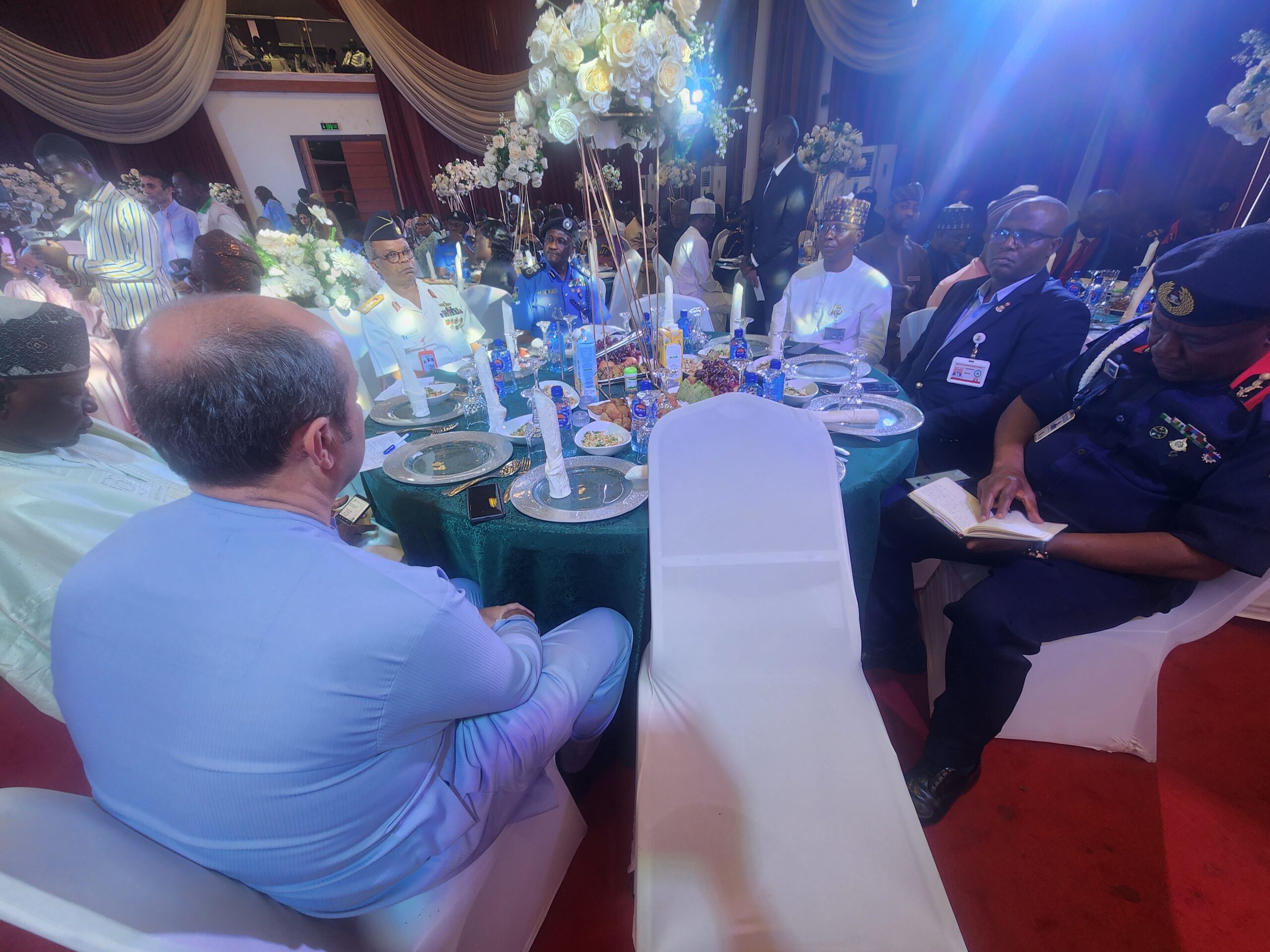
Participants at the event.
For FFA, the proposition is straightforward: where people understand and respect one another’s religious rights, there is greater room for trust; where trust grows, dialogue becomes possible; and where dialogue becomes part of community life, peaceful coexistence becomes more sustainable.
That philosophy has increasingly shaped the organisation’s activities across Nigeria.
In recent months, FFA has taken its advocacy beyond conference rooms in Abuja to communities and institutions across the country. Its engagements have included town hall meetings, youth advocacy programmes, conversations with religious leaders and consultations with traditional rulers.
In Kano, for instance, FFA brought together stakeholders from different religious and social backgrounds to discuss religious freedom, equality and peaceful coexistence. The organisation has also worked with young advocates to strengthen understanding of Freedom of Religion or Belief and equip them with advocacy skills capable of challenging stereotypes, misinformation and narratives that can fuel religious tensions. Its engagement with traditional institutions has also become an important component of the organisation’s peacebuilding strategy.
In June, an FFA delegation led by Samari visited the Emir of Fika, His Royal Highness Dr Muhammad Ibn Abali Muhammadu Idrisa, in Potiskum, Yobe State, where discussions centred on the role of traditional rulers in promoting peaceful coexistence and interfaith understanding. The organisation has similarly engaged other traditional leaders, including the Kwandi Nunguraya, as part of its broader advocacy for religious freedom and social cohesion.
The significance of the Peace Award therefore lies not only in the ceremony in Abuja but also in the body of work that brought Faith and Freedom Africa to the attention of the award organisers.
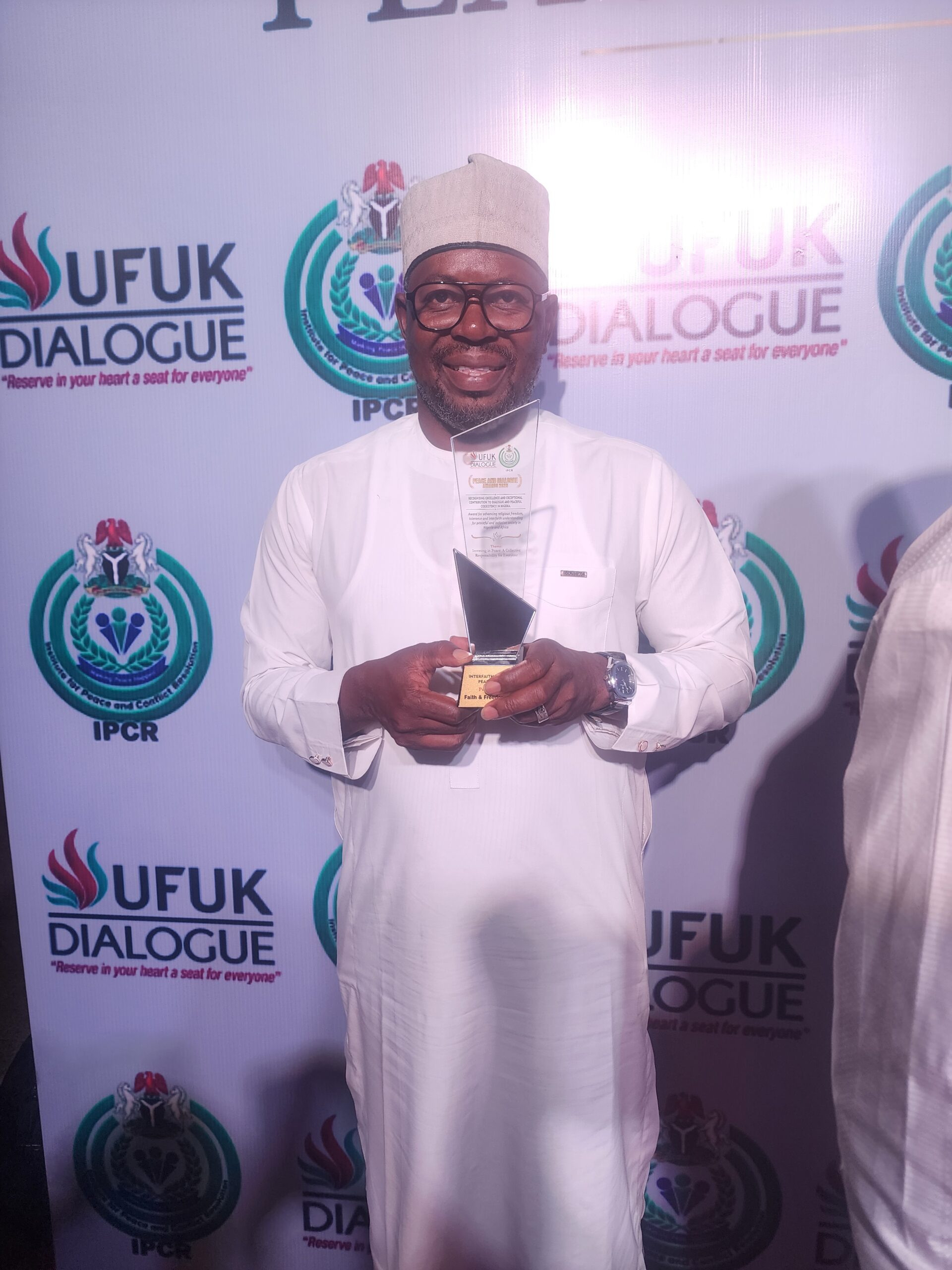
Country Representative, FFA, Mr Felix Joseph Samari at the event.
The recognition placed the organisation within a larger community of Nigerians and institutions working to prevent conflict, strengthen dialogue and create conditions for peaceful coexistence.
That wider community was on full display at the Abuja ceremony.
The Director-General of the Institute for Peace and Conflict Resolution, Dr Joseph Ochogwu, used the occasion to challenge Nigeria to rethink the way it approaches peace.
For years, he argued, societies have invested heavily in responding to violence while comparatively less attention has been given to preventing it.
His intervention was captured in one of the strongest messages of the ceremony: “To invest in peace is to move from rhetoric to resources, from reaction to prevention.”
Ochogwu proposed that government should consider a minimum three per cent peacebuilding allocation across relevant Ministries, Departments and Agencies, while urging the private sector to dedicate at least one per cent of corporate social responsibility resources to peacebuilding.
The proposal placed FFA’s work in a broader policy context.
If peace is to become a national priority, then the work of civil society organisations that promote dialogue, religious freedom and social cohesion must be connected to the larger architecture of conflict prevention.
This is particularly important in Nigeria, where insecurity does not have one face or one cause.
Violent extremism, banditry, communal conflicts, farmer-herder tensions, separatist agitation, displacement, poverty, unemployment, misinformation and social exclusion all contribute to an environment in which distrust can quickly become conflict. Religious misunderstanding can add another dangerous layer.
This is where organisations such as Faith and Freedom Africa seek to intervene before disagreements become crises.
Rather than waiting for violence to occur, the organisation focuses on dialogue, education, advocacy and community engagement.
Its work with young people is particularly significant.
Earlier this year, FFA organised a Religious Freedom Youth Advocacy Cohort in Abuja, bringing together young leaders, faith actors, civil society advocates and development practitioners to deepen their understanding of Freedom of Religion or Belief and develop practical advocacy skills. The programme emphasised dialogue, responsible digital citizenship, mutual respect and the role of young people as agents of peace.
For Samari, young Nigerians occupy a strategic position in shaping the future of the country.
The challenge is not simply to tell young people to reject violence. It is also to give them the knowledge, confidence and platforms to challenge the narratives that make violence possible.
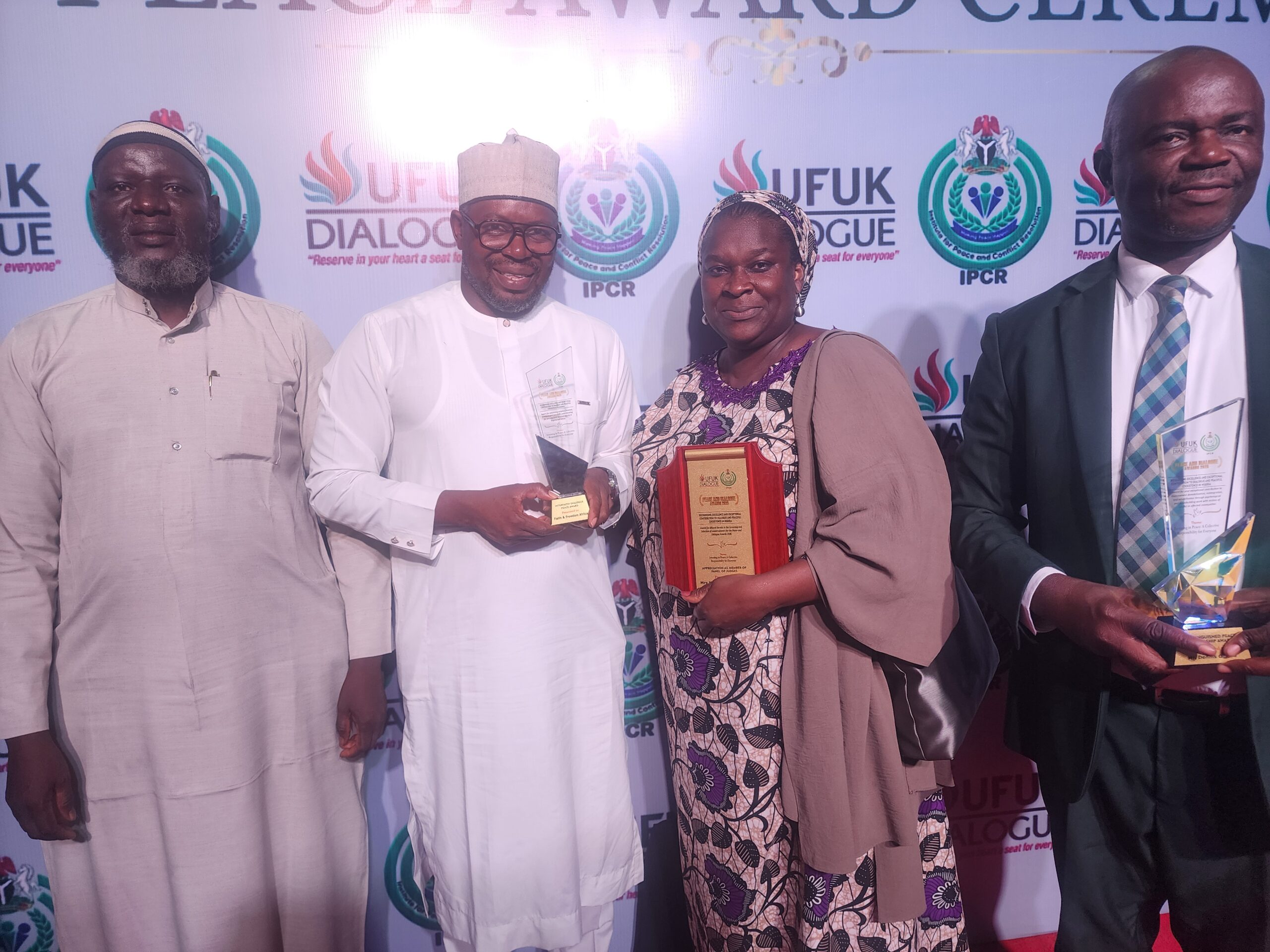
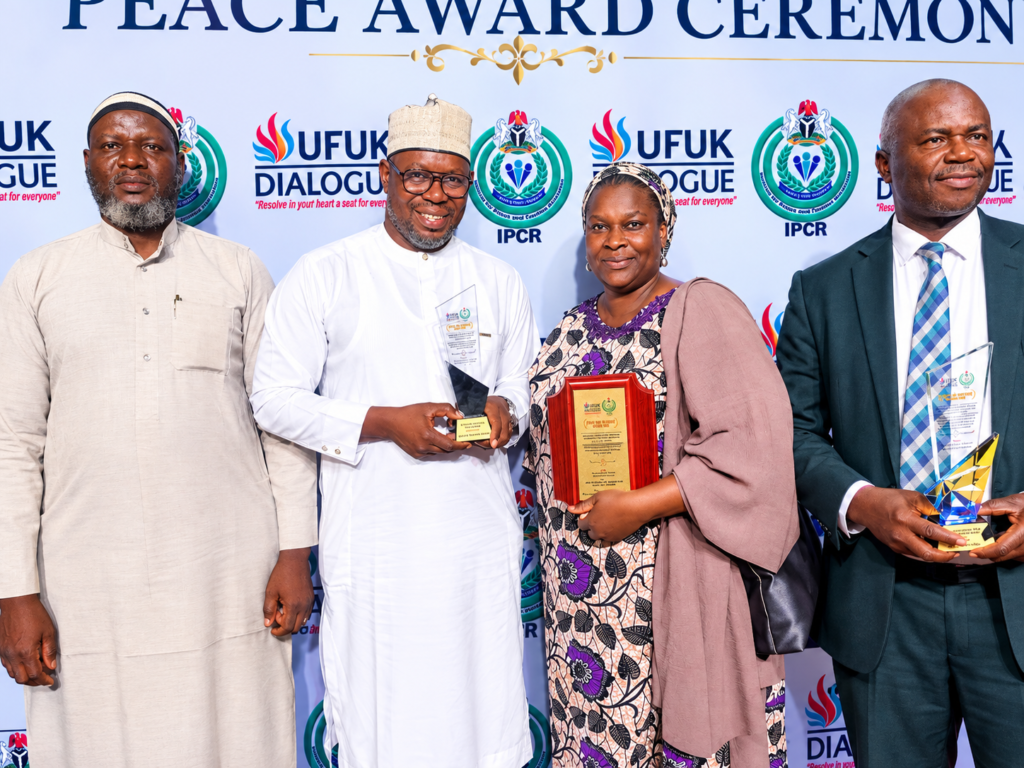
Felix Samari and other recipient in a group photograph.
In a digital age where misinformation can travel across communities within minutes, responsible young advocates can become an important line of defence against religious hatred and social division.
FFA’s town hall approach has similarly sought to bring peacebuilding into communities rather than leaving it exclusively to policymakers and elite institutions.
At a recent town hall in Bauchi, religious leaders, traditional rulers, youth representatives, women groups, civil society actors, academics and media practitioners came together to discuss Freedom of Religion or Belief and peaceful coexistence. The gathering adopted resolutions focused on interfaith dialogue, peace education, responsible social media use and deeper community engagement. That grassroots dimension is important because peaceful coexistence is ultimately experienced at community level.
It is experienced in neighbourhoods, markets, schools, places of worship and families.
It is experienced when a Christian neighbour attends the wedding of a Muslim neighbour, when Muslims and Christians cooperate during community development projects, when religious leaders intervene before tensions escalate and when young people refuse to allow social media propaganda to determine their relationships with one another.
The Abuja awards recognised this broader reality.
The Ufuk Dialogue Foundation President, Emrah Ilgen, emphasised that investing in peace means investing in relationships. That philosophy closely intersects with the work of Faith and Freedom Africa.
Religious freedom is not merely a legal principle. It has a practical relationship with social trust.
When citizens believe that their faith is respected, they are more likely to participate confidently in society. When communities recognise the rights of others, fear and suspicion are reduced. When religious leaders communicate across faith boundaries, stereotypes can be challenged before they harden into hostility. The event therefore provided a platform for a conversation that went beyond Faith and Freedom Africa. It brought together institutions whose responsibilities, although different, converge around the same objective.
The police, represented at the event by Assistant Inspector-General of Police Victor Olaiya on behalf of Inspector-General of Police Olatunji Rilwan Disu, emphasised the relationship between peace, security and democracy.
The police leadership stressed that peace and democracy are mutually reinforcing and that security, like peace, is a collective responsibility.
The National Counterterrorism Centre, represented at the event, also recognised the importance of partnerships with civil society organisations in strengthening peacebuilding and counterterrorism efforts.
Representatives of the National Institute for Legislative and Democratic Studies, the National Defence College and other security and development institutions further demonstrated the breadth of the peacebuilding ecosystem.
It was a gathering in which security professionals shared the same space with civil society advocates, religious actors, researchers, traditional institutions and community-based peacebuilders.
That convergence may be one of the most important messages from the event.
Peace cannot be built by one institution.
The military has a role.
The police have a role.
Government has a role.
Traditional rulers have a role.
Religious leaders have a role.
Civil society has a role.
The media has a role.
And citizens themselves have a role.
The 2026 Peace and Dialogue Awards sought to celebrate that diversity through its various categories, recognising contributions to peace leadership, interfaith dialogue, humanitarian service, youth advocacy, education, media, sport, community peacebuilding, art, culture, gender sensitivity and support for persons with disabilities.
The recognition of Faith and Freedom Africa under the civil society category was therefore consistent with the broader philosophy of the awards.
It acknowledged the role of organised civil society in addressing some of the social conditions that can either strengthen or undermine peaceful coexistence.
For FFA, however, the award is unlikely to represent an endpoint.
The organisation’s growing engagements suggest a strategy based on sustained community presence.
Its work in Kano has focused on dialogue and religious freedom. Its youth programmes have sought to develop a new generation of advocates. Its engagements with traditional rulers have recognised the influence of traditional institutions in conflict prevention. Its wider advocacy has sought to make religious freedom part of the national conversation about peace and human dignity.
In Adamawa, Samari has also emphasised the importance of religious freedom to peace and unity, arguing that citizens should be able to practise their religion without fear, intimidation, discrimination or coercion. He has equally highlighted the role of the media in promoting tolerance and peaceful coexistence.
That emphasis on freedom and dignity provides an important dimension to Nigeria’s peacebuilding conversation.
Conflict prevention is not only about stopping people from fighting.
It is also about creating conditions in which people feel respected, heard and protected.
It is about ensuring that difference does not automatically produce suspicion.
It is about giving communities mechanisms for resolving disagreements before they become violent.
It is about ensuring that religious identity does not become a basis for discrimination.
And it is about giving young people alternatives to hatred and extremism.
This was also reflected in Ochogwu’s description of peace as an “orphan.”
Peace often receives little attention because its success is invisible. When dialogue prevents a crisis, there may be no dramatic headline. When a religious leader resolves a community dispute quietly, there may be no television cameras.
When a youth advocate corrects misinformation before it triggers hostility, there may be no emergency response. But these quiet interventions can save communities from enormous human and economic costs. This is why the proposed investment in peacebuilding matters.
If Nigeria is serious about prevention, then the work of organisations operating at community level must be connected to national policy.
The Peace Investment Tracker Dashboard proposed by IPCR is one attempt to make such investment measurable. Government and stakeholders should be able to identify who is investing in peace, where resources are going and what impact those investments are producing.
That would give greater visibility to the work of civil society organisations, community leaders and other actors whose contributions are often difficult to quantify.
For Faith and Freedom Africa, the Abuja award provides recognition at a moment when its work is expanding.
For the broader peacebuilding community, it provides another reminder that religious freedom and peaceful coexistence are deeply interconnected.
For the Nigerian state, it raises an even larger question.
Can the country move from responding to conflict to preventing it?
Can government, security agencies, civil society, religious leaders, traditional institutions and communities work together before tensions become violence?
Can Nigeria create a culture in which dialogue is considered a strength rather than a sign of weakness?
These questions are particularly important for the younger generation.
Nigeria’s youth population represents an enormous national resource. But without opportunity, inclusion, education and a sense of belonging, young people can become vulnerable to manipulation.
Peacebuilding therefore begins long before violence.
It begins in schools.
It begins in families.
It begins in religious communities.
It begins in social media conversations.
It begins when young people learn that disagreement does not have to produce hatred.
It begins when citizens understand that another person’s religious freedom does not diminish their own.
And it begins when society rewards dialogue as much as it condemns violence.
The recognition of Faith and Freedom Africa at the Abuja awards was therefore more than a ceremonial moment.
It was an acknowledgement of the importance of sustained civil society engagement in Nigeria’s search for peaceful coexistence.
As Samari and the FFA delegation received the award, the moment brought together the organisation’s advocacy for religious freedom and the wider national conversation about peace investment.
The award also placed FFA alongside institutions and individuals whose different areas of work converge around the same national objective: preventing conflict and strengthening peaceful coexistence.
That is perhaps the deeper meaning of the Abuja gathering.
Peace is not the responsibility of government alone.
It is not the responsibility of the security agencies alone.
It is not the responsibility of religious leaders alone.
It is not the responsibility of civil society alone.
It is a shared national responsibility.
And if Nigeria is to build a more peaceful future, the investment must begin before the crisis.
The message from Abuja was therefore clear.
Dialogue must become more than an event.
Religious freedom must become more than a constitutional provision.
Peacebuilding must become more than a response to violence.
And coexistence must become more than a slogan.
For Faith and Freedom Africa, the Peace Award is recognition of a journey already underway.
For the wider peacebuilding community, it is a reminder that some of the most important work is often done quietly—in communities, schools, places of worship, youth networks and conversations where differences are confronted not with hostility but with understanding.
And for Nigeria, the message remains compelling:
Where there is dialogue, there is hope.
Where there is understanding, there is trust.
Where there is trust, there is cooperation.
And where there is peace, there is progress.
Invest in peace. For everyone. Everywhere. Every day.