


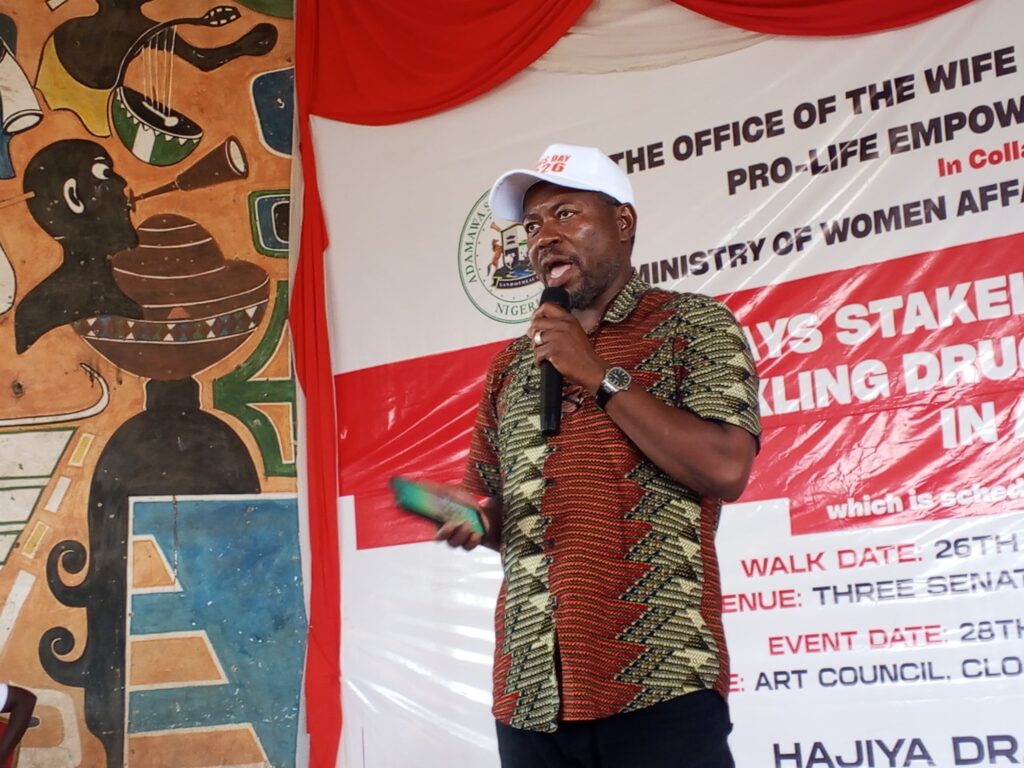
In Adamawa State, Faith and Freedom Africa Country Representative Felix Joseph Samari has called for greater collaboration among religious institutions, community leaders and families to address drug abuse among young people, highlighting Freedom of Religion or Belief (FoRB) as a pathway to social inclusion, peaceful coexistence and healthier communities.
The growing challenge of drug abuse among young people requires more than enforcement and public warnings. It also demands community engagement, moral guidance, counselling and opportunities for young people to discuss the pressures confronting them. These were central to the message delivered by the Country Representative of Faith and Freedom Africa (FFA), Mr. Felix Joseph Samari, during a programme commemorating World Drug Day in Yola, Adamawa State.
Samari delivered the lecture at a two-day programme organised through the Adamawa State Ministry of Women Affairs under the auspices of Her Excellency, Hajiya Lami Ahmadu Umaru Fintiri. The event took place at the Arts and Culture Theatre Hall, Mahmud Ribadu Square, Yola.
Speaking on the relevance of Freedom of Religion or Belief (FoRB) to addressing drug abuse, Samari highlighted the potential of religious institutions and faith-based organisations to support prevention efforts, provide counselling, offer moral guidance and create opportunities for youth development.
He argued that respect for religious freedom could also strengthen cooperation among different faith communities, enabling them to work collectively towards addressing social challenges affecting young people.
For Samari, the relationship between faith and drug abuse prevention extends beyond religious teachings. It also involves building inclusive communities where young people feel supported, listened to and encouraged to make informed decisions about their lives.
Empowering Communities to Protect Young People
A major highlight of his presentation was his appeal to the wives of Local Government Chairmen across Adamawa State to become more actively involved in addressing the challenges confronting young people in their respective communities.
He encouraged them to organise small, informal gatherings where young people could speak openly about their experiences, concerns and aspirations without fear of judgement or intimidation.
Such interactions, he suggested, could provide opportunities to discuss drug abuse, peer pressure, unemployment and other social problems that affect the choices and well-being of young people.
The approach places community participation at the centre of prevention efforts, recognising that parents, religious leaders, community stakeholders and local influencers can help identify emerging problems and connect vulnerable young people with appropriate support.
Creating safe spaces for dialogue could also strengthen trust between young people and community leaders, making it easier to understand the pressures they face and develop practical responses to those challenges.
FoRB as a Platform for Peaceful Coexistence
Samari’s advocacy also drew attention to the wider social significance of Freedom of Religion or Belief. By promoting respect for different religious convictions and encouraging cooperation among faith communities, FoRB can provide a framework for collective action on issues that transcend religious boundaries.
Drug abuse, youth vulnerability and community insecurity are challenges that require sustained engagement from multiple stakeholders. Religious organisations, civil society groups, families and public institutions can contribute by promoting awareness, supporting prevention initiatives and ensuring that young people have access to appropriate guidance and assistance.
Within this context, FoRB serves as a framework for inclusion and peaceful coexistence, creating opportunities for faith communities to contribute to social development while respecting the rights and beliefs of others.
Knowledge-Sharing and Community Transformation
At the conclusion of the programme, Samari presented copies of his books to Her Excellency and other dignitaries in attendance. The presentation underscored his emphasis on knowledge-sharing, youth development and community transformation.
His participation in the World Drug Day programme reinforced Faith and Freedom Africa’s advocacy for the promotion of Freedom of Religion or Belief as a foundation for peaceful coexistence, social inclusion and community engagement.
As communities continue to confront drug abuse and other challenges affecting young people, the call from Yola highlights the importance of combining awareness campaigns with sustained dialogue, supportive community networks and practical youth empowerment initiatives.
Ultimately, protecting young people requires collective responsibility. By bringing religious institutions, community leaders, families and young people into constructive conversations, communities can strengthen prevention efforts and create environments in which young people are better equipped to navigate social pressures and pursue healthier futures.