


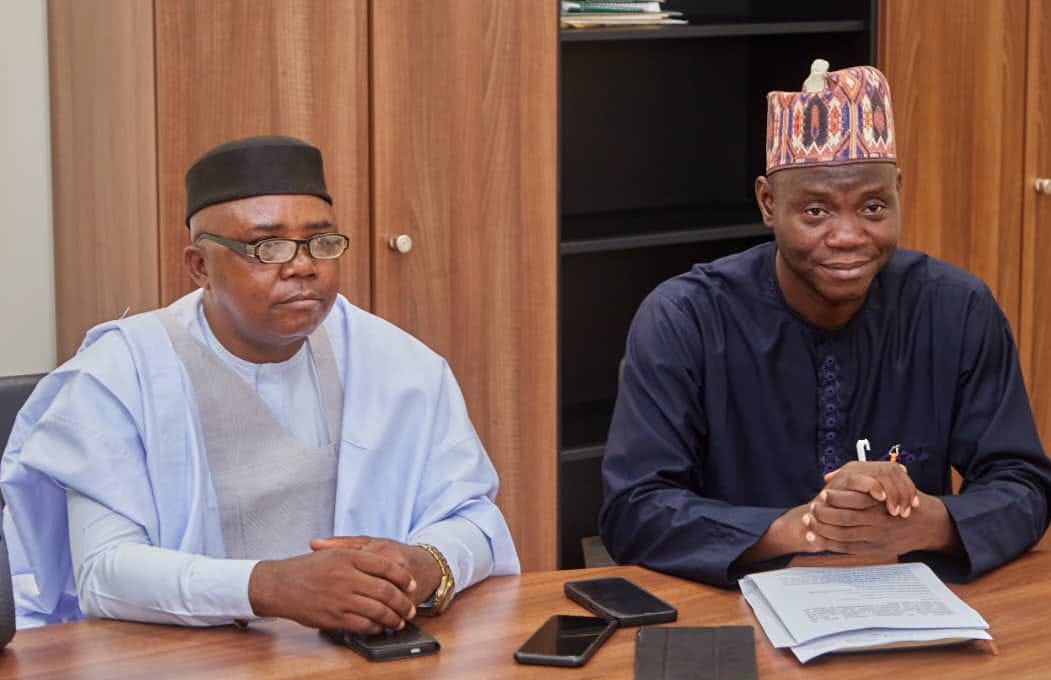
The newly re-elected elected President and the Vice President Investigation of the Nigerian Guild of Investigative Journalists, NGIJ, Mallam AbdulRahaman Aliagan and Comrade James Ezema respectively.
The Nigerian Guild of Investigative Journalists (NGIJ) has called on Nigerians and governments at all levels to ensure that the country’s 66th Independence Anniversary translates into greater freedom from impunity, insecurity, corruption and the culture of silence.
The Guild, in an Independence Day statement signed by its National President, Mallam Abdulrahman Aliagan, and National Secretary, Rowland Shuwa, said Nigeria’s independence should go beyond ceremonial celebrations to include tangible improvements in the lives and welfare of citizens.
NGIJ said the country’s independence struggle was driven by the desire for self-determination, dignity, justice and shared prosperity, stressing that those ideals must remain central to Nigeria’s democratic development.
According to the Guild, the current economic realities confronting millions of Nigerians require honest acknowledgement, responsive leadership and practical solutions.
It noted that despite indications of some moderation in headline inflation, many households were still under pressure from the rising cost of food, transportation, housing, energy and other essential commodities.
“The true test of economic recovery is not merely what the figures indicate, but how significantly it improves the lives of Nigerians,” the Guild said.
On national security, NGIJ expressed concern over the continued threats posed by kidnapping, terrorism, banditry, communal violence, oil theft and other forms of criminality across the country.
While acknowledging the efforts and operational successes of security agencies, the Guild called for sustained vigilance, stronger institutions, intelligence-driven operations and deeper community engagement.
It stressed that every Nigerian should be able to live, work, farm, travel, worship and pursue legitimate aspirations without fear.
The Guild also called for what it described as Nigeria’s “institutional independence from impunity, corruption, institutional failure and the culture of silence.”
According to NGIJ, public office remains a trust and not a personal entitlement, adding that public officials and institutions must remain accountable to citizens and operate with integrity, efficiency and respect for the rule of law.
The Guild further maintained that accountability should not be interpreted as hostility towards government, just as constructive criticism should not be regarded as an attack.
“Both are essential ingredients of democratic governance,” it said.
On the role of the media, NGIJ reaffirmed its commitment to investigative and public-interest journalism, describing investigative journalists as important watchdogs in a democratic society.
The Guild said journalists should not be regarded as enemies of government, but as partners in promoting transparency, accountability, good governance and national development.
It, however, urged journalists to uphold professional standards by verifying information before publication, investigating allegations thoroughly, protecting confidential sources and resisting political manipulation.
The Guild also warned against sensationalism and misinformation, urging media practitioners to increasingly embrace data, technology and innovative investigative methods while remaining conscious of national security considerations.
“National security considerations must not become a blanket justification for suppressing legitimate journalism, just as press freedom must not be used to justify the publication of unverified or harmful information,” NGIJ said.
The Guild also called for greater investment in Nigerian youths, particularly in education, vocational and digital skills, entrepreneurship, technology, creative industries, productive employment and leadership development.
It said young Nigerians should be regarded as innovators, entrepreneurs, professionals, creatives and future leaders rather than merely voters or campaign mobilisers.
On national unity, NGIJ urged political, religious, traditional and community leaders to promote tolerance, mutual respect and peaceful coexistence, saying Nigeria’s diversity should be harnessed as an asset for national development rather than used as an instrument of division.
The Guild said nation-building required an honest assessment of the country’s challenges, recognition of genuine achievements, correction of failures and the courage to pursue necessary reforms.
Reflecting on its own leadership, NGIJ said the Guild would continue to strengthen investigative journalism, promote professional excellence, defend the public interest and contribute to national discourse through credible and evidence-based reporting.
The Guild said its leadership philosophy remained: “Don’t Start Again. Build Forward.”
According to NGIJ, the philosophy also applies to Nigeria as a nation, stressing the need to build on successes, learn from past experiences, correct failures and strengthen institutions capable of delivering a more prosperous and equitable society.
The Guild called on Nigerians to remain hopeful, engaged and committed to nation-building, saying the country owed it to the sacrifices of its founding fathers and the aspirations of present and future generations to build a Nigeria where freedom is meaningful, justice is accessible, leadership is accountable and opportunity is not determined by privilege.