


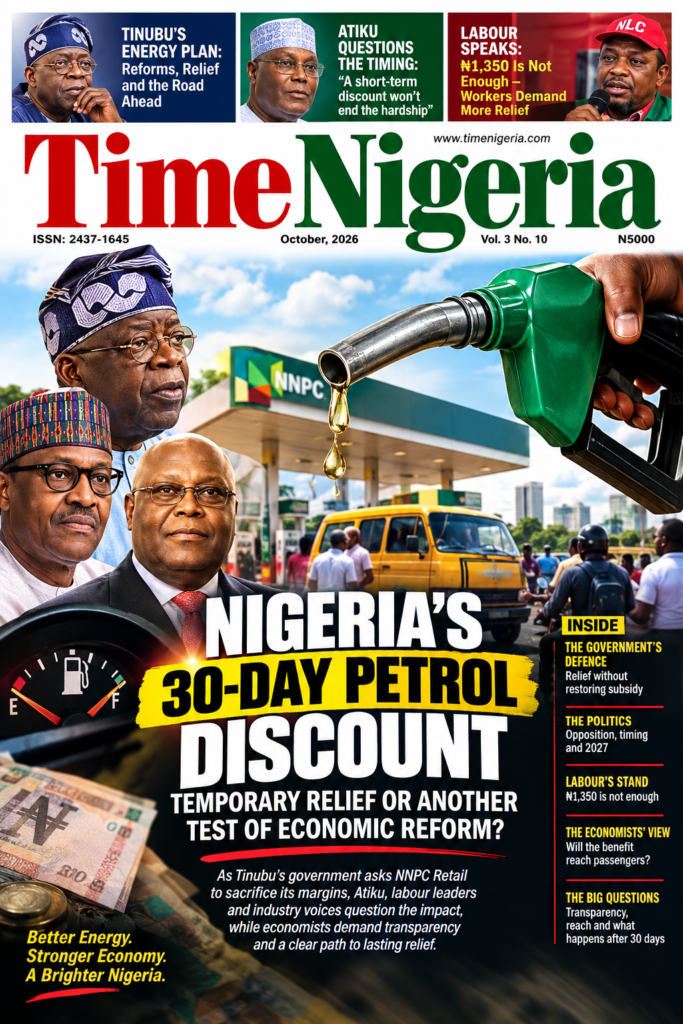
As Tinubu’s government asks NNPC Retail to sacrifice its margins, Atiku, labour leaders and industry voices question the impact, while economists demand transparency and a clear path to lasting relief.
By Abdulrahman Aliagan
For millions of Nigerians who have watched the price of petrol reshape the cost of nearly everything they buy, the Federal Government’s announcement of a 30-day petrol discount has reopened one of the most consequential economic debates since the removal of fuel subsidy in May 2023.
The question confronting the country is deceptively simple: can a temporary reduction in the cost of petrol deliver meaningful relief to households struggling with transportation, food, electricity, production and distribution costs, or will it merely offer a brief reprieve from a crisis whose roots run much deeper?
On October 8, 2026, the Federal Government announced that the Nigerian National Petroleum Company Limited (NNPC) would forgo its retail profit margin on petrol for an initial period of 30 days, selling the product at cost in an effort to cushion Nigerians against rising international oil prices.
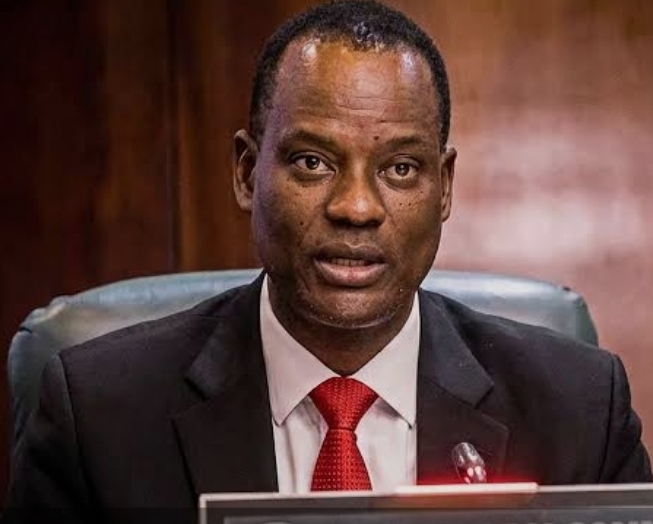
Finance Minister and Coordinating Minister of the Economy, Taiwo Oyedele,
Finance Minister and Coordinating Minister of the Economy, Taiwo Oyedele, said the intervention would initially prioritise public transport operators nationwide.
The following day, the Presidency clarified that the arrangement was backed by President Bola Tinubu and formed part of a wider package of measures intended to moderate the effects of global oil-market volatility on Nigerian households and businesses.
The government insists that the initiative is not a return to the petrol subsidy regime abolished in 2023.
But opposition politicians, organised labour and sections of the business community have challenged both the adequacy of the intervention and the distinction the government draws between a retail discount and a subsidy-like arrangement.
For petroleum economists, the debate is not simply about terminology. It concerns who bears the cost, who receives the benefit, how the intervention is financed and whether the resulting savings will reach ordinary Nigerians.
The stakes extend beyond filling stations. They reach into the daily calculations of a commercial driver deciding what to charge passengers, a trader transporting food to market, a manufacturer running generators and a household struggling to stretch its income until the end of the month.
The 30-day initiative has therefore become a test of economic policy, public confidence and the government’s ability to translate intervention into measurable improvements in living conditions.
The Government’s Defence: Relief without Restoring Subsidy
The administration’s argument rests on a distinction between government-funded fuel subsidy and a temporary decision by a retailer to surrender its profit margin.
Under the arrangement announced by the government, NNPC Retail is to sell petrol at cost during the designated period, with public transport operators receiving priority.
If the company’s cost of acquiring petrol is ₦1,300 per litre, for example, the stated principle is that it would sell at that cost rather than add its usual retail margin.
The distinction matters because the previous subsidy system required public resources to bridge the gap between the regulated pump price and the actual cost of supplying petrol. That arrangement placed considerable pressure on government finances and became a central point of contention in Nigeria’s economic management.
The Tinubu administration ended the subsidy on May 29, 2023, arguing that the savings could be redirected towards infrastructure, social investment and other national priorities.
The present initiative, according to the government, does not reverse that decision. Instead, it seeks to provide temporary relief without reinstating a blanket subsidy funded directly from public revenue.
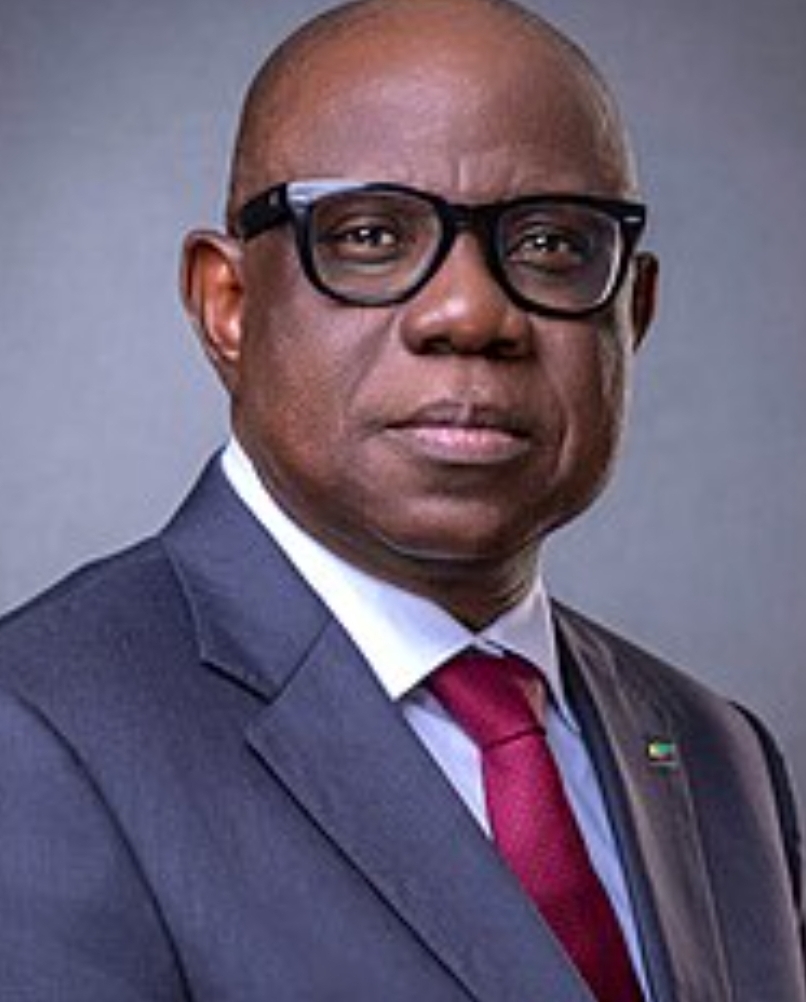
Group Chief Executive Officer (GCEO) and Group Managing Director (GMD) of the Nigerian National Petroleum Company Limited (NNPCL) is Bashir Bayo Ojulari.
In its October 9 clarification, NNPC Limited said the discount would continue until October 31 under its customer-relief initiative, which had begun on October 1 to mark Nigeria’s 66th Independence Anniversary.
The company stressed that the arrangement did not establish a uniform national pump price or alter the market-based pricing framework for petroleum products.
That clarification is significant. It suggests that the intervention should not be interpreted as a nationwide reduction to a single pump price, but rather as a discount arrangement limited to participating NNPC Retail outlets.
The Presidency has also announced complementary measures, including negotiations over a proposed ceiling on petrol’s ex-gantry or landing cost, forward crude sales to domestic refineries, accelerated compressed natural gas deployment, additional support for vulnerable households and consideration of an excess-profit tax on operators found to be exploiting consumers.
These measures indicate that the government recognises that petrol prices affect the wider economy.
Yet the central issue remains unresolved: how much will consumers actually save, and what happens when the discount expires?
The ₦1,350 Question: What Exactly Is Being Capped?
One of the most contentious elements of the government’s announcement is its proposed ₦1,350-per-litre ceiling on the ex-gantry or landing cost of petrol.
Oyedele has explained that the proposed ceiling is intended to prevent sudden increases in international crude prices and exchange-rate movements from immediately translating into higher domestic fuel costs.
Under the proposed arrangement, refiners and importers would initially absorb costs above the ceiling and recover the shortfall later when market conditions improve.
The government argues that smoothing price movements would provide businesses and households with greater certainty than allowing petrol prices to rise sharply during international supply disruptions and fall only after a delay.
However, a critical distinction must be made between a ceiling on the cost at which petrol enters the distribution chain and the final pump price paid by motorists.
The proposed ₦1,350 figure is not necessarily a nationwide retail price. Transportation, distribution, retail margins and other applicable costs may affect what consumers ultimately pay.
This distinction has fuelled public questions about the actual size of the relief.
In its October 9 report, The Guardian cited Nigerian Midstream and Downstream Petroleum Regulatory Authority data showing average pump prices of ₦1,271.56 per litre in July, ₦1,294.50 in August and ₦1,378 in September.
Those figures provide useful context for assessing the proposed ceiling, although they do not establish the price paid by every consumer or the precise discount available at individual stations.
The government must therefore explain clearly how the proposed ceiling will operate alongside the 30-day retail discount.
Without that explanation, Nigerians may struggle to distinguish between a retail-margin concession, a limit on wholesale costs and a general reduction in pump prices.
The policy’s success will depend partly on whether those distinctions are communicated clearly and reflected in actual transactions.
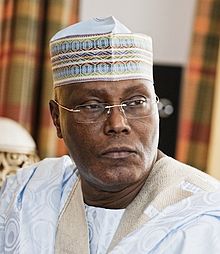
Alhaji Atiku Abubakar, The former Vice-President President and Presidential Candidate of African Democratic Congress (ADC)
Atiku, Obi Supporters and Makinde’s Camp Question the Timing
The political response has been swift, with opposition figures challenging the adequacy of the intervention and questioning why a measure of this nature is being introduced after years of high fuel prices.
Former Vice-President Atiku Abubakar, through a statement issued by Phrank Shaibu, Director of Strategic Communication of the African Democratic Congress Presidential Campaign Council, rejected the intervention as a temporary measure that would leave the underlying cost-of-living pressures unresolved.
Atiku questioned whether the savings would translate into lower transportation fares and what would happen when the 30-day period ended.
His central argument is that a short-term discount cannot, by itself, reverse the cumulative effects of expensive fuel on household budgets, food distribution and business operations.
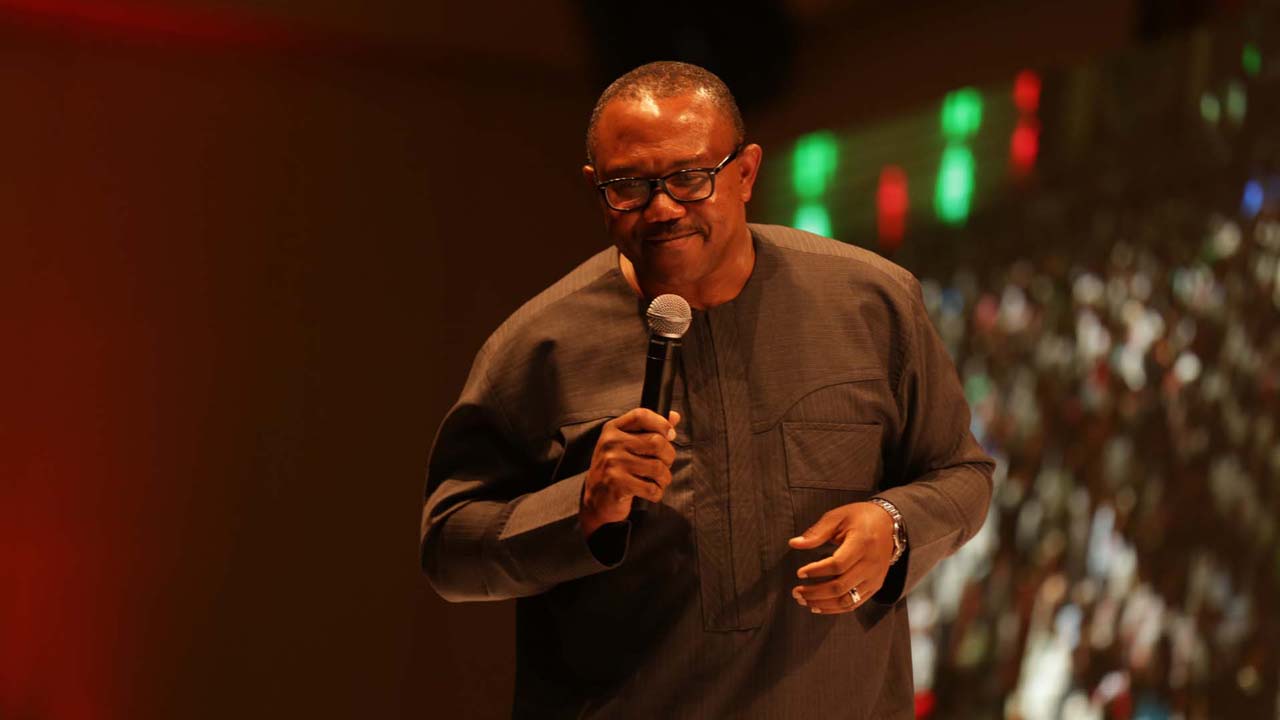
Peter Obi, firmer Governor of Anambra State and the Presidential Candidate of Nigeria Democratic Congress (NDC).
The Obidient Movement has also criticised the initiative.
In a statement by its Director of Media and Communications, Onyeka Dike, the movement questioned why the government was introducing the measure after Nigerians had endured several years of higher energy and living costs following the removal of subsidy.
The movement suggested that the timing could be connected to the approach of the 2027 general elections.
That is a political interpretation advanced by the opposition movement, rather than an established explanation for the government’s decision.
Similarly, the Makinde/Daura Presidential Campaign Organisation, associated with Oyo State Governor Seyi Makinde’s presidential campaign under the Allied Peoples Movement, described the intervention as inadequate and questioned its likely effect on consumers.
The Nigeria Democratic Congress also rejected the scheme, describing it as tokenism and questioning whether a discount restricted to NNPC outlets could reach enough Nigerians to make a meaningful difference.
These criticisms reflect a broader concern: temporary relief may have limited economic value if it does not significantly reduce the cost of transportation and the prices of essential goods.
Nevertheless, the political opposition’s criticisms also leave an important policy question open.
If the discount is inadequate, what specific alternative would deliver more immediate relief without creating unsustainable public liabilities or undermining domestic petroleum investment?
That question deserves the same scrutiny as the government’s proposal.
The debate should not end with competing political accusations. Nigerians need clearly costed alternatives against which the current intervention can be assessed.
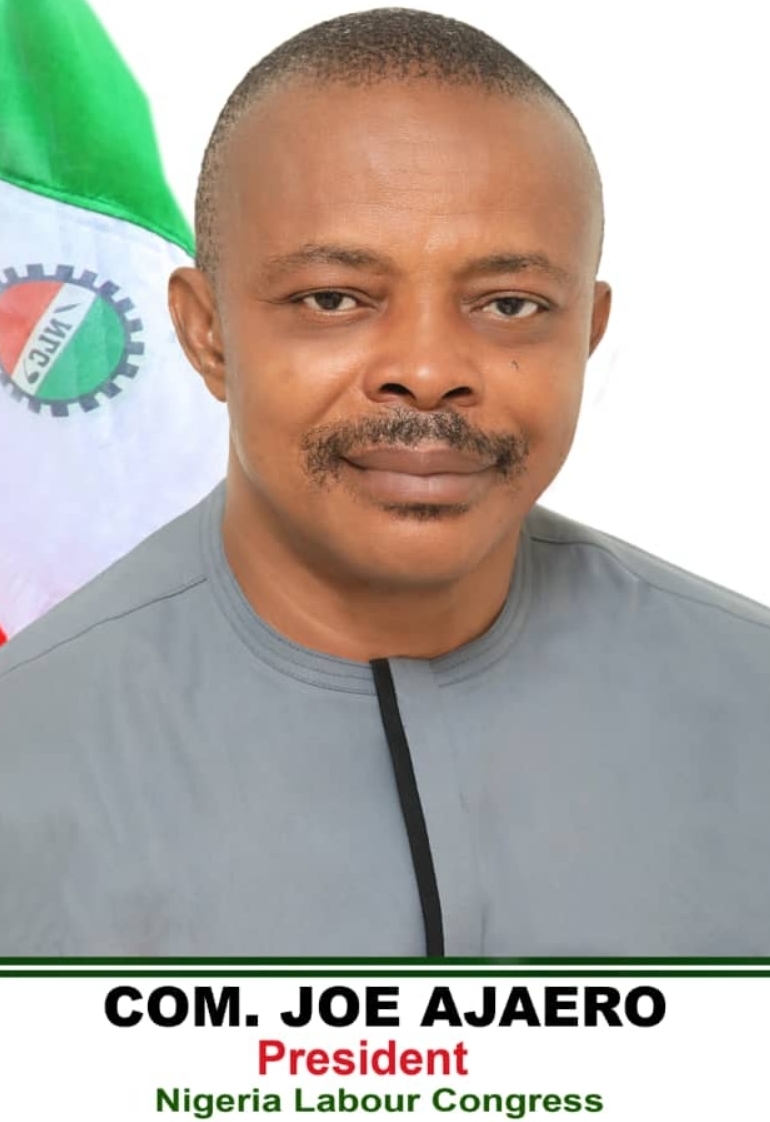
Labour’s Position: ₦1,350 Is Not Enough
Organised labour has delivered some of the sharpest criticism of the intervention, arguing that a discount tied to a price benchmark around ₦1,350 per litre offers insufficient relief to workers already facing high living costs.
The Nigeria Labour Congress, through its Assistant General Secretary, Chris Onyeka, called for a much lower price, arguing that petrol would need to sell below ₦1,000 per litre to provide meaningful relief.
The position reflects labour’s concern that high transport costs consume a significant share of workers’ earnings, particularly for those who commute daily and cannot work remotely.
For these workers, the consequences of high petrol prices extend beyond the cost of filling a vehicle’s tank. They include higher fares, more expensive food, increased distribution costs and the erosion of purchasing power.
The Association of Senior Civil Servants of Nigeria has also questioned whether the proposed benchmark is sufficient to cushion workers against these pressures.
Its National President, Muhammed Shehu, urged the government to use the 30-day window to address structural problems in the petroleum sector, particularly the need for more reliable domestic refining.
Meanwhile, Gbenga Komolafe, General Secretary of the Federation of Informal Workers Organisations of Nigeria, questioned the practical significance of a reduction of approximately ₦50 per litre where the prevailing price is around ₦1,400.
His concern points to an essential economic calculation: a discount’s value must be measured against the actual price paid before the intervention, the volume of fuel purchased and the resulting reduction in household expenditure.
A ₦50 saving per litre would amount to ₦500 on a 10-litre purchase and ₦2,500 on 50 litres, assuming the full reduction is available on every litre purchased.
Such savings are not meaningless to households under financial pressure. However, they may be insufficient to offset the broader increase in transportation, food and other essential expenses.
Labour’s demand for prices below ₦1,000 per litre raises another question: what mechanism would produce that price, who would bear the difference and how would the government prevent the arrangement from creating new financial pressures?
Those are questions that require economic evidence rather than political slogans.
The Economiats’ Test: Does The Benefit Reach Passengers?

Petroleum Economist and Professor Emeritus of Petroleum Economics, Wumi Iledare.
Perhaps the most consequential assessment of the policy comes from petroleum economist and Professor Emeritus of Petroleum Economics, Wumi Iledare.
Iledare has identified a defensible economic rationale for prioritising public transport operators instead of offering a blanket discount to every motorist.
His argument is that the policy should be judged by its intended economic outcomes: lower transportation costs, reduced logistics expenses, moderation of inflationary pressures and protection for vulnerable households.
However, he warned that lower fuel costs for transport operators would not automatically translate into lower fares.
If a commercial driver purchases discounted petrol but continues charging passengers the same fares, the intended benefit may remain with the operator rather than reaching the wider public.
This is arguably the scheme’s most important implementation challenge.
The government is effectively relying on a chain of economic transmission: lower fuel acquisition costs should reduce transport operators’ expenses; lower operating costs should encourage reduced fares; and lower transportation costs should ease the movement of goods and people.
Every link in that chain matters.
If the first link works but the second fails, commuters may see little improvement.
If transport fares fall but distribution costs remain high for other reasons, food prices may not respond immediately.
And if the scheme is inaccessible to operators who do not use participating NNPC stations, its benefits may be unevenly distributed.
Iledare has therefore urged the government to disclose the discount per litre, the volume of petrol covered, the maximum fiscal exposure and the actual financial impact of the intervention.
He also called for transparent reporting of the quantities sold and the results achieved at the end of the 30-day period.
His position offers a practical framework for evaluating the initiative.
Rather than judging the scheme solely by the announcement or the number of participating stations, Nigerians should ask whether fares declined, whether logistics became cheaper and whether vulnerable households experienced measurable relief.
Those outcomes can be investigated and independently verified.
Is It a Subsidy By Another Name?
The government has been emphatic that the discount does not restore petrol subsidy.
But the economic interpretation is more complicated.

Muda Yusuf, Chief Executive Officer of the Centre for the Promotion of Private Enterprise,
Muda Yusuf, Chief Executive Officer of the Centre for the Promotion of Private Enterprise, has described the arrangement as a form of subsidy, although different from the previous blanket regime.
His reasoning is that NNPC Retail is giving up income it would ordinarily earn from its retail margin to make petrol available at a lower price.
The company therefore bears an economic cost, even if the government does not directly reimburse it from the public purse.
This distinction is important because the term subsidy is often used broadly in public debate, even though different mechanisms can have different consequences for government finances, businesses and consumers.
A direct government subsidy may involve public expenditure or revenue foregone to reduce the price paid by consumers.
A retailer-funded discount, by contrast, may be financed through a temporary reduction in the retailer’s earnings.
The two arrangements are not identical.
However, the fact that the government describes the initiative as a discount does not eliminate the need to examine its economic incidence.
If NNPC Retail voluntarily absorbs the cost from its own margin without compensation, the arrangement is materially different from a government-funded subsidy.
If the company later receives compensation, preferential treatment or another financial benefit linked to the discount, the assessment could change.
The relevant question is therefore not simply what the arrangement is called, but how it works in practice.
Who pays? Who benefits? Is the cost recovered later? What effect does it have on NNPC’s finances? And what obligations, if any, does the arrangement create for the government?
These are the questions that financial disclosures should answer.
The Transparency Challenge: Hiw Much Fuel Is Actually Covered?
A further issue is the scheme’s reach.
NNPC Retail operates a national network of filling stations, but its outlets represent only a fraction of Nigeria’s total retail fuel infrastructure.
The Guardian, in its October 9 report, cited figures of approximately 900 NNPC outlets out of about 22,700 registered filling stations.
These figures suggest that a discount confined to NNPC stations may not be equally accessible to motorists in every community.
For consumers who live far from participating outlets, the cost of travelling to buy discounted petrol could reduce or eliminate the value of the saving.
The concern is particularly relevant to rural communities, smaller towns and areas where alternative fuel stations are more readily accessible than NNPC outlets.
This challenge has prompted the Petroleum Products Retail Outlets Owners Association of Nigeria (PETROAN) to seek a role in distributing the discounted product.
The association has asked the government to allocate 30 per cent of the petrol covered by the scheme to its members, arguing that their wider geographical spread could extend the intervention to underserved communities.
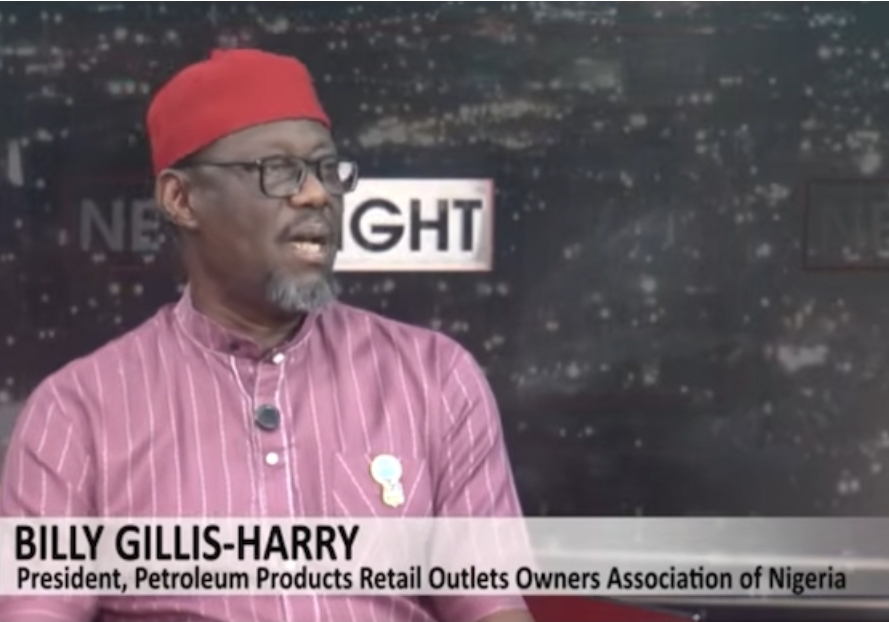
PETROAN’s National President, Billy Gillis-Harry, has welcomed the recognition of transportation’s importance to the economy while calling for clear guidelines on the discount, eligibility, distribution and monitoring.
The proposal deserves consideration, although extending the arrangement through private retailers would require a transparent framework.
Such a framework would need to establish how participating outlets are selected, how discounted supplies are allocated, how prices are verified and how the government prevents diversion or abuse.
It would also need to clarify whether participating retailers would surrender their own margins or receive supplies on different commercial terms.
Without such safeguards, a broader distribution arrangement could complicate the very transparency it is intended to improve.
But if properly structured, participation by additional retailers could make the intervention more accessible to communities beyond the immediate reach of NNPC stations.
The policy challenge is to expand access without obscuring the costs or weakening accountability.
A Different Proposal: Can Domestic Crude Pricing Lower Petrol Cost?

A Legal Practitioner and former President of the Nigerian Bar Association, Olisa Agbakoba.
Beyond the immediate dispute over the 30-day discount, a more structural proposal has emerged from legal practitioner and former President of the Nigerian Bar Association, Olisa Agbakoba.
Speaking at the 2026 conference of the Association of Energy Correspondents of Nigeria, Agbakoba argued that Nigeria should reconsider the terms on which crude oil is supplied to domestic refineries.
He proposed a crude-price differential that, in his view, could support a petrol price of around ₦400 per litre.
His argument is that Nigeria, as a crude-oil-producing country with expanding domestic refining capacity, should examine whether crude supplied to local refiners must always be priced on the same basis as crude sold internationally.
He cited domestic pricing arrangements in other oil-producing countries as examples of how energy policy can be designed around national economic priorities.
The proposal represents a fundamentally different approach from NNPC Retail’s temporary discount.
Rather than asking a retailer to surrender its margin for a month, it seeks to alter an upstream cost that influences the price of refined petroleum products.
However, the suggested ₦400 price should be understood as Agbakoba’s policy proposal, not an established estimate of the price at which Nigerian petrol could immediately and sustainably be sold.
The economic implications would depend on the price assigned to crude, refining efficiency, operating costs, exchange-rate exposure, distribution expenses, taxes and the treatment of any difference between domestic and international crude prices.
A crude-price concession could reduce input costs for local refiners, but the extent to which those savings would be passed on to consumers would depend on the structure of the market and the policy’s implementation.
It would also raise questions about the opportunity cost of selling crude domestically at a discount instead of obtaining international market value.
The government would need to weigh potential consumer benefits against revenue implications, incentives for domestic investment and the need for a financially sustainable petroleum sector.
Nevertheless, Agbakoba’s proposal brings an important question into focus: should Nigeria’s petroleum policy concentrate primarily on cushioning consumers after prices rise, or should it also address the underlying cost structure of domestic refining?
The two approaches are not necessarily mutually exclusive.
Temporary relief may help households during a period of exceptional volatility, while structural reforms could address the factors that determine domestic prices over the longer term.
The difficulty lies in designing both in ways that are transparent, economically defensible and sustainable.
The Wider Package: More than A Discount
The Federal Government has presented the 30-day initiative as part of a wider response to rising energy costs.
Among the additional measures announced are forward sales of crude to domestic refineries, a proposed ceiling on petrol’s ex-gantry or landing cost, expanded deployment of compressed natural gas, increased support for vulnerable households and subsidised credit for small businesses and consumers.
The government has also indicated that it is working with states and security agencies to address road taxes and levies that increase transportation and logistics costs.
In addition, it has proposed considering an excess-profit tax on operators found to be taking undue advantage of consumers, with proceeds intended to support measures such as transport assistance and vouchers for vulnerable urban workers.
A National Strategic Fuel Reserve is also part of the announced policy direction, with the stated objective of releasing refined products under published rules during supply disruptions or episodes of hoarding that threaten market stability.
If implemented effectively, these measures could address several channels through which fuel prices affect the economy.
But announcements and implementation are different stages of policymaking.
The public will need to know which measures are already operational, which remain under negotiation and which require further legislation or administrative arrangements.
For example, the proposed petrol-cost ceiling depends on an agreed mechanism for handling temporary increases and subsequent recoveries. The fuel reserve requires operational rules, transparent procurement and release procedures, while targeted support for vulnerable households needs clear eligibility and delivery arrangements.
The government must also explain how these interventions will interact with market-based pricing and domestic refining.
A comprehensive package can be more effective than an isolated discount, but only if its individual components are coordinated and their results can be measured.
What Happens When The 30 Days End?
The expiry question may ultimately determine whether Nigerians regard the intervention as meaningful relief or a short-lived concession.
Fuel prices influence transport fares, food distribution and production costs, but these prices do not always move in tandem.
When petrol becomes more expensive, transport operators may quickly raise fares to cover their operating costs. When petrol becomes cheaper, fares may not fall at the same speed, particularly if operators face other rising expenses.
The same problem applies to food prices.
Traders and distributors may increase prices when transportation costs rise, but a subsequent reduction in fuel costs does not guarantee an immediate reversal.
Consequently, a temporary petrol discount cannot be assumed to produce an equivalent reduction in the prices of goods and services.
For the policy to have a durable impact, the government would need to establish how it intends to protect consumers against a return to higher costs after the initial period.
Would the discount end automatically after 30 days? Could it be extended? Under what conditions? Would an extension depend on international oil prices, domestic supply, the performance of transport fares or the financial position of NNPC Retail?
These are legitimate questions, not necessarily arguments for or against the policy.
A clearly defined exit strategy would help businesses plan, prevent uncertainty and make it easier to distinguish a temporary emergency response from an open-ended price intervention.
The government should also publish the criteria for assessing whether the initiative has achieved its objectives.
If the discount reduces transport fares and improves the movement of goods, the evidence should be made public.
If the benefits are limited, the reasons should be identified and the policy adjusted accordingly.
The end of the 30-day period should be an opportunity for evaluation, not simply the return of the same argument over whether the initiative was a subsidy.
The Accountability Test: Six Questions the Government Must Answer
For the intervention to command public confidence, the Federal Government and NNPC Retail should provide clear answers to six questions.
First, what is the actual discount per litre?
Nigerians need to know the price before the discount, the price during the discount and the circumstances in which the offer applies. A broad announcement is insufficient if customers cannot establish what they are saving.
Second, how much petrol will be covered?
The total volume allocated to the initiative, the number of participating outlets and the distribution of supplies across states should be disclosed.
Third, who bears the cost?
NNPC Retail should explain the value of the retail margin being surrendered, how the arrangement affects its finances and whether any direct or indirect government compensation is involved.
Fourth, how will transporters pass the savings to passengers?
If public transport operators are prioritised, the government should publish a mechanism for monitoring fuel purchases and transport fares. The objective should be to ensure that the intended beneficiaries receive a measurable share of the savings.
Fifth, how will the scheme reach underserved communities?
The government should explain whether additional retailers can participate and what safeguards would govern the allocation and sale of discounted petrol.
Sixth, what happens after 30 days?
A published review should establish the scheme’s total cost, the volume sold, the savings achieved, the impact on transport fares and the decision on whether the arrangement will end, continue or be modified.
These questions would help move the discussion away from competing claims and towards evidence.
They would also provide a basis for independent assessment by economists, consumer groups, labour organisations, journalists and civil society.
The Verdict Must Come from the Evidence
Nigeria’s 30-day petrol discount has exposed a fundamental tension in the country’s energy policy.
On one side is the government’s argument that it can provide temporary relief by asking NNPC Retail to forgo its margin without restoring the former blanket subsidy.
On the other are opposition politicians and labour leaders who argue that the intervention is too limited to reverse the hardship associated with high fuel prices.
Industry stakeholders are also asking how the initiative can reach more communities, while economists insist that the benefits must be measured rather than assumed.
These positions are not entirely irreconcilable.
A temporary retail discount may provide some immediate savings to eligible consumers. That does not necessarily mean it is sufficient to resolve the cost-of-living crisis.
Equally, criticism of the intervention does not eliminate the possibility that a well-designed, transparent and properly monitored discount could deliver limited but useful relief.
The decisive issue is implementation.
If NNPC Retail sells petrol at a lower cost but transport fares remain unchanged, the benefit to commuters may be limited. If discounted supplies are concentrated in areas where participating outlets are accessible, consumers elsewhere may receive little or no relief. If the government does not publish the financial details, questions about the arrangement’s true cost will persist.
Conversely, if the scheme produces verifiable reductions in transport expenses, extends access to vulnerable communities and operates without hidden public liabilities, it could demonstrate how temporary market interventions can complement broader economic reforms.
The longer-term challenge remains the need for a petroleum sector that supplies products reliably, supports efficient domestic refining, encourages investment and reduces the vulnerability of households and businesses to sudden price shocks.
That challenge cannot be resolved in 30 days.
But the period can establish whether the government is prepared to subject its intervention to measurable standards and public scrutiny.
For Nigerians, the most meaningful outcome will not be the language used to describe the initiative, the political controversy surrounding its announcement or the number of press conferences held in its defence.
It will be the difference the policy makes to the cost of getting to work, moving food to market, running a business and feeding a family.
Ultimately, the 30-day petrol discount should be judged not by the relief promised at its announcement, but by the relief Nigerians can verify before it expires.
Aliagan, is an Abuja-based Journalist, the Group Managing Editor of Time Nigeria Magazine and President of Nigerian Guild of Investigative Journalists, NGIJ.