


The future of Nigeria’s healthcare system may well depend on what happens outside hospital wards, in laboratories where diseases are studied, scientific discoveries are made and solutions to some of the country’s most pressing health challenges are developed. Beyond the doctors, hospitals and medical equipment, there is a critical foundation that determines how effectively a nation can protect the health of its people: medical research.
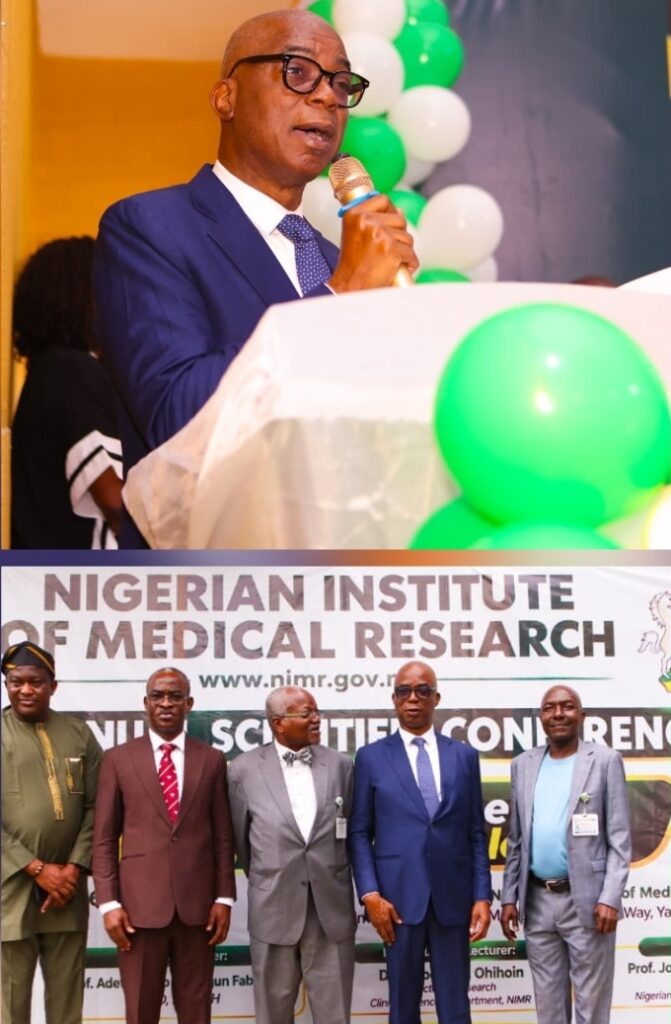
This was the central message of Dr Tunji Olowolafe at the 2026 Annual International Scientific Conference of the Nigerian Institute of Medical Research (NIMR), where he made a compelling case for placing scientific research at the heart of Nigeria’s healthcare transformation.
Speaking as Chairman of the conference, themed “Health Research in the Era of Advanced Technology,” Olowolafe described NIMR as an institution whose importance to Nigeria extends far beyond scientific investigation. Established in 1920, decades before Nigeria attained independence, the Institute has a mandate to investigate the health challenges of Nigerians, strengthen research capacity and translate scientific discoveries into evidence that can shape public policy.
In many ways, the work of institutions such as NIMR determines how prepared a country is to confront its health challenges. From understanding the nature of diseases to developing effective treatments, anticipating outbreaks and guiding government interventions, medical research provides the knowledge upon which sustainable healthcare policies and solutions are built.
Olowolafe recalled the Institute’s contributions during the Ebola crisis and the COVID-19 pandemic, noting that these experiences underscored the importance of having strong indigenous research institutions. However, he believes Nigeria must move beyond responding to health emergencies and develop the capacity to produce its own vaccines, medicines and other essential medical solutions.
He stressed that the country should by now be building the laboratories, expertise and infrastructure required to investigate emerging diseases and respond to them with speed and confidence. The ambition to strengthen local production of medicines and vaccines, he noted, must be backed by research, with institutions such as NIMR providing the scientific foundation.
He also highlighted the growing influence of advanced technology in reshaping medical research and healthcare delivery. Artificial intelligence is helping researchers identify patterns in medical data that might otherwise take years to uncover, while technology is improving disease surveillance and enabling public health authorities to anticipate outbreaks and plan their responses.
Robotics is equally expanding the possibilities of modern surgery, while artificial intelligence and language models are changing how medical professionals access information and interact with patients. Citing the pioneering robotic telesurgery undertaken by Dr Adedamola Dada and his team at Redeemer’s University in September 2026, Olowolafe noted that such developments demonstrate the exciting possibilities emerging from the intersection of science and technology.
Ultimately, his message was that Nigeria’s healthcare ambitions must be matched by deliberate investment in research, innovation and local scientific capacity. Improving access to hospitals and healthcare professionals remains important, but building the knowledge and technological capabilities to prevent diseases, develop treatments and produce essential medicines locally is equally critical.
He also expressed the hope that the conference would go beyond the exchange of ideas and discoveries to inspire practical partnerships and a more ambitious commitment to strengthening research institutions. In this regard, he welcomed the prospect of a lasting partnership between the Tunji Olowolafe Foundation and NIMR to support the Institute’s important work.
The larger lesson is that a healthier Nigeria will not be built in hospitals alone. It will also emerge from the laboratories, research centres and scientific institutions where tomorrow’s medical breakthroughs are being developed. Investing in these institutions is, therefore, not merely an investment in science; it is an investment in the lives, wellbeing and future of the Nigerian people.