


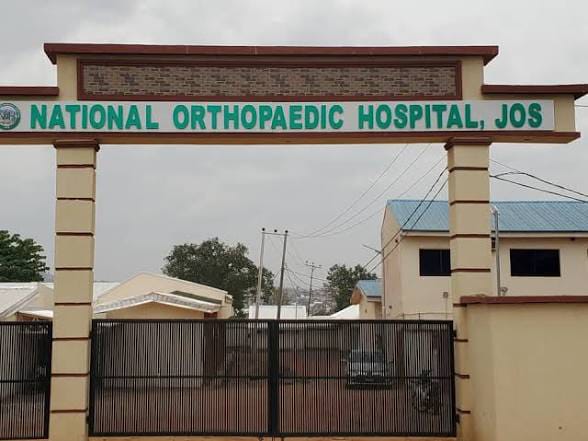
The management of the National Orthopaedic Hospital, Jos, has dismissed misleading reports surrounding the medical treatment of late Bilat Raphael, a student of the College of Nursing Sciences, Anaesthesia Programme, Jos University Teaching Hospital (JUTH), insisting that emergency medical care was promptly administered following his arrival at the hospital.
Raphael, who was reportedly awaiting his final result, was brought to the hospital’s Accident and Emergency (A&E) Unit on Monday, November 16, 2026, after he suddenly collapsed on a football pitch.
In a press statement issued on Thursday, November 19, the hospital expressed condolences to the deceased’s family, colleagues, the College of Nursing Sciences community and the medical profession, while presenting what it described as a verified clinical timeline of events to clarify public concerns over his treatment.
According to the hospital, Raphael arrived at the A&E Unit at about 6:05 p.m. in a clinically unresponsive state, pale, cold to the touch, with fixed and dilated pupils and a Glasgow Coma Scale (GCS) score of 3/15.
The management said the doctor on duty was immediately notified, while nurses commenced resuscitation efforts and established an intravenous line after accompanying students reportedly attempted to carry out the procedure themselves.
A random blood sugar test conducted on the patient reportedly returned a reading of 8.4 mmol/L, while the attending doctor confirmed that he was clinically unresponsive following cardiac arrest.
The hospital said normal saline infusion, 200mg of intravenous Hydrocortisone, Adrenaline and supplemental oxygen were administered as cardiopulmonary resuscitation (CPR) continued.
It added that cardiac monitoring revealed a body temperature of 31 degrees Celsius, with unrecordable pulse, blood pressure and oxygen saturation, while the patient remained unresponsive despite medical intervention.
However, the hospital alleged that the resuscitation process was disrupted by a large crowd of student nurses who overwhelmed the A&E Unit, internal security personnel and Nigeria Security and Civil Defence Corps (NSCDC) operatives.
According to the statement, the agitated students obstructed medical specialists from taking full control of the patient’s management, insisting on performing endotracheal intubation themselves and administering doses of intravenous Adrenaline, reportedly up to six ampoules, as well as Atropine, against the attending physician’s advice.
The management said the situation made it difficult for medical personnel to maintain full control of the resuscitation process, despite repeated appeals for calm and adherence to established clinical protocols.
Following prolonged resuscitation efforts, the hospital said the students requested an ambulance to transfer Raphael to JUTH, where he was expected to receive further medical attention.
At the time of the transfer request, the patient’s temperature had reportedly dropped to 30 degrees Celsius, oxygen saturation was 42 per cent, while his pulse and blood pressure remained unrecordable.
The hospital said a second doctor on duty managed to navigate through the crowd to reassess the patient, counsel the students on his critical condition and formally approve the transfer.
The ambulance was deployed at 8:59 p.m. and departed at 9:05 p.m., accompanied by a nurse, a hospital porter and student representatives, with resuscitation continuing throughout the journey.
Raphael was reportedly handed over to the Accident and Emergency team at JUTH at 9:20 p.m., while the ambulance returned to base at 10:05 p.m.
The hospital also disclosed that another student from the same group was brought to its A&E Unit in critical condition during the incident but was promptly attended to and successfully stabilised, eventually regaining consciousness.
While expressing sympathy with the students over the loss of their colleague, the management warned that interference with medical personnel and the unauthorised administration of emergency drugs could compromise patient care and undermine established medical procedures.
It reaffirmed its commitment to providing emergency healthcare, upholding medical ethics and saving lives, urging the public to disregard unverified accounts of the incident and allow peace and due process to prevail.
The hospital’s statement comes amid public concerns and reports surrounding the circumstances of Raphael’s treatment and death, with management insisting that its medical team responded promptly and deployed emergency interventions upon his arrival.