


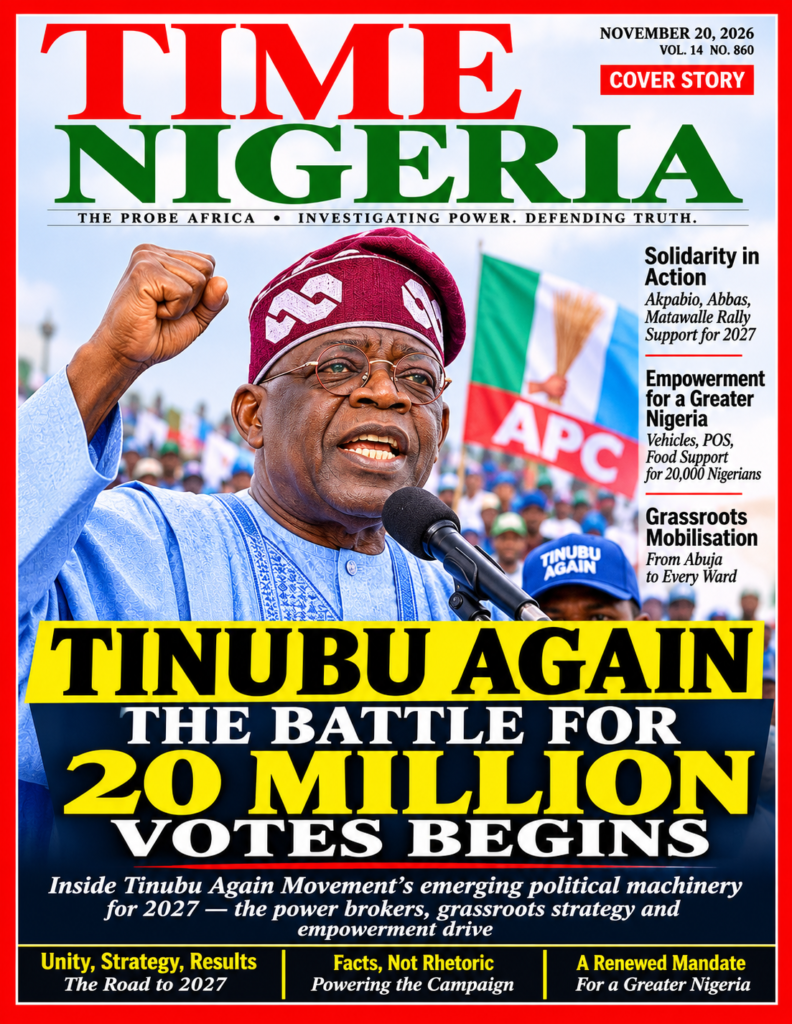
Akpabio, Abbas, Matawalle assemble political heavyweights in Abuja as vehicles, POS empowerment and grassroots mobilisation take centre stage in a campaign to consolidate Tinubu’s re-election ambition
By Abdulrahman Aliagan
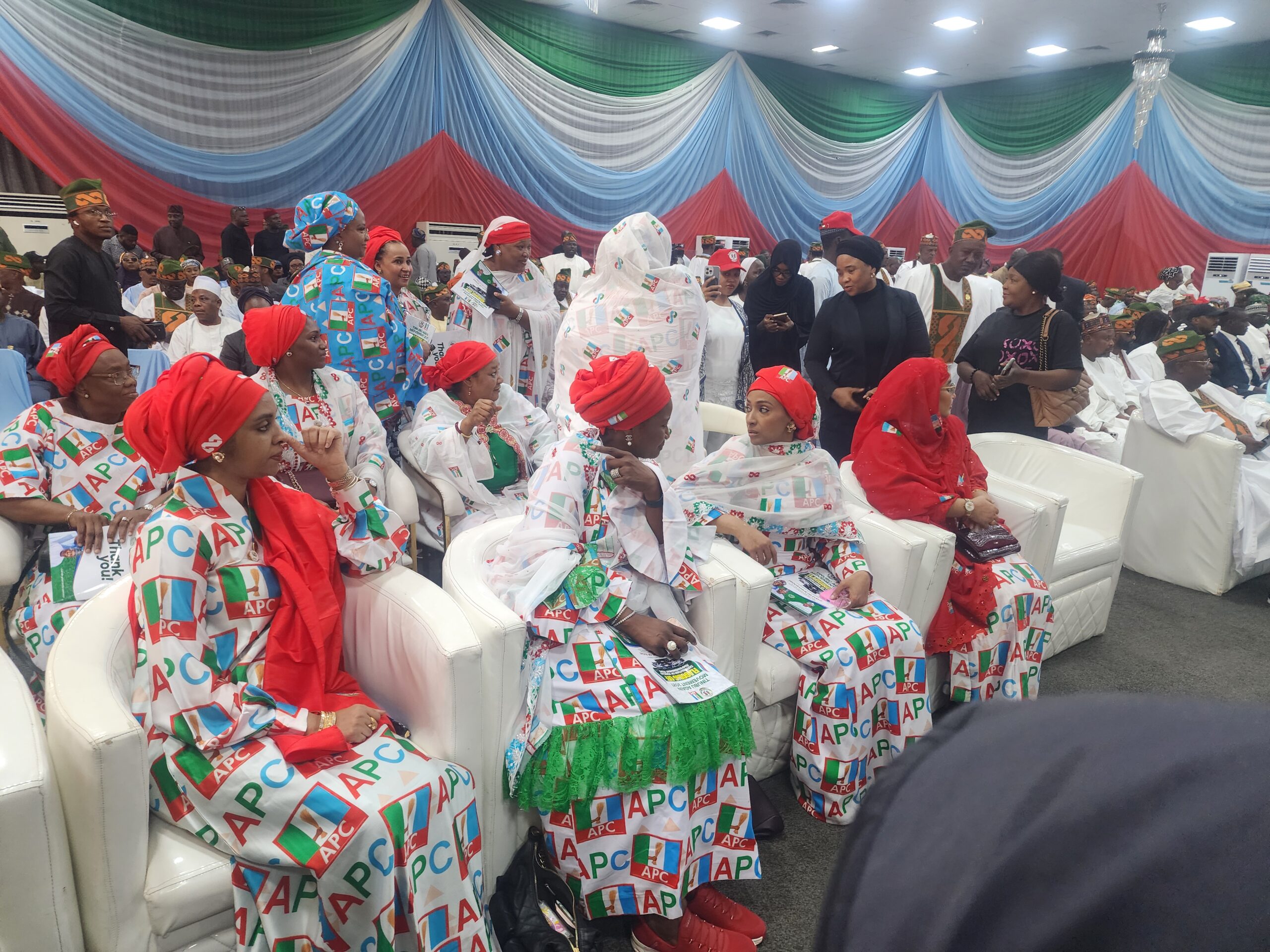
The 2027 presidential election may still be some distance away, but the political calculations surrounding it are already taking shape. In Abuja on Friday, November 20, 2026, a gathering of powerful political figures, serving and former government officials, party leaders, legislators and grassroots mobilisers offered a glimpse into the machinery being assembled for President Bola Ahmed Tinubu’s second-term ambition.
At the NAF Centre, Kado, the inauguration of the Tinubu Again Movement was not merely another political gathering punctuated by speeches, endorsements and declarations of loyalty. It was a demonstration of the growing determination among Tinubu’s political allies to organise, consolidate and mobilise support ahead of a consequential electoral contest in 2027.
The movement’s central ambition is unmistakably bold: 20 million votes for President Tinubu.
That figure, repeatedly projected during the inauguration, raises questions beyond the excitement of political mobilisation. What does a 20-million-vote target mean in the architecture of Nigeria’s electoral politics? What kind of political network is required to deliver it? How does a movement translate the presence of political heavyweights into voter confidence, and how does it move from Abuja’s elite political corridors to the communities, wards and polling units where elections are ultimately decided?
The answers may determine whether Tinubu Again becomes a formidable electoral instrument or another political support structure whose enthusiasm is strongest at inauguration ceremonies but weakest at the ballot box.
The arithmetic of political ambition
The 20-million-vote target is not a casual political slogan. It represents an attempt to establish a measurable electoral ambition around Tinubu’s re-election and to give the movement a numerical benchmark against which its mobilisation efforts could eventually be assessed.
In Nigeria’s presidential politics, victory is determined not merely by the intensity of political support but by its geographical spread, electoral concentration, voter turnout and the ability to secure votes across states and geopolitical zones.
A 20-million-vote ambition therefore requires more than political endorsements. It demands a functioning mobilisation architecture capable of identifying supporters, persuading undecided voters, maintaining political relationships, monitoring local sentiment and ensuring that those mobilised actually participate in the election.
It also requires a degree of political coordination that support groups frequently struggle to achieve.
The Tinubu Again Movement appears to be positioning itself around this challenge, with structures involving national, zonal, state, local government, ward and polling-unit coordinators expected to drive its activities.
The significance of this structure lies not necessarily in the number of coordinators appointed but in the operational capacity they can demonstrate.
A national coordinator may command political attention. A state coordinator may convene influential stakeholders. A local government coordinator may mobilise hundreds. But the real electoral value of such a structure is determined by what happens at the polling-unit level, where political conversations are converted into votes.
That is where the movement’s ambition will face its first serious test.
A political coalition of heavyweights
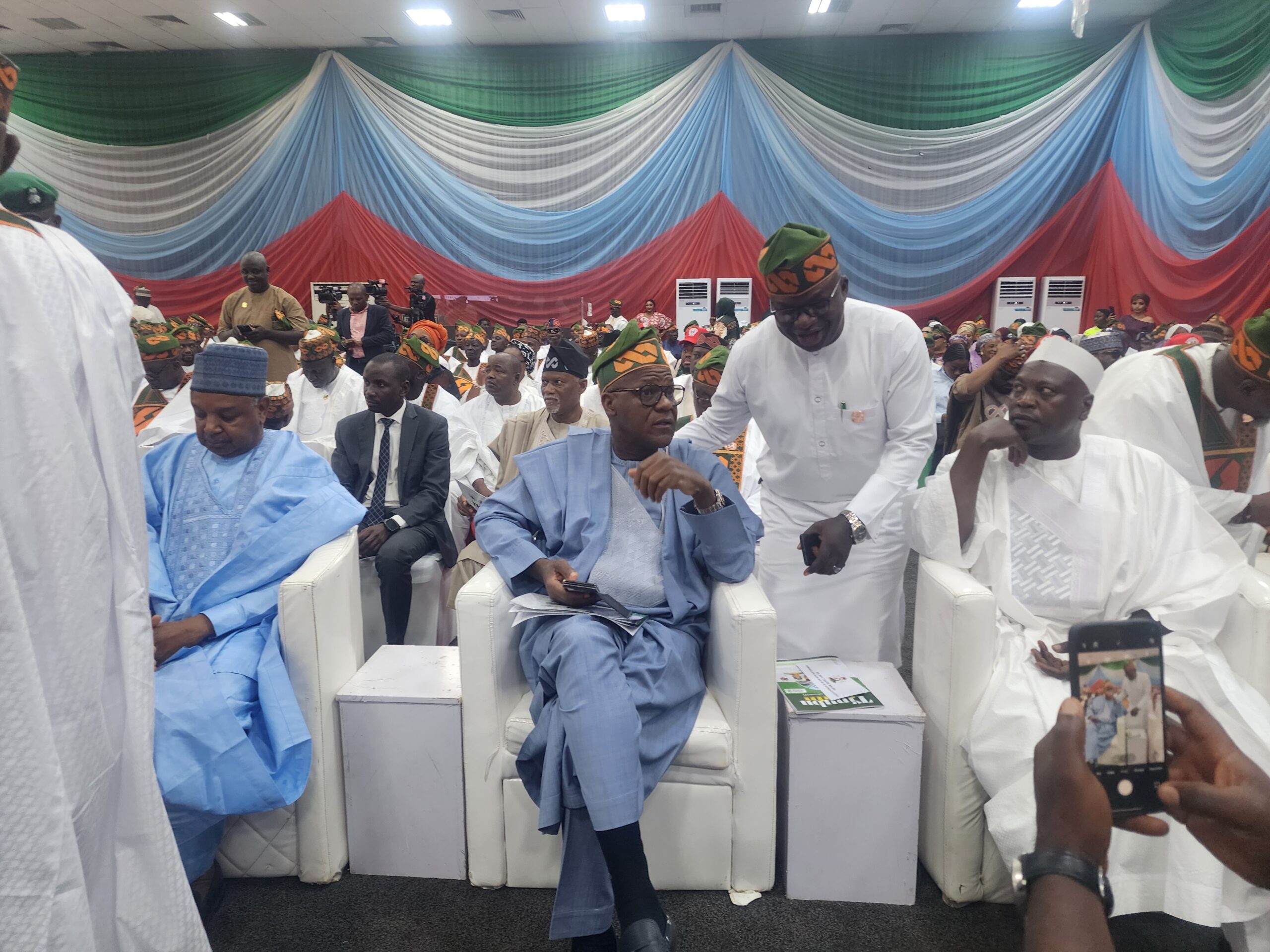
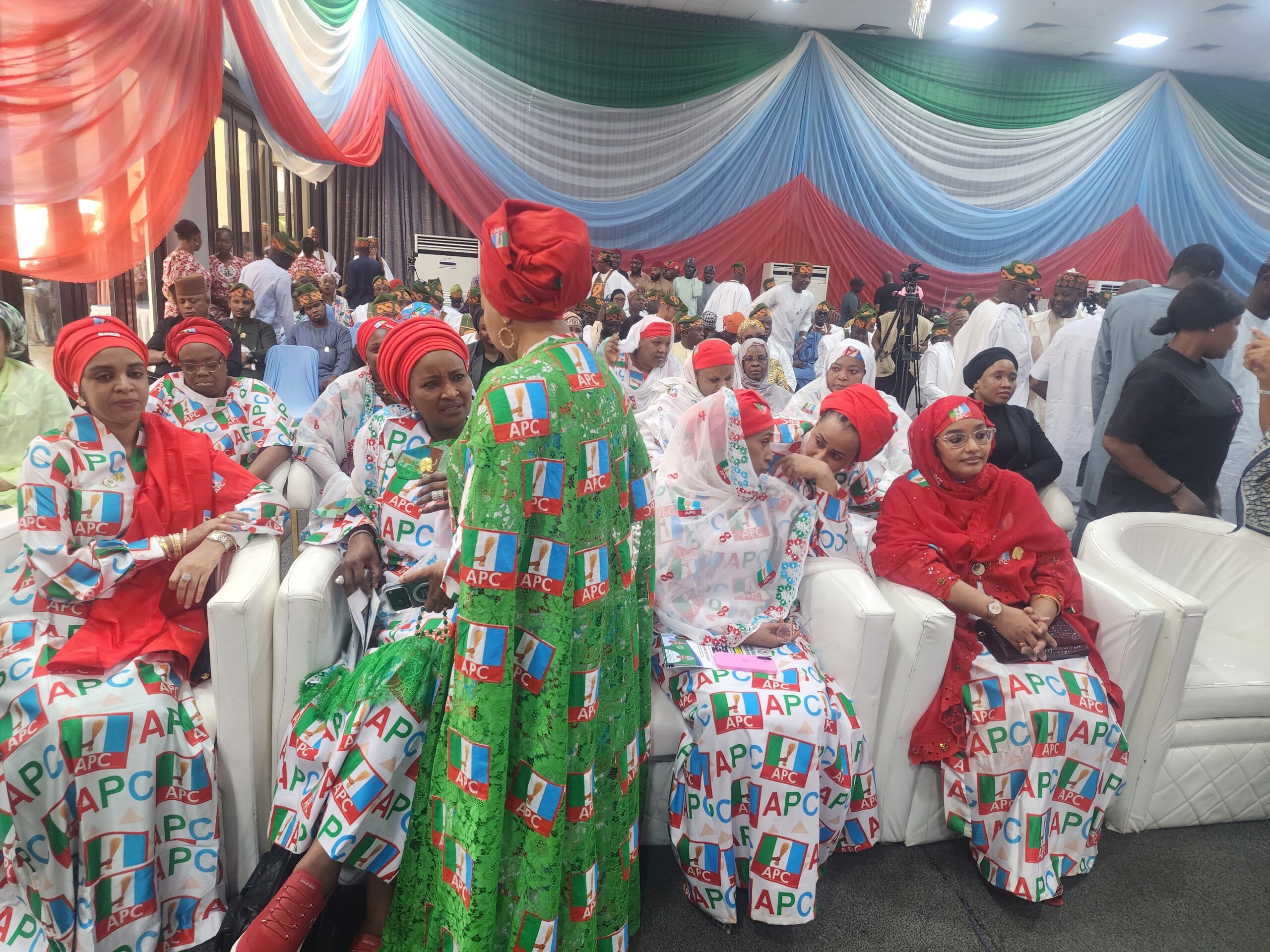
The inauguration attracted an impressive array of political figures, reflecting the movement’s effort to establish itself as a national platform rather than a regional or narrowly defined support group.
The President of the Senate, Godswill Obot Akpabio; Speaker of the House of Representatives, Tajudeen Abbas; APC National Chairman, Professor Nentawe Yilwatda; Convener of the movement, Dr. Bello Mohammed Matawalle; and several former governors, ministers, lawmakers and political stakeholders were among the prominent personalities at the event.
Former governors Atiku Bagudu, Mahmud Aliyu Shinkafi, CON, and Jibrilla Bindow, alongside Senator Bamidele Opeyemi and other dignitaries, added to the political weight of the gathering.
The presence of these figures served two purposes.
First, it projected confidence in Tinubu’s re-election project and reinforced the message that influential actors within the ruling political establishment were prepared to work towards its consolidation.
Second, it provided the movement with access to political networks, institutional relationships and structures that could be deployed for mobilisation across different parts of the country.
Yet, in Nigerian politics, political weight does not always translate automatically into electoral value.
The presence of a former governor at a political event may attract attention, but the critical question is whether his political network remains functional. The endorsement of a national political figure may strengthen a campaign, but its value depends on whether it influences voters beyond the immediate circle of political loyalists.
For Tinubu Again, the challenge will be to convert political capital into grassroots influence.
Matawalle’s gamble: From political solidarity to mobilisation infrastructure
For Dr. Bello Mohammed Matawalle, the convener of the Tinubu Again Movement and Minister of State for Defence, the inauguration represents an opportunity to build a platform that extends beyond conventional political endorsements.
The movement’s architecture suggests an ambition to create a nationwide network of supporters and coordinators capable of mobilising for Tinubu’s re-election while combining political advocacy with empowerment and community engagement.
The strategy is significant because Nigerian electoral politics is increasingly shaped by the interaction of formal party structures, political support groups, community networks, associations, youth organisations, professional groups and individual political actors.
Support groups have become important instruments in expanding political reach beyond party structures, particularly where they can attract individuals who may not necessarily be active party members but are sympathetic to a candidate or political agenda.
However, the proliferation of political support groups also creates a problem of coordination.
Several groups may claim the same voters, compete for visibility, duplicate mobilisation efforts and struggle to establish clear responsibilities. Without effective coordination, the apparent size of a political coalition may not reflect its actual electoral strength.
Tinubu Again will therefore have to establish more than a presence across the country. It will need to demonstrate organisation, discipline, accountability and measurable activity.
The 20-million-vote target provides the ambition. The structures must provide the delivery mechanism.
Akpabio’s message: The politics of unity and persuasion
Senate President Godswill Akpabio, in his remarks, expressed confidence in the movement’s ability to achieve its target, urging its members to take the mobilisation campaign to communities across the country.
His message was particularly instructive on the need for unity, peaceful political engagement and the avoidance of confrontation.
Akpabio argued that supporters of the President must be prepared to defend the administration’s policies and communicate its achievements to Nigerians. He referenced the economic reforms of the Tinubu administration, including fuel subsidy removal, financial and economic reforms, and the student loan programme.
He also cautioned campaigners against allowing themselves to be provoked into violence, urging them to remain focused on the electoral objective.
The emphasis on peaceful mobilisation is significant in an increasingly competitive political environment where political disagreements can easily escalate into confrontation, particularly at grassroots level.
A successful political movement must not only mobilise supporters; it must also manage them. Political enthusiasm without discipline can become a liability, while a campaign anchored on persuasion, organisation and peaceful engagement can strengthen its credibility.
The movement’s challenge is to ensure that its supporters understand that electoral victory is achieved through the ballot, not intimidation, hostility or political violence.
Abbas raises the question of political intelligence
If Akpabio’s message was about unity and mobilisation, the Speaker of the House of Representatives, Tajudeen Abbas, brought the conversation closer to the practical realities of political campaigning.
His advice was direct: political campaigners must know what they are talking about.
Abbas warned against sending supporters into the field without equipping them with accurate information about the government’s achievements, ongoing projects and planned programmes.
He argued that Nigerians could no longer be persuaded through empty slogans or emotional appeals unsupported by facts.
His illustration of an encounter with a political opponent in Kaduna was particularly revealing.
The Speaker recalled meeting an individual who believed that President Tinubu had not done enough for Kaduna State. According to Abbas, he challenged the man’s perception by presenting some of the administration’s projects, appointments and investments in the state.
The encounter, he said, changed the man’s perception.
Whether such an encounter represents a broader pattern of voter opinion or an individual experience, the political lesson Abbas drew was clear: effective campaigning requires information, preparation and the ability to engage scepticism.
He urged Tinubu Again coordinators to undertake a detailed review of Federal Government achievements in their respective states, senatorial districts and local government areas.
Campaigners, he said, must be able to identify what has been done, where it was done, when it was done and how it affects the people.
This approach could prove crucial in 2027.
Nigerians facing economic pressures, insecurity, unemployment and rising living costs are unlikely to be persuaded merely by the repetition of political slogans. They may demand explanations, evidence and tangible improvements in their lives.
The movement’s campaigners will therefore have to confront questions about the administration’s record, not merely celebrate it.
They must be prepared to discuss both policy intentions and outcomes, and to engage criticism without becoming defensive.
The warning against campaigning to the converted
One of the most consequential observations made at the inauguration was Abbas’s warning against concentrating mobilisation efforts on supporters who are already convinced.
He advised the movement to devote greater attention to undecided voters, sceptical Nigerians and those who currently support opposition political parties.
This is a critical distinction between political visibility and electoral strategy.
A crowded rally can demonstrate enthusiasm. A large audience can create an impression of political strength. A procession of vehicles can attract attention.
But none of these necessarily translates into votes.
The real political work lies in identifying voters who are yet to make up their minds, understanding their concerns, addressing their questions and convincing them that the administration deserves another mandate.
The movement’s 20-million-vote ambition will be determined partly by its ability to reach beyond its existing support base.
The challenge is not simply to make Tinubu supporters louder.
It is to make the President more persuasive to those who are not yet convinced.
Empowerment as political mobilisation
The inauguration also featured announcements of substantial empowerment initiatives, adding an economic and social dimension to the movement’s political strategy.
Organisers announced plans for the distribution of more than 1,000 vehicles, 20,000 Point-of-Sale terminals with ₦100,000 start-up support for each beneficiary, as well as food items for 20,000 Nigerians.
These initiatives, if implemented as announced, could provide assistance to beneficiaries while also creating an extensive network of individuals connected to the movement through its empowerment programmes.
The POS initiative is particularly noteworthy because it is linked to a form of small-scale economic activity capable of providing income opportunities for beneficiaries.
With 20,000 proposed beneficiaries receiving POS terminals and ₦100,000 each, the programme represents a substantial financial commitment and could create opportunities for small businesses and individuals seeking entry into the retail financial services sector.
The food distribution programme, meanwhile, speaks to the immediate needs of households facing economic pressures.
The vehicles announced for distribution could strengthen the movement’s operational capacity, particularly if deployed to support coordinators, outreach programmes and mobilisation activities across the country.
However, the scale of these initiatives also raises important questions about implementation.
Who qualifies for the vehicles? How will POS beneficiaries be selected? What mechanisms will ensure that the ₦100,000 support reaches the intended recipients? Will the programmes be distributed equitably across states and geopolitical zones? What monitoring and accountability measures will be put in place?
For a movement seeking to build national credibility, transparent implementation may be as important as the announcements themselves.
Empowerment programmes can create goodwill, but their long-term value depends on whether they produce meaningful benefits for recipients rather than merely generate publicity.
The Tinubu administration’s economic narrative
The political mobilisation around Tinubu’s re-election is also closely tied to the administration’s effort to defend its economic reforms.
The removal of fuel subsidy, changes in foreign exchange management, fiscal reforms and efforts to expand access to financing have significantly altered the economic landscape since Tinubu assumed office.
The administration has argued that these reforms are necessary to address longstanding structural distortions and establish a more sustainable economic foundation.
However, the immediate effects of the reforms have been accompanied by considerable hardship for many Nigerians, including higher transportation costs, rising food prices and pressure on household purchasing power.
This creates a difficult political environment for the President’s supporters.
They must explain the rationale for the reforms while acknowledging the realities confronting ordinary Nigerians.
Political persuasion is likely to be more effective when it recognises people’s lived experiences rather than dismisses their frustrations.
The Tinubu Again Movement will therefore need to balance its defence of government policies with an understanding of the concerns that may influence voters in 2027.
The question is not merely whether the government has introduced reforms.
It is whether Nigerians believe those reforms are producing, or will produce, improvements that justify another mandate.
The grassroots question
Abbas’s insistence on ward-level, local government and polling-unit mobilisation points to what may be the most important element of the Tinubu Again Movement’s strategy.
Nigeria’s elections are not won in conference halls.
They are won through political networks that can reach voters, maintain relationships, mobilise participation and operate effectively on election day.
A national support group with thousands of coordinators may appear impressive. But its real strength is determined by the number of active supporters it can reach, the quality of its organisation, its understanding of local issues and its ability to mobilise voters without relying entirely on political elites.
This is why the movement’s structures must be more than names on lists.
They must become operational units with clearly defined responsibilities, measurable targets and a system for tracking mobilisation.
The movement’s 20-million-vote target will require an understanding of voter demographics, geographical distribution, electoral trends, local political dynamics and the concerns of communities.
It will require a strategy that recognises the differences between urban and rural voters, young people and older voters, economically vulnerable households and middle-income groups, as well as the political realities of different states.
A national campaign cannot be effective if its message is disconnected from local realities.
The opposition and the changing political landscape
The 2027 presidential contest is expected to be shaped by competition among political parties, alliances, movements and individual political actors seeking to influence the direction of national politics.
For Tinubu’s supporters, the challenge will be to defend the administration’s record, consolidate its existing political base and persuade voters who may be dissatisfied with current economic conditions.
The opposition, meanwhile, is likely to seek opportunities to exploit public frustrations, internal political disagreements and concerns about the cost of living.
In this environment, support groups such as Tinubu Again could become increasingly important as instruments of political communication, grassroots mobilisation and coalition building.
But their effectiveness will depend on whether they can operate independently of the conventional political cycle in which mobilisation intensifies during election periods and diminishes afterwards.
A movement that maintains consistent engagement with communities, responds to local concerns and provides opportunities for participation could develop a stronger political identity than one built primarily around campaign events.
The real test of 20 million votes
The inauguration of Tinubu Again Movement was a strong political statement of intent.
It demonstrated the willingness of prominent political figures and supporters to organise around the President’s re-election ambition and presented a framework for nationwide mobilisation.
But the 20-million-vote target remains an ambition that must be tested against the realities of Nigeria’s electoral politics.
The movement must answer several questions.
Can it build functional structures across the country?
Can it coordinate its numerous stakeholders without internal competition?
Can it reach voters beyond the traditional APC base?
Can it defend the administration’s record with facts and credible arguments?
Can its empowerment initiatives deliver transparently and meaningfully?
Can it maintain peaceful, issue-based engagement in a highly competitive political environment?
And, perhaps most importantly, can it translate the political energy generated in Abuja into measurable support across communities and polling units?
These are the questions that will determine the movement’s relevance as the 2027 election approaches.
The inauguration has provided the platform, the political endorsements and the ambition.
The work of building an electoral machine, however, begins after the applause has faded.
Twenty million votes cannot be secured through declarations alone. They require organisation, persuasion, trust, consistency and a political structure capable of reaching Nigerians where they live, work and make decisions about their future.
For Tinubu Again Movement, Abuja was the beginning of the mobilisation story. The ballot box will eventually provide its verdict.
Aliagan, an Abuja-based seasoned Journalist, Managing Editor of Time Nigeria Magazine and President of Nigerian Guild of Investigative Journalists (NGIJ) was at the event and