


By Uthman Abayomi
Stakeholders at the Interfaith Leadership Conference organised by the Mohawal Charity Foundation, with support from the Nigeria Youth Futures Fund (NYFF), have called on the Federal Government to establish a Ministry of Interfaith or Religious Affairs as a long-term solution to Nigeria’s persistent religious tensions.
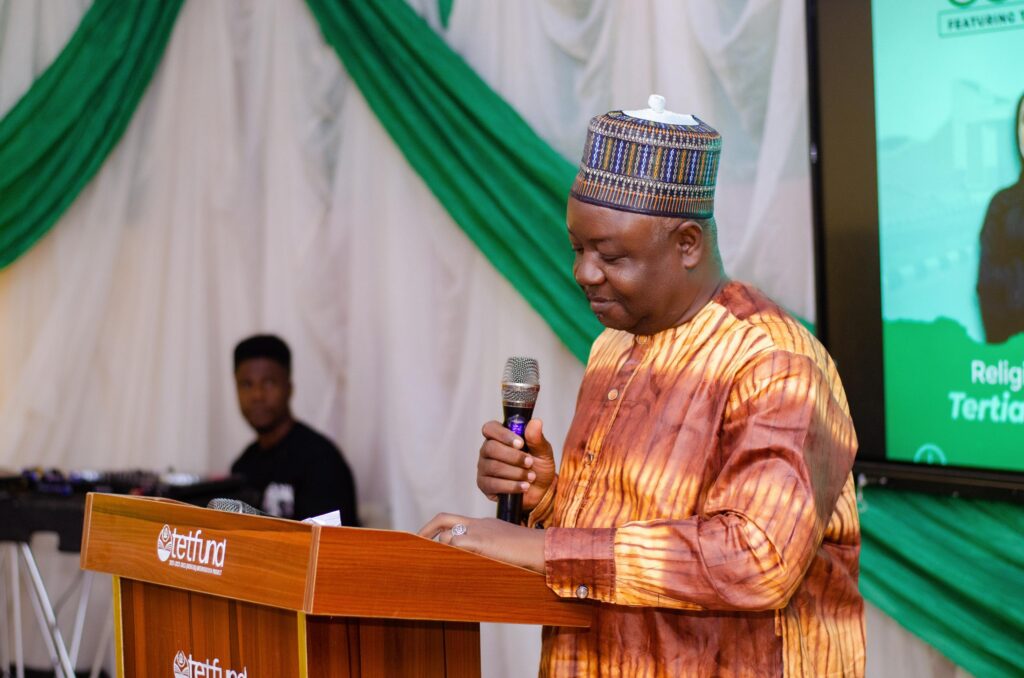
The call was spearheaded by Professor Isiaka Zubair Aliagan, Dean of the Faculty of Information and Communication Technology, Kwara State University (KWASU), Malete, during his keynote presentation at the conference held at the KWASU International Conference Centre on Thursday.
According to Prof. Aliagan, Nigeria can no longer afford to treat religious crises with ad-hoc responses, warning that unregulated preaching and the politicisation of faith continue to fuel extremism and social instability.
“Religion, aside from poor governance, has become one of the major challenges confronting Nigeria,” Aliagan stated. “We need a Ministry of Interfaith or Religious Affairs, staffed by trained professionals, to regulate religious activities, license preachers, and promote peaceful coexistence across faith lines.”
He cited Malaysia, Saudi Arabia, and other countries where structured oversight of religious affairs has helped curb extremist preaching and ensure responsible religious propagation. The recommendation was unanimously adopted as part of the conference communiqué, marking a key policy outcome of the event.
The conference, themed “Beyond Belief Boundaries: Advancing Interfaith Understanding and Religious Tolerance in Nigerian Campuses,” brought together students from multiple tertiary institutions, academics, facilitators, and civil society actors to discuss practical strategies for promoting peace within Nigerian universities.
Earlier in his welcome address, Founder of Mohawal Charity Foundation, Lawal Muhammed Oluwasina, described the conference as a response to growing religious misinformation and intolerance among young people.
“Campuses are mirrors of the larger society,” Oluwasina said. “If we can nurture tolerance, dialogue, and respect here, then we are laying a strong foundation for a more peaceful Nigeria.”
Presenting the project overview, Project Director of Mohawal Charity Foundation, Habeeb Opeyemi Daranijo, highlighted the critical role played by the Nigeria Youth Futures Fund (NYFF) in expanding the organisation’s peacebuilding interventions across the country.
“The support from NYFF has moved our work from vision to measurable impact,” Daranijo noted. “Through this support, we have successfully onboarded seven tertiary institutions across Kwara State, and extended our interventions to the University of Abuja and Nasarawa State University.”
He explained that the project focuses on countering misinformation, empowering students as peace ambassadors, and promoting intergenerational peace, ensuring that young people are equipped to manage religious diversity constructively.
“We are not only advocating tolerance; we are building leadership capacity among students to sustain peace within their institutions and communities,” he added.
One of the facilitators, Dr. Mary Taiye Daniel of the Department of Religion, University of Ilorin, reinforced the need for unity, stressing that religious harmony remains central to Nigeria’s social and economic development.
“No nation can prosper where religion is used as a tool of division,” she said. “Harmonious living and mutual respect across faiths are essential for Nigeria’s peace and long-term prosperity.”
Participants at the conference agreed that Nigerian universities, as microcosms of society, must play a strategic role in shaping tolerant mindsets and countering extremist narratives among youths. Many also emphasized the importance of institutional frameworks to sustain interfaith engagement beyond periodic dialogues.
The conference concluded with a collective commitment to intensify advocacy for policy reforms, strengthen campus-based interfaith structures, and expand youth-led peacebuilding initiatives nationwide. Organisers expressed confidence that with continued support from partners like NYFF and the adoption of recommendations such as an interfaith ministry, religion can be repositioned as a force for unity, stability, and national cohesion in Nigeria.