


“This expansion reflects our confidence in Nigeria’s future, our belief in Africa’s potential, and our commitment to building energy independence for our continent,”
— Aliko Dangote
By Time Nigeria Editorial Team
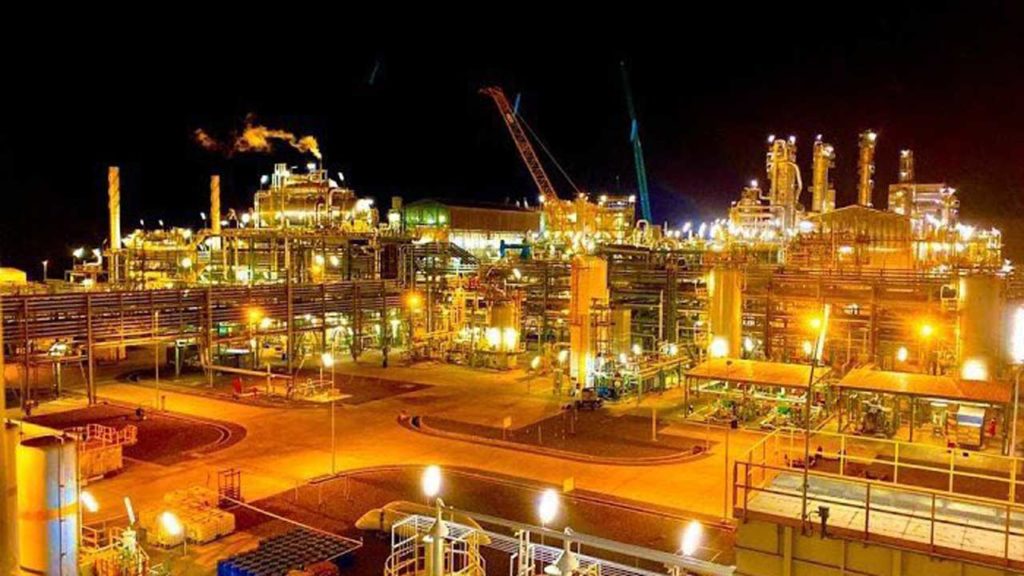
In a bold move that underscores confidence in Nigeria’s economic trajectory and Africa’s industrial future, President of Dangote Industries Limited, Aliko Dangote, has announced the expansion of the Dangote Petroleum Refinery from its current 650,000 barrels per day (bpd) to an unprecedented 1.4 million bpd within the next three years.
Speaking at a media briefing in Lagos, Dangote revealed that the $20 billion refinery—the largest single-train refinery in the world—will more than double its capacity through a multi-phase expansion programme, transforming Nigeria into a global refining powerhouse and the beating heart of Africa’s industrial renaissance.
“This expansion reflects our confidence in Nigeria’s future, our belief in Africa’s potential, and our commitment to building energy independence for our continent,” Dangote said.
This expansion reflects our confidence in Nigeria’s future, our belief in Africa’s potential, and our commitment to building energy independence for our continent,”
— Aliko Dangote
“It is the dream of President Bola Ahmed Tinubu, GCFR, for Nigeria to emerge as one of the major suppliers of petroleum products in the world, and with his strong backing through his policies, we are taking on the challenge to make this happen.”
“It is the dream of President Bola Ahmed Tinubu, GCFR, for Nigeria to emerge as one of the major suppliers of petroleum products in the world, and with his strong backing through his policies, we are taking on the challenge to make this happen.”
— Aliko Dangote
Africa’s Energy Independence in Sight
According to Dangote, the expansion is more than a business decision—it is a strategic response to Africa’s growing demand for cleaner fuels and Nigeria’s evolving policy landscape that favours domestic refining. The move will also strengthen the continent’s ability to achieve energy independence and reduce its reliance on imported petroleum products.
When completed, the expanded facility will surpass India’s Jamnagar Refinery—currently the world’s largest—cementing Nigeria’s position as a global refining hub. The expansion will be financed through a mix of internal cash flow, public listing, and strategic investments.
In addition to refining capacity, the project will also boost production of petrochemical derivatives. Polypropylene output will rise from 900,000 metric tonnes to 2.4 million metric tonnes per annum, while production of linear alkylbenzene—a key ingredient in detergents—and base oils will also increase significantly.
“With this expansion, the refinery transitions from producing Euro V to Euro VI fuel standards, meeting the highest global environmental benchmarks,” Dangote explained.
“With this expansion, the refinery transitions from producing Euro V to Euro VI fuel standards, meeting the highest global environmental benchmarks,”
— Aliko Dangote
“We will expand our power generation capacity to 1,000 megawatts, ensuring complete operational self-sufficiency. More than 85% of our workforce will be Nigerian, with continuous investment in skills development and technology transfer.”
“We will expand our power generation capacity to 1,000 megawatts, ensuring complete operational self-sufficiency. More than 85% of our workforce will be Nigerian, with continuous investment in skills development and technology transfer.”
— Aliko Dangote
Economic and Social Impact
The implications of the expansion are monumental. Dangote estimated that the refinery’s revenue could exceed $55 billion annually, positioning it among Africa’s most valuable industrial assets. The project is expected to create thousands of direct and indirect jobs, stimulate small and medium enterprises (SMEs), and deepen Nigeria’s industrial base.
Dangote also reaffirmed plans to list a significant portion of the refinery’s shares on the Nigerian Exchange (NGX) within the next year, offering Nigerians an opportunity to directly participate in one of the continent’s most transformative enterprises.
“Our main listing will be here in Nigeria to give Nigerians value,” Dangote said.
“Our main listing will be here in Nigeria to give Nigerians value,” — Aliko Dangote
“We want the Dangote Refinery to be the golden stock of the Exchange—a true national asset. This is a step toward broader ownership and market transparency.”
“We want the Dangote Refinery to be the golden stock of the Exchange—a true national asset. This is a step toward broader ownership and market transparency.”
–‐ Aliko Dangote
Boosting Energy Security and Strengthening the Naira
Dangote highlighted how the refinery has already begun stabilising Nigeria’s fuel supply, curbing capital flight, and strengthening the naira by reducing the need for dollar-based imports.
“This refinery, Nigeria would still be buying dollars at ridiculous rates and depleting our reserves to import fuel,
“This refinery, Nigeria would still be buying dollars at ridiculous rates and depleting our reserves to import fuel,”
— Aliko Dangote
“Today, Nigerians buy petrol at roughly half the price of what our neighbours pay—and it’s even cheaper than in Saudi Arabia—despite our higher-quality Euro VI fuel.”
Today, Nigerians buy petrol at roughly half the price of what our neighbours pay—and it’s even cheaper than in Saudi Arabia—despite our higher-quality Euro VI fuel.”
— Aliko Dangote
The billionaire industrialist assured Nigerians that there would be no fuel scarcity or price hike during the festive season, despite global oil price fluctuations.
“For the first time in many years, Nigerians can look forward to a Christmas and New Year free of fuel anxiety,” he declared.
For the first time in many years, Nigerians can look forward to a Christmas and New Year free of fuel anxiety,”
— Aliko Dangote
Government Collaboration and Investor Confidence
Dangote commended President Tinubu and the Federal Government for creating an enabling environment through forward-thinking policies such as Nigeria First, Naira-for-Crude, and the One-Stop Shop Initiative—all designed to encourage local refining and reduce bureaucratic hurdles.
He also acknowledged government interventions in addressing recent disruptions at the refinery linked to union activities and sabotage attempts, describing them as evidence of strong collaboration between public and private sectors.
“This expansion is not just about capacity; it is about confidence—in our people, in our government, and in our continent, Dangote stated. “Together, we are building a stronger Nigeria and redefining what is possible for Africa.”
“This expansion is not just about capacity; it is about confidence—in our people, in our government, and in our continent,
“Together, we are building a stronger Nigeria and redefining what is possible for Africa.”
— Aliko Dangote
A Call to African Industrialists
Dangote urged other investors holding refinery licences to emulate the initiative, stressing that Africa’s future lies in building its own industrial capacity.
“When Africa builds its own capacity, it builds its own destiny,” he concluded.
“When Africa builds its own capacity, it builds its own destiny,” he concluded.
A Vision Beyond Profit
Despite not yet recouping the initial investment in the 650,000 bpd phase, Dangote maintained that the refinery expansion is a long-term investment in Africa’s transformation, not just a commercial venture.
“Our goal has never been just to refine oil, but to refine opportunities for our people,”
“Our goal has never been just to refine oil, but to refine opportunities for our people,”
— Aliko Dangote
As Dangote Industries embarks on this historic expansion, the message is clear: Nigeria is not just refining crude—it is refining confidence, capacity, and a new African destiny.
TIME NIGERIA — Promoting Industrial Innovation, Economic Development, and African Excellence.