


“The real test is whether Nigeria can now translate the difficult choices we have made into inclusive growth that improves the daily lives of our people.”
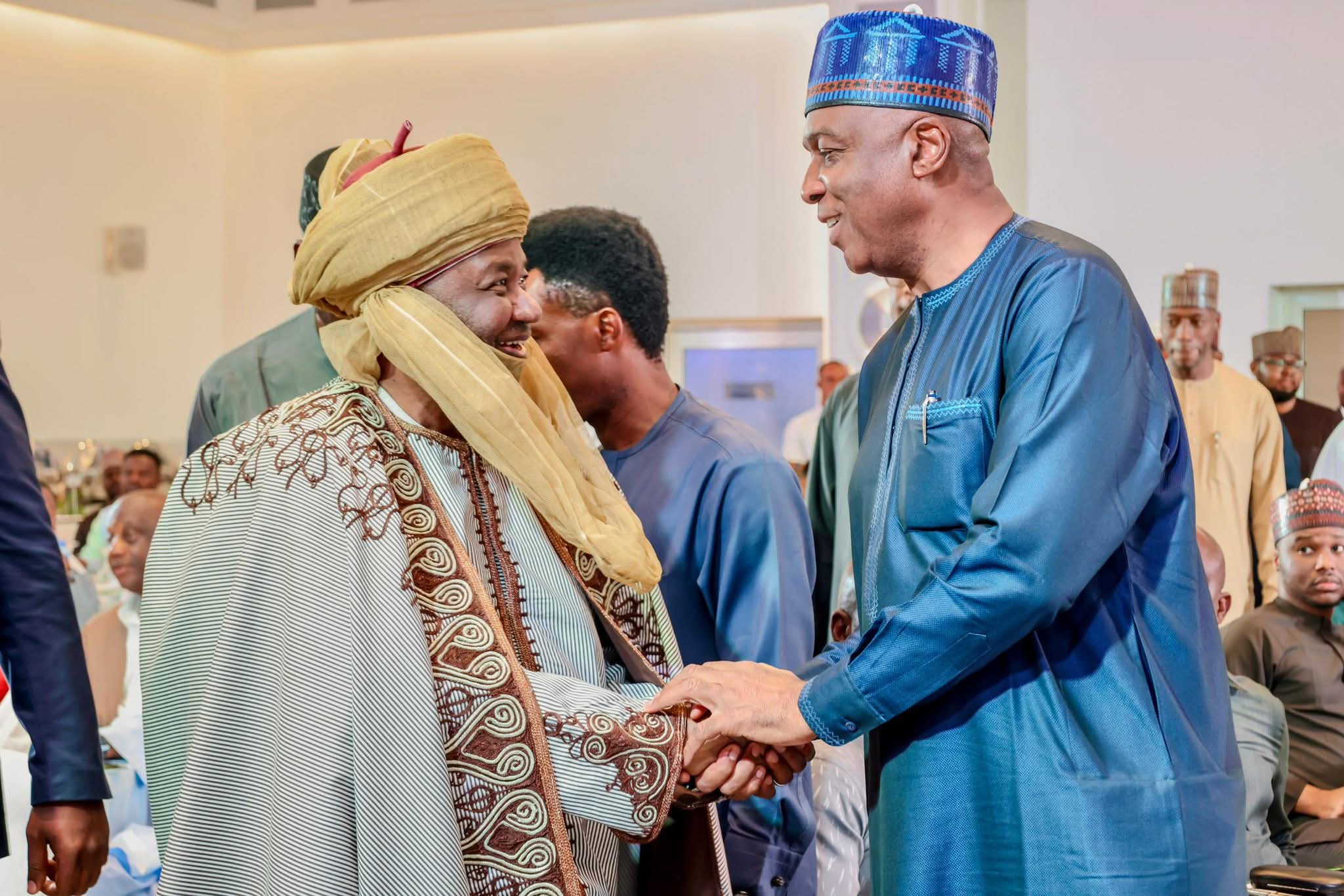
Dr Abubakar Bukola Saraki exchanging pleasantries with the Emir of Kano, HRH Sanusi Lamido Sanusi at the event.
By Abdulrahman Aliagan, Abuja
Former Senate President, Dr. Abubakar Bukola Saraki, says Nigeria’s recent economic reforms will remain incomplete and unsustainable unless they translate into tangible improvements in the daily lives of citizens.
Speaking on Tuesday evening while delivering a goodwill message at the launch of the Ignite Nigeria Economic Outlook 2026, themed “From Adjustment to Advantage,” Saraki noted that while reforms on fuel subsidy, foreign exchange and fiscal policy were necessary, they will only be meaningful when Nigerians begin to feel real relief.
“The question before us is not whether economic reform was necessary — it was,” he stated.
“The real test is whether Nigeria can now translate the difficult choices we have made into inclusive growth that improves the daily lives of our people.”
Saraki warned that adjustment without visible improvement in living standards cannot be sustained.
“Until Nigerians begin to see more affordable food, reliable energy and transport, functional schools and hospitals, and dignified work for our young people, we are merely adjusting, not advancing,”
— Dr Bukola Saraki
He stressed that the success of any reform lies not in policy design but in measurable outcomes such as jobs created, prices stabilised, incomes protected and opportunities expanded.
The former Senate President also cautioned that economic growth without jobs would only widen inequality. He called for strategic expansion of labour-intensive sectors including agriculture, agro-processing, light manufacturing, energy, and the digital and creative economy.
“Economic growth without jobs is not prosperity — it is arithmetic,”
— Saraki said.
To accelerate development, he urged deliberate capital mobilisation, particularly through unlocking more domestic pension assets to fund critical infrastructure.
Saraki further emphasised that the rule of law has become an economic imperative, noting that markets respond to stability and predictability rather than rhetoric.
“No economic outlook is complete without governance,” he added. “Nigeria’s greatest economic asset is not oil, gas, or even our population — it is trust, and trust must be earned consistently.”
He commended Alhaji Kyari Abba Bukar, Convener of the Abuja Economic Dialogue, and the team behind the outlook for presenting a vision grounded in evidence and realism.
“Nigeria has the talent, the scale, and the opportunity,” Saraki said. “What we require now is leadership with the clarity, courage, and continuity to turn these reforms into shared prosperity.”
“Nigeria has the talent, the scale, and the opportunity,” Saraki said. “What we require now is leadership with the clarity, courage, and continuity to turn these reforms into shared prosperity.”