


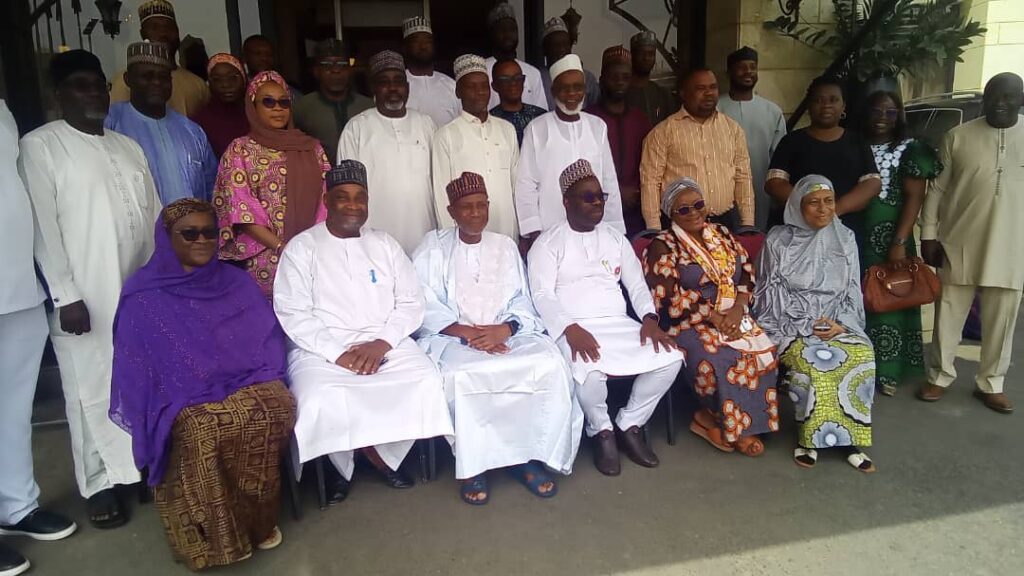
Government budgets remain insufficient to meet rising healthcare demands, donor funding is unpredictable and often project-based, while health insurance coverage remains low, leaving households exposed to catastrophic health spending.
— Dr Warshu T. Rabiu
By Abdulrahman Aliagan, Abuja
Nigeria’s healthcare system has long struggled under the weight of chronic underfunding, high out-of-pocket expenditure, weak financial risk protection, and growing inequities that disproportionately affect the poor, women, and children.
For millions of Nigerians, accessing healthcare often means selling assets, borrowing money, or resorting to public appeals to pay hospital bills. Despite decades of donor support and government interventions, sustainable healthcare financing remains one of the most stubborn bottlenecks to achieving Universal Health Coverage (UHC).
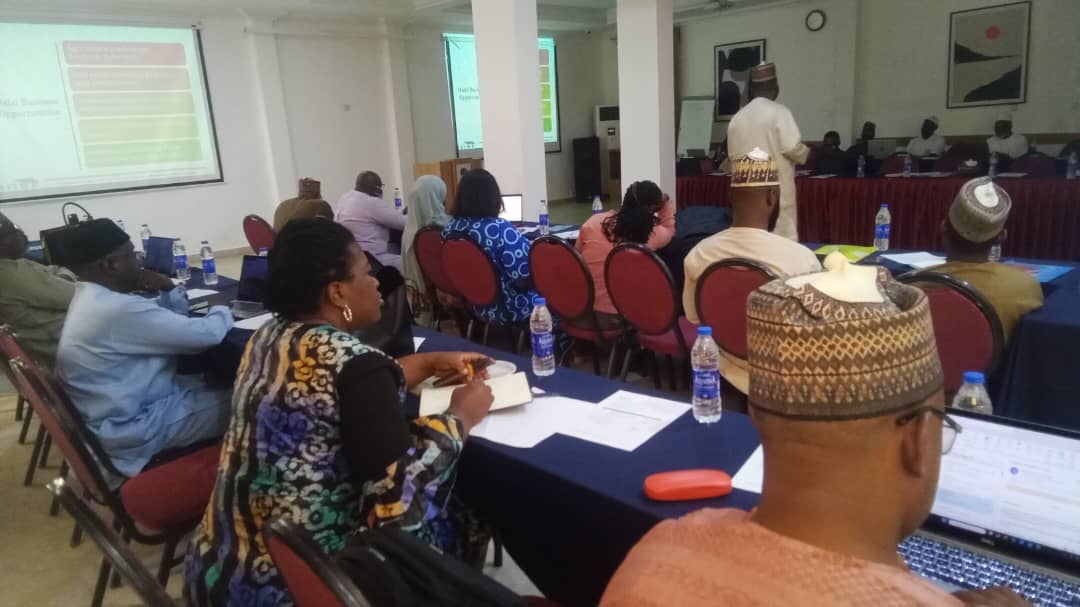
Stakeholders from Government, Civil Society Organisations, Development Partners, Academics, Media in a critical brainstorming at 3-Day Technical Workshop held at Bolton White Hotels, Garki Abuja.
It was against this backdrop that a quiet but transformative idea—Ethical Health Financing—took centre stage at the 3-Day Lafiya Programme Ethical Health Finance Technical Workshop, held from 14 to 16 January 2026 at Bolton White Hotels, Garki Area 11, Abuja.
Convened by the International Institute of Islamic Banking and Finance (IIIBF), Bayero University Kano, with support from the Lafiya Programme, the workshop brought together national and subnational policymakers, development partners, academics, faith-based actors, civil society organisations, and community leaders. Their shared objective was to build consensus around Ethical Health Finance as a viable, scalable, and culturally legitimate alternative health financing solution for Nigeria.
At the heart of the discussions was a frank acknowledgment of Nigeria’s health financing reality through a well researched paper presented in a highly structured PowerPoint presented by Dr Warshu T. Rabiu who noted that Government budgets remain insufficient to meet rising healthcare demands, donor funding is unpredictable and often project-based, while health insurance coverage remains low, leaving households exposed to catastrophic health spending.
The workshop therefore focused not on replacing public or donor financing, but on complementing them with a locally rooted, community-owned financing model that leverages values Nigerians already understand and trust.
Providing strategic direction to the conversation was Dr. Usman Gwarzo, National Team Leader of the UK Foreign, Commonwealth and Development Office (FCDO)-supported Lafiya Programme. He explained that the Lafiya Programme, launched in February 2022 in the aftermath of COVID-19 response efforts, was deliberately designed as an upstream, flexible, and adaptive intervention. Rather than focusing on short-term service delivery, the programme addresses systemic bottlenecks that hinder Universal Health Coverage, including weak governance, poor institutionalisation, inadequate healthcare financing, limited use of data for decision-making, and emerging health security threats linked to climate and demographic change.
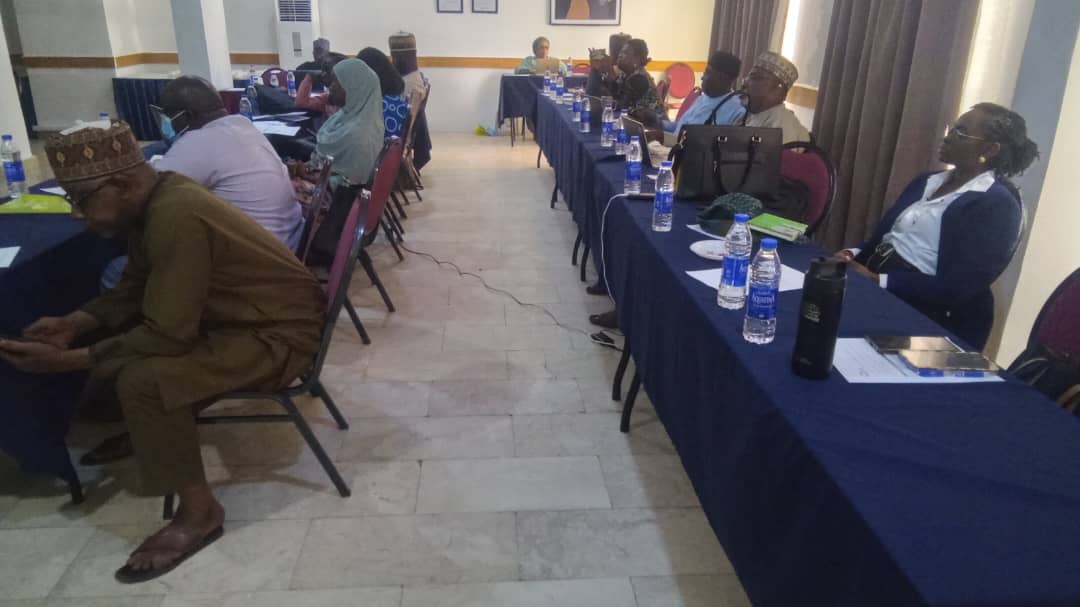
Stakeholders from Government, Civil Society Organisations, Development Partners, Academics, Media in a critical brainstorming at 3-Day Technical Workshop held at Bolton White Hotels, Garki Abuja.
According to Dr. Gwarzo, healthcare financing sits at the centre of these challenges. While Lafiya works closely with government institutions at federal, state, and local levels to strengthen public health financing through planning, resource mobilisation, budget tracking, expenditure analysis, performance monitoring, and optimisation of the Basic Healthcare Provision Fund, it became clear that public financing alone would not close Nigeria’s health funding gap. This realisation led to the exploration of alternative financing pathways.
“Healthcare financing sits at the centre of these challenges. While Lafiya works closely with government institutions at federal, state, and local levels to strengthen public health financing through planning, resource mobilisation, budget tracking, expenditure analysis, performance monitoring, and optimisation of the Basic Healthcare Provision Fund, it became clear that public financing alone would not close Nigeria’s health funding gap. This realisation led to the exploration of alternative financing pathways.”
— Dr. Usman Gwarzo
Rather than inventing entirely new systems, the Lafiya Programme adopted what Dr. Gwarzo described as an “opportunistic” approach—identifying low-hanging fruits that already exist within communities. One such opportunity was the long-standing tradition of faith-based philanthropy, particularly Islamic instruments such as Zakat and Waqf, as well as Christian endowments.
Across Northern Nigeria and in global institutions such as Harvard, Yale, and universities in Indonesia and Malaysia, endowments have historically funded education, housing, and social welfare. Health, however, remained largely neglected.
Across Northern Nigeria and in global institutions such as Harvard, Yale, and universities in Indonesia and Malaysia, endowments have historically funded education, housing, and social welfare. Health, however, remained largely neglected.
— Dr Usman Gwarzo
Through Ethical Health Finance, these ethical and faith-based resources were adapted—without distorting their religious foundations—to support healthcare. Working through traditional institutions such as Emirate councils and in collaboration with Islamic and Christian religious leaders, communities were sensitised on how endowment-style resources could be institutionalised to support health needs sustainably.

From Left: Dr Shehu Sule, another stakeholder and the Ace Broadcaster and Veteran Journalist, Chief Dr. Mrs Moji Makanjuola, MFR in a discussion at the event
Crucially, communities themselves conducted needs assessments to identify priority health challenges, whether shortages of health workers, gaps in infrastructure, poor drug availability, or weak supervision and service quality. Financing and implementation plans were then developed locally, ensuring ownership and relevance.
A defining innovation of the Ethical Health Finance model is its emphasis on sustainability and perpetuity. Funds mobilised through donations, crowdfunding, and community launches are not spent entirely at once. Instead, communities adopt investment models—often using a 40:60 formula—where a portion addresses immediate health needs while the larger share is invested to generate long-term returns. In many communities, this has led to the establishment of health-linked social enterprises, such as community pharmacies that provide subsidised medicines while generating income to sustain health interventions.
Within just three years, the Ethical Health Finance initiative expanded from 12 Local Government Areas to 138 LGAs across five states, demonstrating transparency, accountability, and scalability. Dr. Gwarzo emphasised that when communities raise their own resources, they are more likely to hold health systems accountable, strengthening governance from the grassroots.
Within just three years, the Ethical Health Finance initiative expanded from 12 Local Government Areas to 138 LGAs across five states, demonstrating transparency, accountability, and scalability. When communities raise their own resources, they are more likely to hold health systems accountable, strengthening governance from the grassroots.
— Dr. Usman Gwarzo
The policy narrative was reinforced by lived experience. Dr. Muhammad Nura Abdullahi, Director of Khairat Islamic Trust, Kano, shared over a decade of practical lessons in ethical, community-driven financing. Established more than 12 years ago and incorporated as a foundation in 2017, Khairat Islamic Trust operates with structured governance, professional accounting, audits, and a strong volunteer base. The organisation has sponsored the education of over 40 orphans, established an orphanage, and invested in income-generating ventures ranging from transport services to small enterprises.
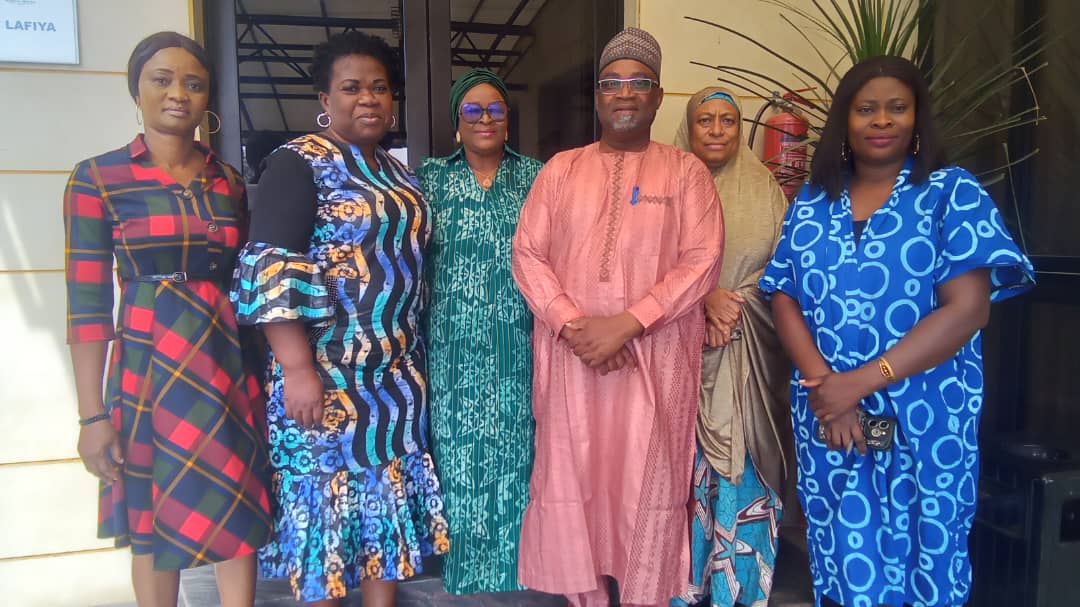
A cross-session of Journalists in a group photograph with the Dr Usman Gwarzo, the Team Leader and Chief Dr Mrs Moji Makanjuola, MFR at the event.
Dr. Abdullahi noted that the shift from pure charity to income-generating ethical endowments was essential for sustainability. He also addressed common challenges, including public mistrust, misconceptions that organisations are “doing business” with donations, and pressure from relatives and community members. These challenges, he said, can only be overcome through transparency, professionalism, and sincere service. Importantly, he stressed that Ethical Health Finance is inclusive. During the COVID-19 pandemic, Khairat Islamic Trust’s “Sadaka Maganin Bala’i” initiative supported about 2,500 families, including non-Muslims, demonstrating that ethical financing transcends religious boundaries.
Providing a broader analytical perspective, Dr. Warshu Tijani Rabiu of IIIBF, Bayero University Kano, explained that Ethical Health Finance was designed in response to Nigeria’s lived healthcare realities, where families routinely delay care or publicly appeal for hospital bills. Piloted across Kano, Kaduna, Jigawa, Yobe, and Borno States, the initiative has established over 138 community-based organisations, many registered with the Corporate Affairs Commission, complete with boards, bylaws, bank accounts, audits, and operational guidelines. In 2025 alone, communities mobilised over ₦2 billion in Zakat and Waqf contributions, both in cash and in kind.
Dr. Rabiu emphasised that Ethical Health Finance views health holistically, addressing not only treatment but also nutrition, shelter, livelihoods, and dignity. By supporting income generation and women’s empowerment, the model tackles root causes of illness and even insecurity, reducing vulnerability to crime and social instability.
Ethical Health Finance views health holistically, addressing not only treatment but also nutrition, shelter, livelihoods, and dignity. By supporting income generation and women’s empowerment, the model tackles root causes of illness and even insecurity, reducing vulnerability to crime and social instability.
— Dr. Warshu Tijani Rabiu
The workshop also featured reflections from veteran journalist and broadcaster Chief (Dr.) Mrs. Moji Makanjuola, who described the gathering as a powerful reminder of Nigerians’ capacity for self-help. She noted that Ethical Health Finance demonstrates how religion, community, and resources can be harnessed to reduce out-of-pocket spending and strengthen healthcare delivery without dependence on donors or government alone.
According to the Ace Broadcaster, “For medical intervention from this Workshop, These are exciting moments because the realization of healthcare delivery service, particularly health financing, is something that we cannot shy away from, and to believe that in country, sustainability intervention is evolving. This is an exciting time. So for me, what Lsciya has been able to do is igniting the Nigerian in us, to be your brother’s keeper.
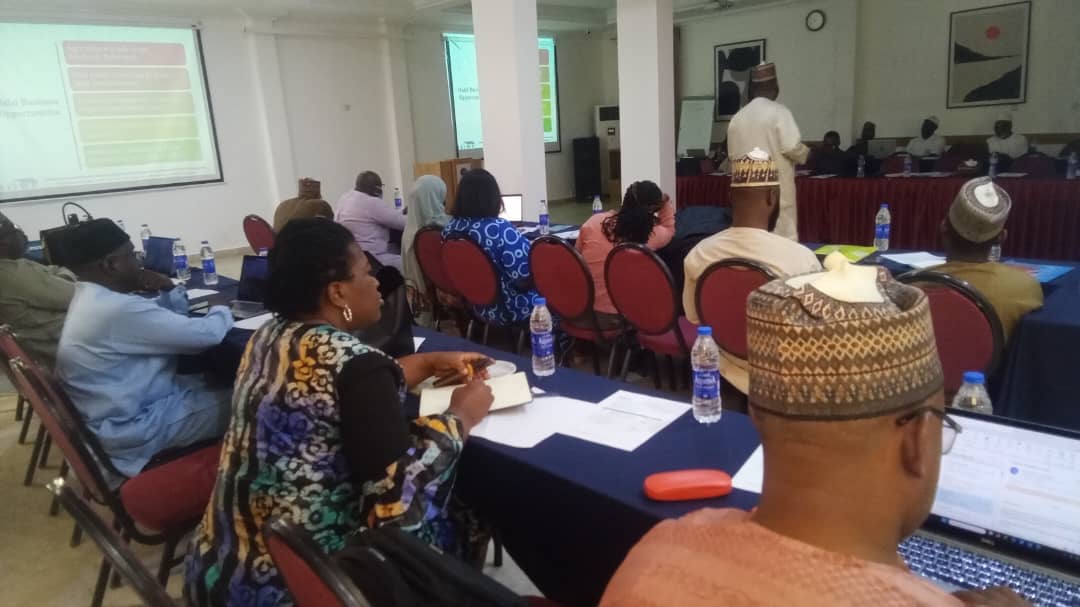
Participants at the event
“For medical intervention from this Workshop, These are exciting moments because the realization of healthcare delivery service, particularly health financing, is something that we cannot shy away from, and to believe that in country, sustainability intervention is evolving. This is an exciting time. So for me, what Lsciya has been able to do is igniting the Nigerian in us, to be your brother’s keeper.
— Moji Makanjuola, MFR
“And this is cutting across, not just in terms of health, education, shelter, the humanity as a whole, the whole essence of survival is what we have learned here, what Nigerians are doing and doing quietly.
“But we know that there are some forces that needs to be put in place. If you are talking that we are a religious country, what does your religion say about looking after humanity?
“I think we’ve seen it here. So I would, say that we need to give visibility to what has happened here, so that it is not just us knowing it, it is something that I’m sure can stimulate growth, can stimulate development, can stimulate the resilience for which Nigerians are known for. So we are not dependent on donors. We are not dependent on government but we are dependent on tangible things that people are doing.
“I think we’ve seen it here. So I would, say that we need to give visibility to what has happened here, so that it is not just us knowing it, it is something that I’m sure can stimulate growth, can stimulate development, can stimulate the resilience for which Nigerians are known for. So we are not dependent on donors. We are not dependent on government but we are dependent on tangible things that people are doing.
— Moji Makanjuola, MFR
“Take the take the example of the man who donated. You know, 13 houses, 13 houses where every rent paid to those houses would be pushed back into providing some measure of financing when it’s needed, so that a lot of us suffering from out of pocket spending. So, what we’ve learned here is saying that out of pocket spending can also be mitigated with the kind of things that the people around here are doing.
“And I think that is a plus, is a win win situation, using your religion, using your space, using your resources, for quality healthcare delivery service going forward.”
Participants echoed these sentiments. Dr. Shehu Sule, Senior Policy Advisor with the Lafiya Programme, described Ethical Health Finance as a pathway to institutionalise community solidarity within Nigeria’s formal health financing framework. Professor Awwalu Haruna of Ahmadu Bello University, Zaria, highlighted the role of academia in documenting evidence and supporting scale-up. Mr. Adamu Imam, Consultant on Ethical Health Finance, observed that communities are not resource-poor but structure-poor, and that transparency unlocks participation. Mr. Francis Ayomoh of the Federal Ministry of Health and Social Welfare noted that the model complements national efforts to reduce catastrophic health expenditure, while Hajia Khadijah Sagir, representing PVAC, stressed the central role of women, who consistently contribute to ethical giving.
By the close of the three-day engagement, stakeholders had explored lessons from pilot states, finalised key Ethical Health Finance knowledge materials, adopted a national Ethical Health Financing logo, co-created a scale-up plan, and established a National Ethical Health Financing Technical Working Group. Representatives from federal and state governments, the National Health Insurance Authority, development partners including the World Bank, civil society organisations, faith-based institutions, and international partners all endorsed the direction.
As Nigeria continues its pursuit of Universal Health Coverage, the Ethical Health Finance intervention of the International Institute of Islamic Banking and Finance, implemented through the Lafiya Programme, is steadily rewriting the narrative of healthcare financing. It offers a Nigerian solution to a Nigerian challenge—one rooted in trust, ethics, community ownership, and sustainability. The message from Abuja was unmistakable: Nigeria’s path to equitable and resilient healthcare may well lie in empowering communities to finance, govern, and protect their own health.