


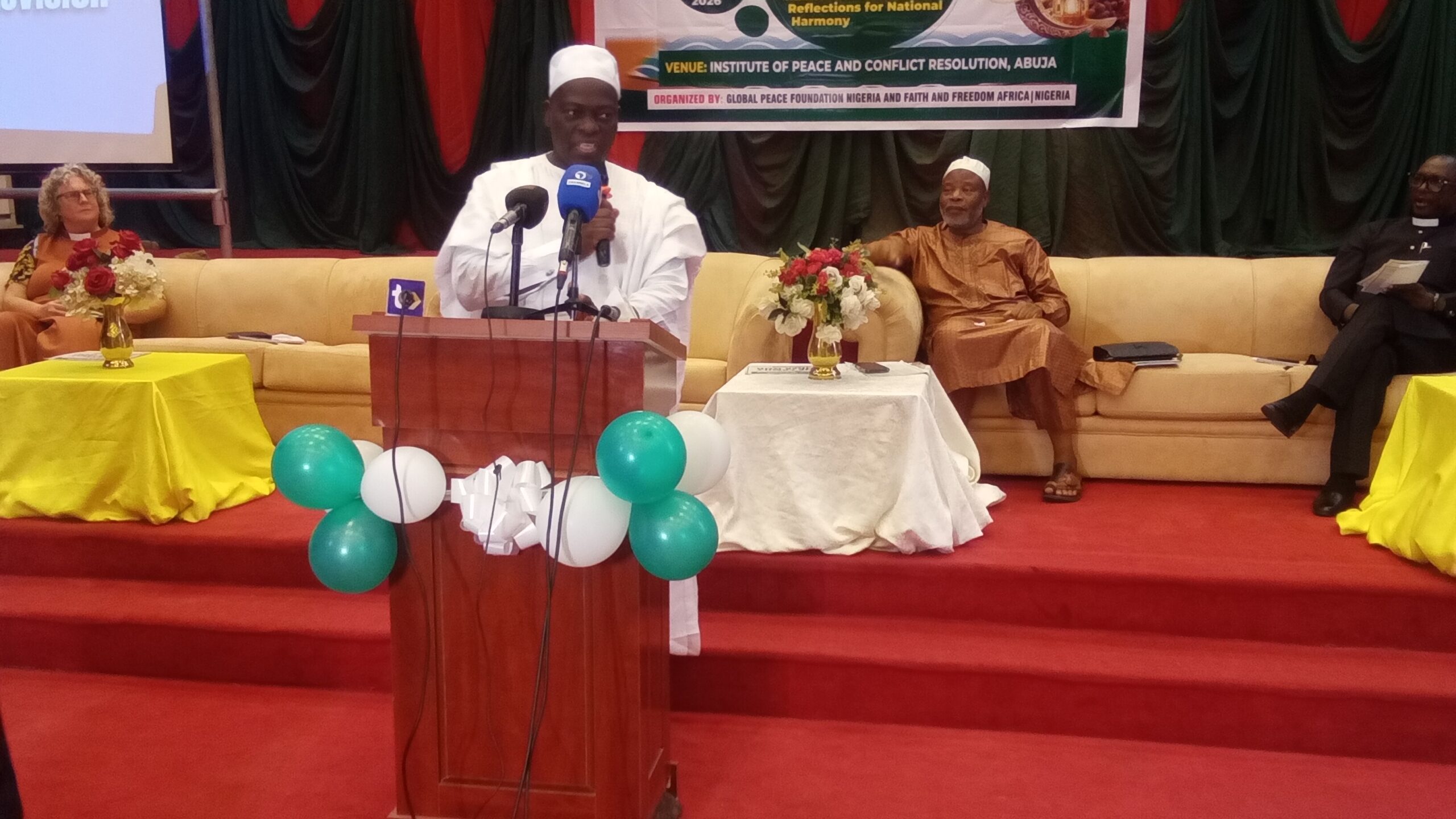
Imam Fuad Adeyemi coordinating Question and Answer session of the event.
By Abdulrahman Aliagan,
In a period marked by both the sac9red observances of Ramadan and Lent, religious leaders across Nigeria gathered in Abuja for a timely and thought-provoking dialogue on national unity, moral renewal, and peaceful coexistence. The National Religious Leaders Consultation on Faith and Nation Building, held on Monday, March 16, 2026, at the Institute for Peace and Conflict Resolution, brought together clerics, scholars, and stakeholders from diverse faith traditions.
Organized by Global Peace Foundation Nigeria in collaboration with Faith and Freedom Africa, the consultation was themed “Faith, Fasting, and Nation-Building: Ramadan and Lent Reflections for National Harmony.” The event underscored the shared spiritual values between Islam and Christianity, particularly during this season of fasting, reflection, and charity.
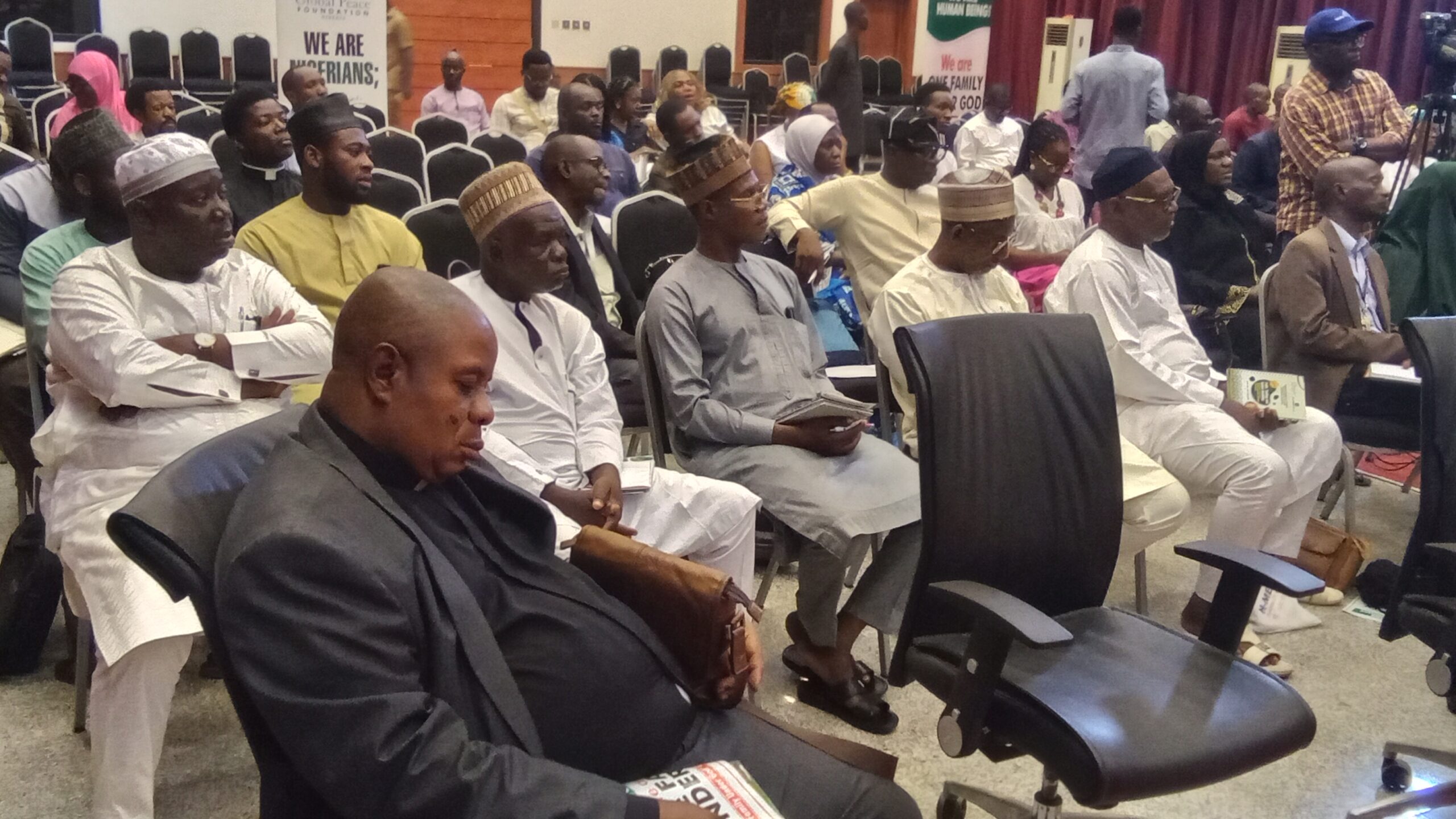
Cross-session of participants at the event
Delivering the keynote address, the Executive Secretary of the Nigeria Inter-Religious Council, Cornelius Afebu Omonokhua, emphasized the urgent need for political leaders to demonstrate goodwill and sincerity in fostering peaceful coexistence. He argued that leadership in Nigeria must transcend religious and ethnic considerations, urging citizens to prioritize competence, integrity, and patriotism when choosing leaders.
Drawing from history, he recounted the exemplary leadership of Abubakar Tafawa Balewa, who, he noted, embodied the virtues of a detribalised and God-fearing leader. According to him, Balewa’s ability to relate harmoniously with Nigerians across religious divides remains a model for contemporary governance.
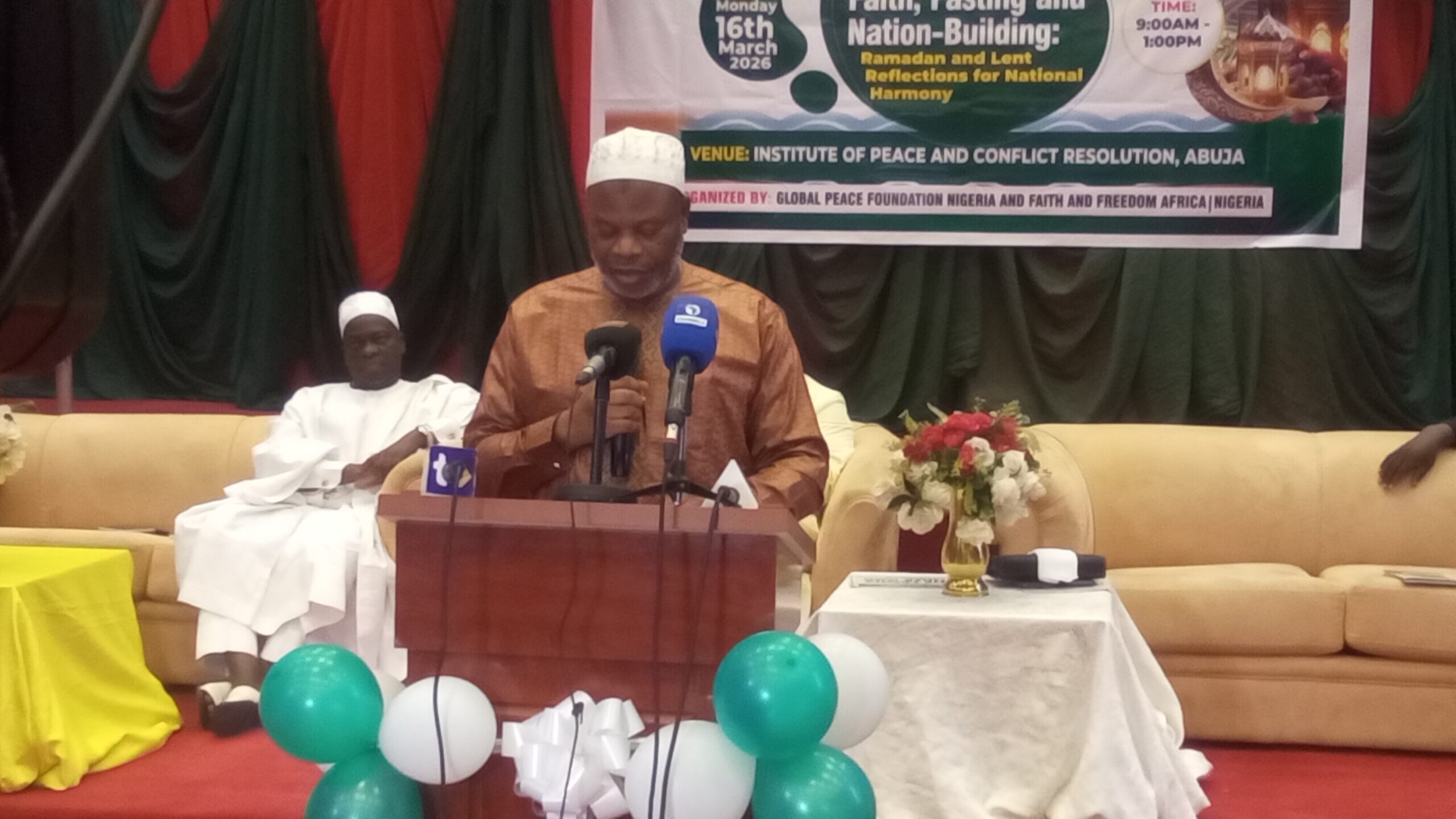
Dr Sediq Abubakar of National Mosque presenting his paper at the Faith and Nation Building Dialogue yesterday in Abuja
In his contribution, Ustaz Sediq Abubakar of the National Mosque reflected on the deeper moral lessons of Ramadan as a period of spiritual purification and self-discipline. He highlighted the significance of the rare overlap between Ramadan and the Christian Lenten season, describing it as a divine opportunity to strengthen interfaith understanding. Emphasizing the diversity of humanity as ordained by God, he called for renewed commitment to love, tolerance, and peaceful coexistence among Nigerians.
The Founder of Al-Habibiyyah Islamic Society, Imam Fuad Adeyemi, advocated for a shift in government approach to religion. Rather than controlling religious institutions, he urged authorities to establish structures that support their growth and positive societal contributions. He also raised security concerns, calling on authorities to closely scrutinize certain motorcycle operators (Okada riders) to ensure proper identification and national security.
Imam Adeyemi further shared practical examples of interfaith harmony, recounting his personal relationship with a Christian neighbour as a demonstration of Islam’s teachings on peaceful coexistence. He also highlighted his organization’s ongoing efforts in training religious leaders and youth on values of peace and mutual respect.
Other participants echoed similar sentiments, cautioning against the condemnation of other religions and instead advocating for messages rooted in unity and shared humanity. The consensus was clear: Nigerians must embrace their common origin and collective destiny.
Adding a gendered and educational perspective, Dr. Rakiya Momoh Abaji of Al-Habibiyyah stressed the importance of properly training religious scholars. According to her, well-informed leaders are better equipped to guide their followers responsibly, particularly in a society where religious influence is profound.
From the Christian perspective, Fr. Lawrence of the Catholic Church in Nigeria delivered a critical reflection on the role of religion in national development. He warned that religion must serve as a solution to Nigeria’s challenges rather than exacerbate them. He linked governance failures—particularly unemployment and poverty—to the growing tendency for religion to be used as a transactional tool. He also challenged religious leaders to courageously speak truth to power, insisting that silence in the face of injustice only deepens national crises.
In his goodwill message, the Chairman of the Christian Association of Nigeria, FCT Chapter, expressed appreciation to the organizers for creating a platform for meaningful interfaith dialogue. Reflecting on his personal experience, he noted that his exposure to interfaith engagement in Abuja had reshaped his perception, affirming that Muslims and Christians can indeed collaborate constructively for national peace. He called for the expansion of such initiatives to grassroots communities.
Also lending his voice, Sheikh Nurudeen Khalid urged religious leaders to embrace sacrifice and national service. Popularly known as the “Digital Imam,” he challenged leaders to shift their mindset from what they can gain from the country to what they can contribute toward its development.
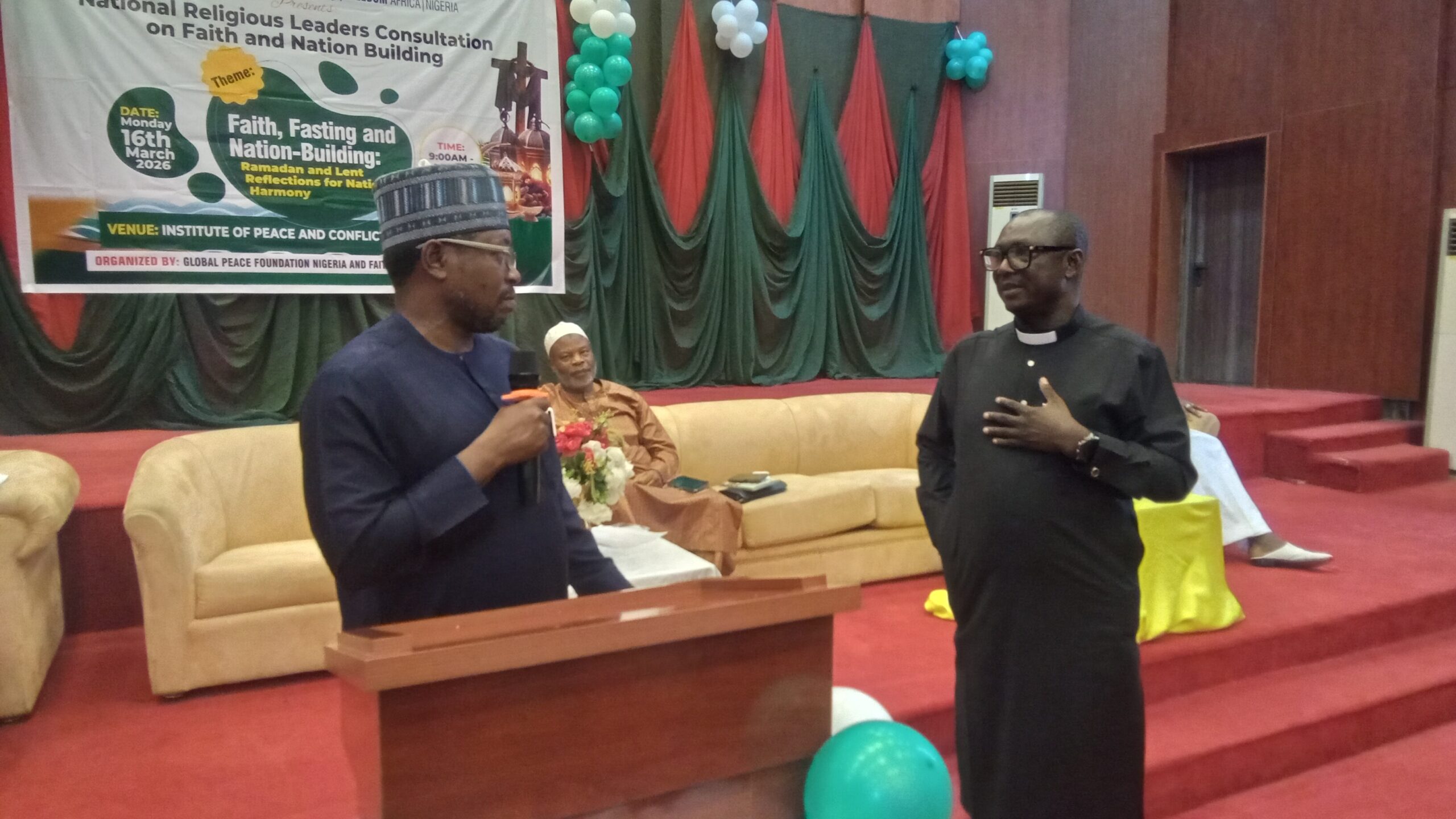
The organisers of the event, Rev Joseph Hayab, Executive Director of Global Peace Foundation Nigeria and Mr Felix Joseph Samari, the country Contractor, Faith and Freedom Africa, FFA giving their closing remarks.
Speaking on behalf of the organizers, Joseph Hayab, Executive Director of Global Peace Foundation Nigeria, reiterated the organization’s commitment to fostering unity through dialogue and shared values. He noted that Nigeria’s diversity should be seen as a strength rather than a fault line, adding that sustained engagement among faith leaders is crucial for national cohesion.
Similarly, Felix Joseph Samari of Faith and Freedom Africa emphasized the importance of collaborative efforts in promoting religious freedom and mutual respect. He stated that platforms like this consultation are essential for building trust and strengthening democratic values across communities.
The event also received institutional support from the Institute for Peace and Conflict Resolution, led by its Director-General, Joseph Ochogwu. The Institute reaffirmed its commitment to supporting initiatives that promote dialogue, prevent conflict, and strengthen national unity.
As the consultation drew to a close, one message resonated strongly across all contributions: Nigeria’s path to peace and sustainable development lies in harnessing the moral authority of religion as a force for unity, justice, and compassion. In a season defined by fasting and reflection, the gathering served as a powerful reminder that faith—when rightly guided—can be a cornerstone for nation-building and enduring harmony.