


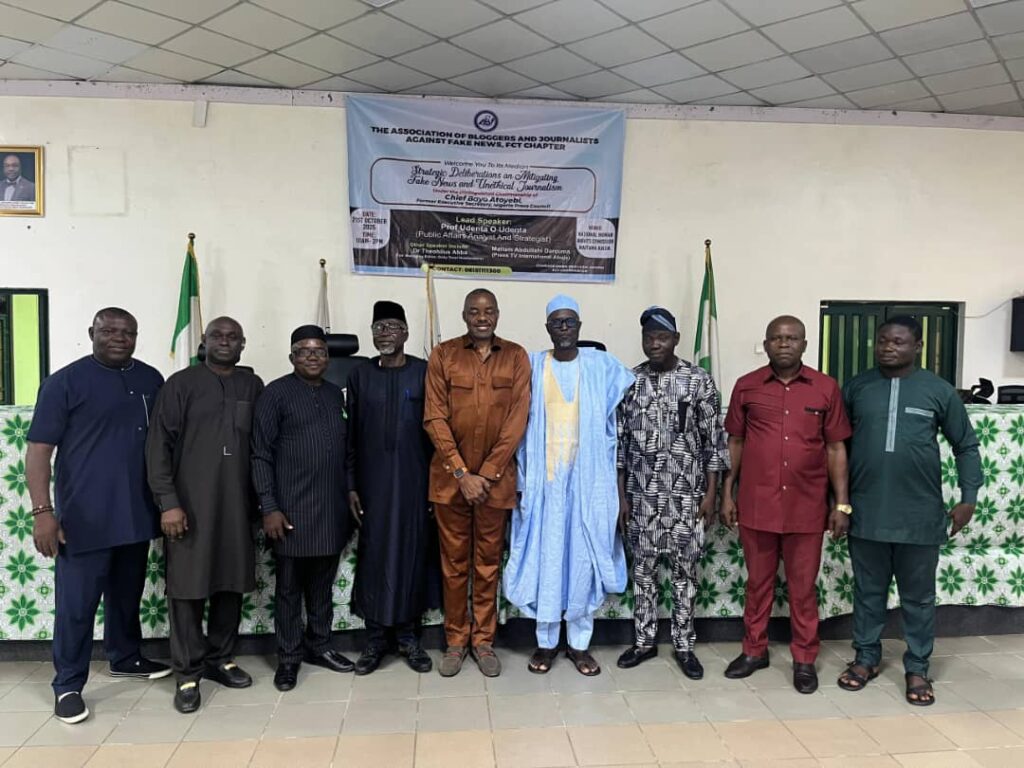
At a when Nigeria’s democratic stability faces increasing strain from misinformation and digital manipulation, voices from both the traditional and media establishments are calling for urgent action.
- As Sultan of Sokoto, Media Veterans, and Regulators Sound Alarm Over Rising Tide of Misinformation
By Abdulrahman Aliagan| Time Nigeria Magazine | Abuja
At a time when Nigeria’s democratic stability faces increasing strain from misinformation and digital manipulation, voices from both the traditional and media establishments are calling for urgent action.
On Tuesday, October 21, 2025, while the Northern Traditional Leaders Council convened a high-level meeting in Kebbi State, where its Chairman, His Eminence, the Sultan of Sokoto, Alhaji Muhammad Sa’ad Abubakar III, decried the “unchecked insurgence of fake news,” media experts and journalists were simultaneously gathering in Abuja for a similar mission — to confront the menace of fake news and unethical journalism threatening Nigeria’s democracy.
The Sultan’s firm stance — that “the social media space must not remain unregulated while falsehood thrives unchecked” — echoed powerfully across the nation, reinforcing the central message of a groundbreaking forum organized by the Association of Bloggers and Journalists Against Fake News (ABJAFN), FCT Chapter, at the National Human Rights Commission (NHRC) Auditorium.
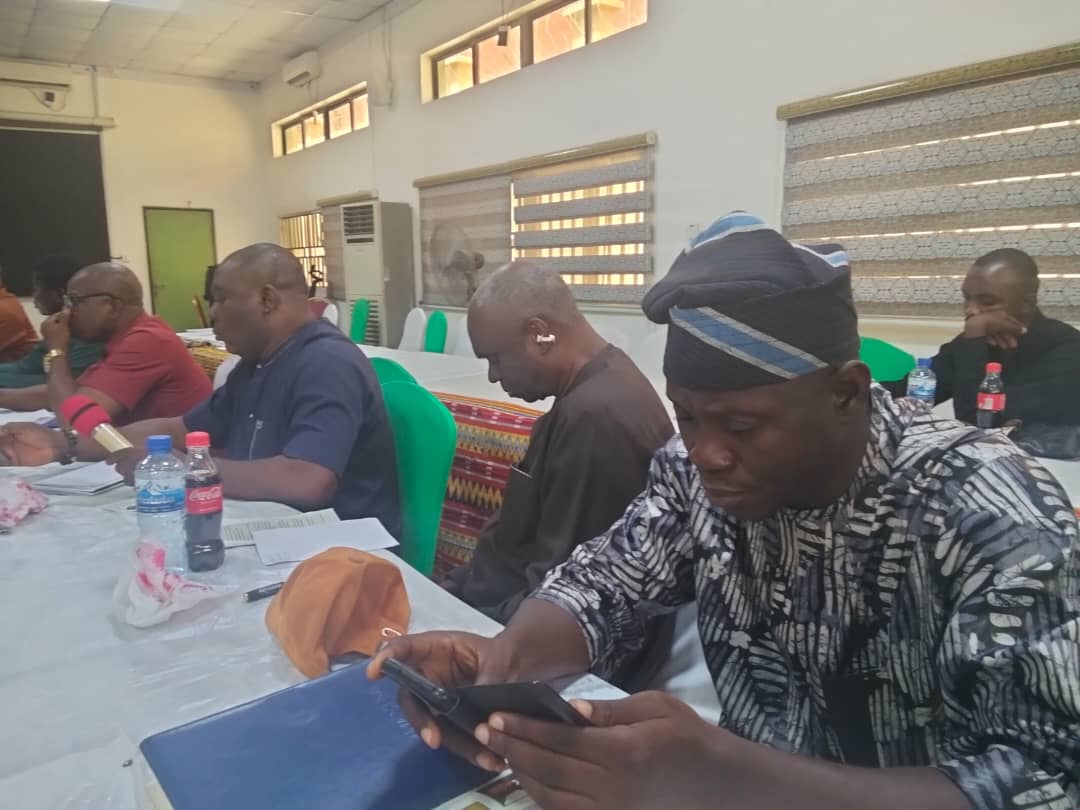
National President of the Nigerian Guild of Investigative Journalists, NGIJ, Comrade Abdulrahman Aliagan, The Chief Executive Officer, Oru Media and Associate, Mr Oru Leonard, Mr Chidi of Daily Independent and the representative of Mr Theophilus Abbah, Mr. Daniel Adaji.
The Abuja forum, themed “Strategic Deliberations on Mitigating Fake News and Unethical Journalism,” brought together media scholars, veteran journalists, and regulators for a sober reflection on how misinformation, disinformation, and malinformation are eroding trust, destabilizing institutions, and threatening national security.
In his passionate welcome address, Comrade Obiora Orji, FCT Coordinator of the Association and convener of the maiden edition, traced the roots of fake news to “the distortion of ethical codes and the collapse of professional discipline among content creators.”
“Professional journalism today faces existential threats of balance, accuracy, fairness, and objectivity,” he lamented, warning that the media space has been “overrun by untrained practitioners and free content creators who feed the public with offensive bile in sights and sounds.”
Orji called for stronger synergy between journalists, bloggers, and regulators — including the Nigerian Press Council (NPC), National Broadcasting Commission (NBC), and National Human Rights Commission (NHRC) — to restore the sanctity of truth in public communication. “Today’s sacrifice will never be taken for granted,” he said. “Our duty is to defend truth and professionalism in the media space.”
Declaring the event open, Dr. Bayo Atoyebi, former Director-General of the NBC and Executive Secretary of the NPC, commended the association’s foresight but reminded participants that “the road to professional recognition is not an easy one.”
He cautioned against blurring the line between journalism and social media chatter. “Those who own a phone and post any information, whether true or false, are not journalists,” he stated bluntly. Quoting Professor Ralph Akinfeleye, Atoyebi added, “What many people practise online today is not journalism but mere broadcasting without regulation.”
Atoyebi urged bloggers to link up with the conventional media and regulators. “The Nigerian Press Council, NBC, and the Nigerian Communications Commission have the purview over anyone who uses the Internet to transmit information. Associate with these institutions — your challenge will be half surmounted.
The keynote presentation by Dr. Theophilus Abbah, delivered by Mr. Daniel Adaji, dissected the phenomenon of “information disorder” — the web of misinformation, disinformation, and malinformation that underpins the fake news epidemic.
Quoting global authorities such as UNESCO, BBC, and Africa Check, Abbah described the modern world as gripped by an “infodemic” — an epidemic of false and misleading information that spreads faster than truth.
He revealed how fake news creators exploit emotions and cognitive biases to deceive the public. “Information disorder thrives on emotion and bias,” he explained. “People believe falsehoods because they confirm what they already think or come from sources they already trust.”
Abbah’s presentation identified forms of information disorder — fabricated content, manipulated visuals, imposter accounts, false context, and propaganda — all of which, he warned, “distort truth and weaken democracy.”
“The antidote,” he declared, “is not censorship but education. Information literacy — the ability to question, verify, and critically assess — is the vaccine against fake news.”
In another thought-provoking paper titled “Ethics of Reporting in the Digital Age: Can Journalists and Bloggers Balance Free Speech with Responsibility?”, Alhaji Danjuma Abdullahi of Press TV International traced the essence of journalism to three eternal virtues: accuracy, objectivity, and confidentiality of sources.
“When in doubt, leave out,” he warned, quoting the iconic journalist Joseph Pulitzer. “Accuracy is the soul of journalism.”
Abdullahi noted that while the digital revolution has democratized information, it has also blurred professional boundaries. “Unlimited access by untrained content creators to transmit uncensored material raises very serious social and security concerns,” he said.
He acknowledged the constitutional guarantee of free speech but reminded the audience that it is not absolute. “No responsible government will allow damaging information that threatens national security or public safety,” he said, referencing the Cybercrimes Act 2025 as a necessary, though controversial, safeguard.
As the forum drew to a close, participants agreed that the fake news epidemic represents not just a professional crisis but a national emergency. They called for ethical reawakening, digital literacy, and collaboration between journalists, regulators, and citizens to protect democracy from the corrosive effects of falsehood.
The Association of Bloggers and Journalists Against Fake News pledged to intensify its advocacy, training, and public enlightenment initiatives. “We must salvage our media constituency,” Orji reaffirmed. “This is not just a media fight — it is a fight for the soul of our democracy.”
Meanwhile, in Kebbi State, the Sultan of Sokoto’s warning reverberated like a moral call to action. He urged government, policymakers, and civil society to act decisively before fake news “destroys the very fabric of truth and nationhood.”
His words, mirrored by the Abuja deliberations, painted a clear picture: Nigeria stands at a crossroads — one path leading to responsible, ethical journalism; the other to chaos fueled by misinformation.
Both traditional and media leaders now agree — the battle against fake news is not optional; it is essential for national survival.