


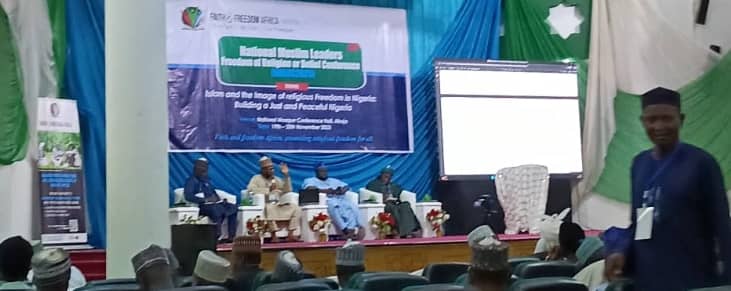
“Everyone has the right to freedom of thought, conscience and religion; this right includes freedom to change his religion or belief, and freedom, either alone or in community with others and in public or private, to manifest his religion or belief in teaching, practice, worship and observance.”
By Longji Dambok
Over the years, Nigeria has hosted many meetings and conferences on interfaith relations. However, these gatherings often lead to more meetings without much real change. Interfaith dialogue in Nigeria mainly focuses on finding common ground for peaceful coexistence between Christians and Muslims only.
Freedom of Religion or Belief (FoRB) takes this conversation further. It does not only include people of other faiths but also recognises the rights of those without religion or faith — such as atheists, humanists, and traditional religious worshippers.
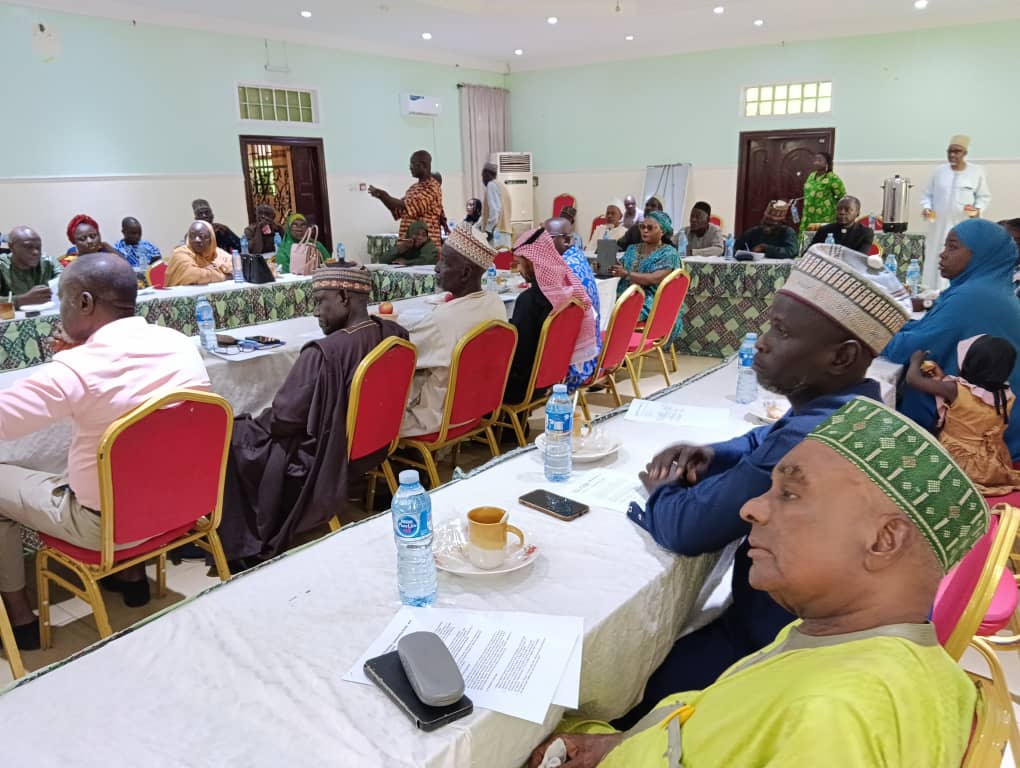
Religion leaders at the roundtable discussion event in Kaduna
By definition, FoRB stands for Freedom of Religion or Belief. It is clearly stated in Article 18 of the Universal Declaration of Human Rights, and Section 38 of Nigeria’s Constitution, respectively, that:
“Everyone has the right to freedom of thought, conscience and religion; this right includes freedom to change his religion or belief, and freedom, either alone or in community with others and in public or private, to manifest his religion or belief in teaching, practice, worship and observance.”
“Every person shall be entitled to freedom of thought, conscience and religion, including freedom to change his religion or belief, and freedom (either alone or in community with others, and in public or in private) to manifest and propagate his religion or belief in worship, teaching, practice and observance.”
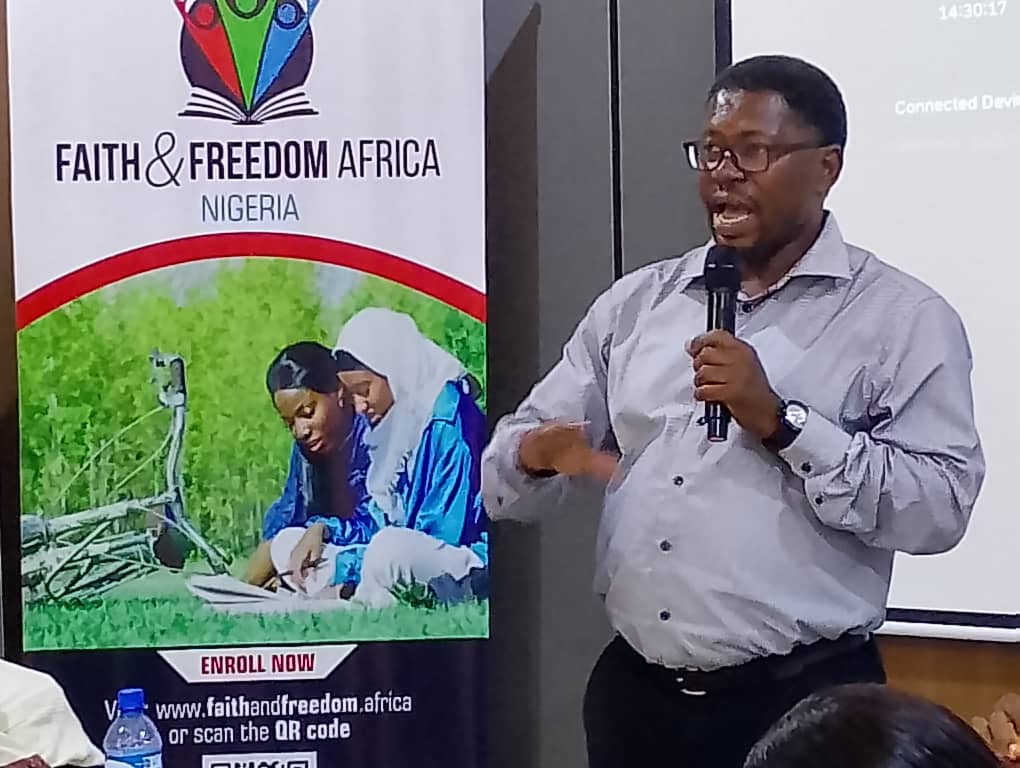
The FFA Nigeria Contractor, Mr Felix Samari addressing the Participants at the Town Hall Meeting in Abuja.
If people truly understand the above, the rampant misuse of religion that we see today will stop. This is because FoRB protects human beings, not religion. It is a human right that ensures everyone is treated with dignity, no matter what they believe or do not believe.
When FoRB becomes the centre of interfaith dialogue, the results will be remarkable. People will become more tolerant, and discussions will move beyond just comparing religions to understanding our shared humanity.
Many religious followers are unaware of Article 18 of the Universal Declaration of Human Rights and Article 38 of the Constitution of the Federal Republic of Nigeria, both of which guarantee FoRB. Once they learn about these, their perspectives will definitely change. As we often say when discussing FoRB: “You may not truly value FoRB until you find yourself in a place where your religion is in the minority.” In such situations, you will not only appreciate FoRB but also want others to be educated about it.
FoRB directly challenges religious extremism. When FoRB is understood and practiced, extremism and radicalisation lose their power.
A lot of people are unaware of FoRB and what it stands for. And it is the responsibility of anyone who is a FoRB practitioner to begin to speak to others about FoRB. The more we talk about it, the more it becomes an integral part of our existence.
Leaders at various levels must be trained on FoRB if the society will eventually embrace the movement. When people begin to hear their leaders talk about freedom of religion or belief, it will go a long way in framing the people’s worldview about the subject matter; as most people are direct reflection of their leaders. They do only what their leaders tell them to do.
Benefits of FoRB
The following are some of the benefits of FoRB:
1. No one is left behind — FoRB brings everyone to the roundtable regardless of belief.
2. FoRB protects people, not religion.
3. It gives everyone a sense of belonging.
4. It reduces religious discrimination and persecution.
5. It promotes peaceful coexistence and national development.
6. It strengthens respect for human rights.
7. It encourages political stability.
8. It supports dialogue and reconciliation.
9. It helps fight religious freedom violations.
10. It allows people without faith to live freely and safely in society.
11. FoRB saves people from religious extremism.
With all these benefits, FoRB truly has the power to change the story of interfaith dialogue. When FoRB becomes the foundation of our discussions, it will build trust, create mutual respect, and make everyone feel included.
FoRB fills the gaps that have long existed in interfaith conversations, the so-called “grey areas” that many avoid. With FoRB, no one will suffer or die because of their religion or belief.
When we allow FoRB to dominate our discussions, it is a win–win for everyone. When FoRB becomes the heart of interfaith dialogue, true peace will become our experience and expression.
Be a FoRB today!