


By Rahmon Alabi
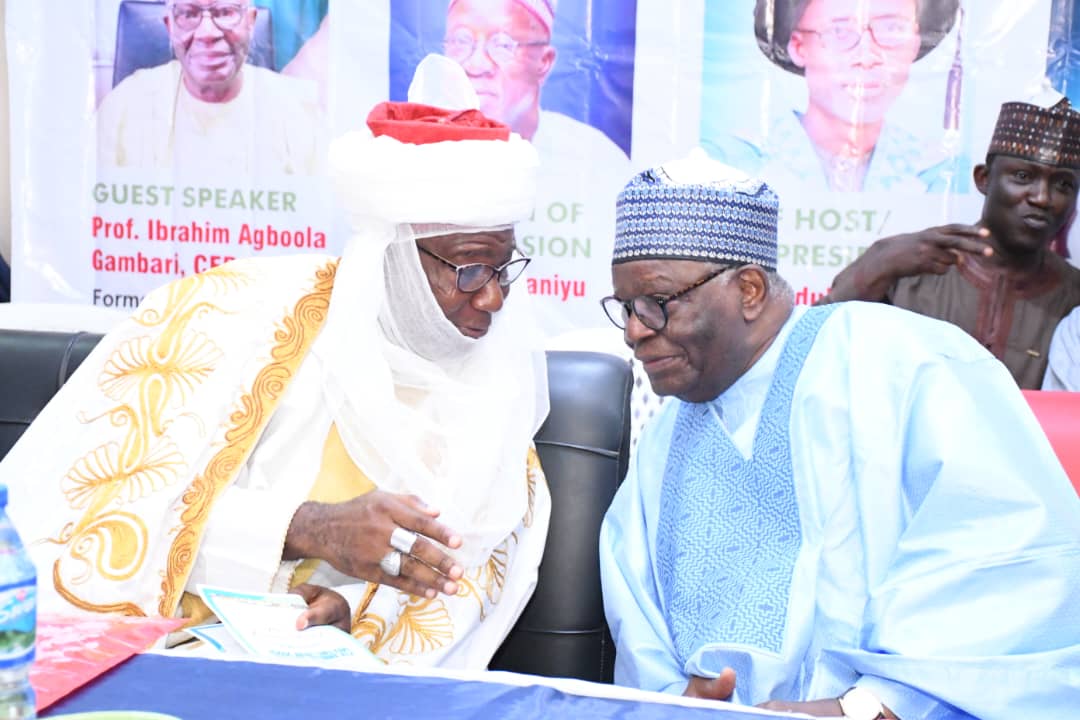
Former Minister of External Affairs, Professor Ibrahim Gambari, on Saturday, called for a radical shift in how academia engages with the Nigerian state, asserting that the ivory tower must move beyond theoretical discourse to become a functional engine for good governance. He spoke at the seventh annual general meeting of Ilorin Emirate Professors’ Association in Ilorin.
Gambari, who was ex-Nigerian envoy to the United Nations (UN), in his lecture titled “Roles and Responsibilities of Academia in Good Governance,” emphasised that the sustainable development of the nation hinges on a symbiotic relationship between intellectual research and public policy.
The scholar-diplomat noted with concern that much of the high-level research generated within Nigerian universities remains confined to library shelves, failing to influence the socio-political landscape.
He argued that for the academia to fulfill its social contract, it must provide evidence-based solutions to the country’s most pressing challenges.
Professor Gambari specifically highlighted the need for academics to act as the “intellectual conscience” of the nation by holding leaders accountable through rigorous data and unbiased analysis.
He stressed that good governance is not merely the absence of corruption, but the presence of efficient systems fueled by the expertise available within the university system.
According to him, the role of the academic extends to mentorship and the grooming of a new generation of leaders imbued with ethical standards and a sense of patriotic duty.
Addressing the “town and gown” divide, the Professor urged university administrators and faculty members to actively seek partnerships with government agencies and private sector stakeholders.
He pointed out that while Nigeria possesses vast natural and human resources, the lack of a structured framework to integrate academic findings into governance has led to a “knowledge gap” that continues to hinder national progress and innovation.
The lecture also touched on the critical need for curriculum reform to ensure that graduates are not only technically proficient but also grounded in the principles of democratic governance and civic responsibility. Gambari posited that the classroom should serve as a laboratory for democracy, where students are encouraged to think critically about the societal structures they will eventually lead and reform.
Professor Gambari reminded the audience that the autonomy of the university comes with a responsibility to be relevant to the immediate environment. He warned that if the academia remains aloof from the struggles of the common man and the intricacies of statecraft, it risks becoming an expensive ornament rather than a catalyst for the much-needed transformation of the Nigerian state.
Earlier, the chairman of the occasion, and chairman of the Governing Council of the Kwara State University, Malete, Professor AbdulGaniyu Ambali, had preached love, peace and unity among scholars from the Emirate. He counselled against the pull-him-down syndrome.
In his welcome address, the president of Ilorin Emirate Professors’ Association, Professor Abdulkabir Hussain Solihu, emphasised that scholars bear a “sacred responsibility” to guide society with wisdom and truth, building on the Emirate’s longstanding tradition of holding learning in the highest esteem.
According to him, professors’ responsibilities now extend beyond traditional teaching and research to encompass thought leadership, evidence-based policy formulation, and ethical guidance in governance processes.
To operationalise this vision, Professor Solihu announced the establishment of a committee on “Good Governance and Citizens’ Civic Rights,” chaired by Professor Hassan Salihu. The committee has been tasked with organising symposiums, forums, and town halls to facilitate public dialogue on citizenship education, good governance, and national unity