


By Ridwan Elemosho
As Kwara State nears the close of 2025, the conversation around its political future is increasingly framed in a familiar yet flawed binary, legacy versus dynasty. This simplistic narrative does a disservice to the people of Kwara and to the complex realities of governance. Leadership is not measured by catchy labels or rhetorical positioning, but by tangible impact on citizens’ lives.
When examined through this lens, the Saraki political structure reveals itself not as an accident of continuity, but as a legacy of inclusion, development, and sustained progress that many Kwarans consciously chose to uphold. It is time to move beyond convenient rhetoric and demand results because only outcomes endured by the people define true legacy.
In Kwara’s political history, the Saraki experience demonstrates that legacy translated into dynasty because it delivered results that the people valued and deliberately chose to sustain. The continuity associated with the Saraki name did not arise from compulsion or entitlement; it emerged because large segments of the electorate supported, defended, and cherished what the legacy represented, it represents political inclusion, stability, national relevance, and tangible improvements in daily life. In democratic politics, when a legacy consistently meets public expectations, continuity becomes not an imposition, but a collective choice.
The Saraki political architecture, founded by Late Olusola Saraki, was anchored in broad mobilisation, institutional presence, and deliberate integration of Kwara Central, North, and South. That legacy found expression in enduring social and economic infrastructure that touched ordinary lives.
These include the establishment and development of Kwara State University (KWASU) to expand access to higher education; the creation of Harmony Diagnostics Centre to strengthen specialised healthcare delivery; low-cost housing estates that enabled ordinary Kwarans to own decent homes, vocational and skills acquisition center that empowered youths with practical livelihoods, and the upgrading of the Ilorin airport including Cargo Terminal to connect Kwara to national and regional markets. These were complemented by the expansion of rural road networks linking farming communities to markets, as well as investments in hospitality, tourism, and sports infrastructure that promoted youth engagement and social cohesion.
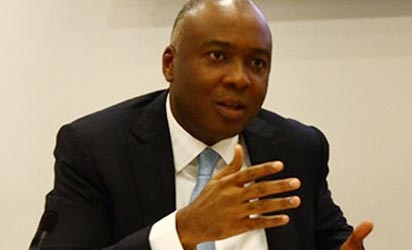
Continuity through Abubakar Bukola Saraki was therefore sustained through repeated electoral mandates, because voters associated it with access, opportunity, and inclusion.
Beyond continuity, this political structure produced leadership at scale. It produced governors, senators across the three senatorial districts, ministers, ambassadors, and influential political actors who consistently projected Kwara’s interests at the national level. This breadth of representation was not symbolic. It reflected a conscious strategy of inclusion, succession, and capacity-building that expanded opportunity across regions rather than concentrating power within a narrow corridor, reinforcing the very legacy that sustained public trust.
By contrast, current governance increasingly reflects what many citizens perceive as legacy building through use and dump politics, deploying and discarding people, structures, and ideas once they have served immediate political objectives. Leadership has become transactional rather than integrative, with loyalty prioritised over competence and silence rewarded over initiative.
Administratively, this has translated into weak coordination, reactive decision-making, and an overreliance on propaganda to mask policy fatigue. The consequences are visible, development outcomes increasingly centralised around the state capital, persistent insecurity in many rural communities, deteriorating school infrastructure outside the central zone, limited economic impact beyond salary payments, shrinking transparency, and restricted access to information.
Legacy is not proclaimed, nor is it secured by denouncing continuity or dismantling political and social capital accumulated over decades. It is measured by inclusion, institutional strength, security, social infrastructure, economic opportunity, transparency, and freedom across the breadth of society.
As 2025 draws to a close, Kwara is being judged not by slogans, but by experience. Consequences whether positive or negative will outlive rhetoric.
As the Yoruba proverb says, “Òkìtì tí a kò mọ, kì í parí ẹyìn” ( a knife whose edge is unknown does not finish the back). In governance, just as in life, wisdom lies in understanding and respecting a proven edge before discarding it recklessly.
The Saraki dynasty stands not as inheritance, but as the natural consequence of a legacy that Kwarans consciously chose to preserve.