


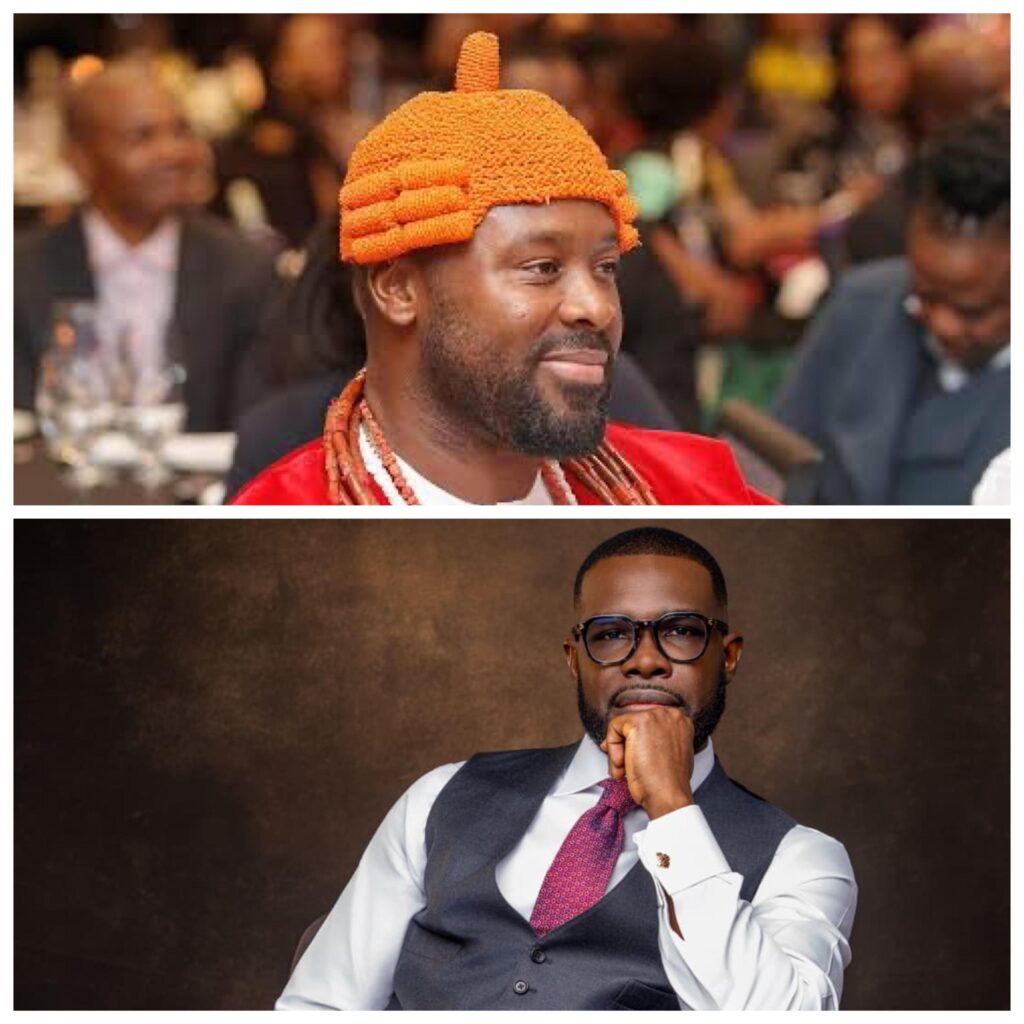
Inspiration from Olu of Warri for Ijebu’s Next Era of Kingship
The year 2021 offered Nigeria a quiet but important lesson in succession. When the crown was placed on the head of the 37-year-old Ogiame Atuwatse III, it marked more than a change of guard in Warri. It signalled a shift in how ancient thrones could function in a modern republic. That coronation did not dilute tradition. It re-energised it.
Today, as Ijebuland approaches its own defining moment, a familiar archetype has begun to emerge in public conversation through Omooba Abimbola Onabanjo. The comparison between both men is not about personalities or outcomes. It is about a pattern of leadership that speaks to the demands of this century.
For decades, traditional stools across Nigeria have been shaped by gerontocracy, where age alone was often treated as a proxy for readiness. That logic is quietly being revised. What is taking its place is a model in which royal lineage remains essential, but is reinforced by education, global exposure, and an ability to engage a fast-moving society.
When Ogiame Atuwatse III ascended the throne, he arrived with a profile more typical of a global executive than a ceremonial monarch. With advanced education and experience in the energy sector, he understood instinctively that modern kingship requires fluency in diplomacy, economics, and global narrative, alongside spiritual and cultural authority. The result was a palace that could speak confidently to investors, educators, youth, and international partners, without losing its ancestral grounding.
Ijebu finds itself at a similar crossroads.
The Awujale institution is not just another traditional stool. It is one of the most disciplined and historically consequential thrones in Yorubaland, shaped most recently by the 65-year reign of Oba Sikiru Adetona, who himself ascended the throne as a young man in 1960. His longevity proved that youth, when paired with restraint and institutional respect, could produce enduring authority.
As conversations turn to the future, the emphasis has shifted from age to competence. The unspoken question is no longer “Who is old enough?” but “Who is prepared?”
At 45, Omooba Abimbola Onabanjo fits squarely within this recalibration. A prince of the Fusengbuwa Royal House, Harvard-educated and a businessman, his profile reflects a convergence of lineage, enterprise, and civic awareness. Yet it is not pedigree alone that has drawn attention.
Despite intense online enthusiasm and premature speculation, Omooba Onabanjo has consistently emphasised respect for process. He has publicly urged supporters to refrain from referring to him as Awujale, stressing that kingship is conferred through sacred tradition, not social media momentum. That instinct for restraint is not incidental. It is one of the quiet markers of suitability in traditional leadership.
The parallel with the Olu of Warri becomes clearest here. In 2021, Ogiame Atuwatse III navigated complex internal dynamics with calm authority and spiritual discipline. In both cases, legitimacy was strengthened not through spectacle, but through patience.
This matters deeply for Ijebu youth, and by extension a wide variety of Nigerian youth.
Nigeria is a young country, and its younger generation is culturally fluent, digitally native, and economically ambitious. They are also searching for institutions that feel relevant to their lived reality. A traditional ruler who understands branding, cultural capital, and the creative economy can transform heritage into opportunity.
Ijebu already possesses one of Africa’s most recognisable cultural exports in Ojude Oba, a festival that blends colour, hierarchy, and commercial potential. A young, globally exposed Awujale who understands narrative, influence, and economic ecosystems could convert that cultural power into a year-round engine for tourism, creativity, and youth enterprise.
The Olu of Warri has shown that this is not theoretical. Culture, when intelligently stewarded, can be leverage rather than nostalgia.
This is why, in my opinion, the comparison resonates beyond succession politics. What is emerging is a new royal archetype, one that respects ancestry while understanding algorithms, that values silence as much as visibility, and that treats tradition not as a museum piece but as living capital.
If recent history is any guide, Nigerian kingship is entering an era where the crown increasingly rests on heads shaped by preparation rather than mere passage of time.
About the Author
Lordson Okpetu is a public affairs strategist and commentator focused on infrastructure, public-sector reform, and corporate reputation.