


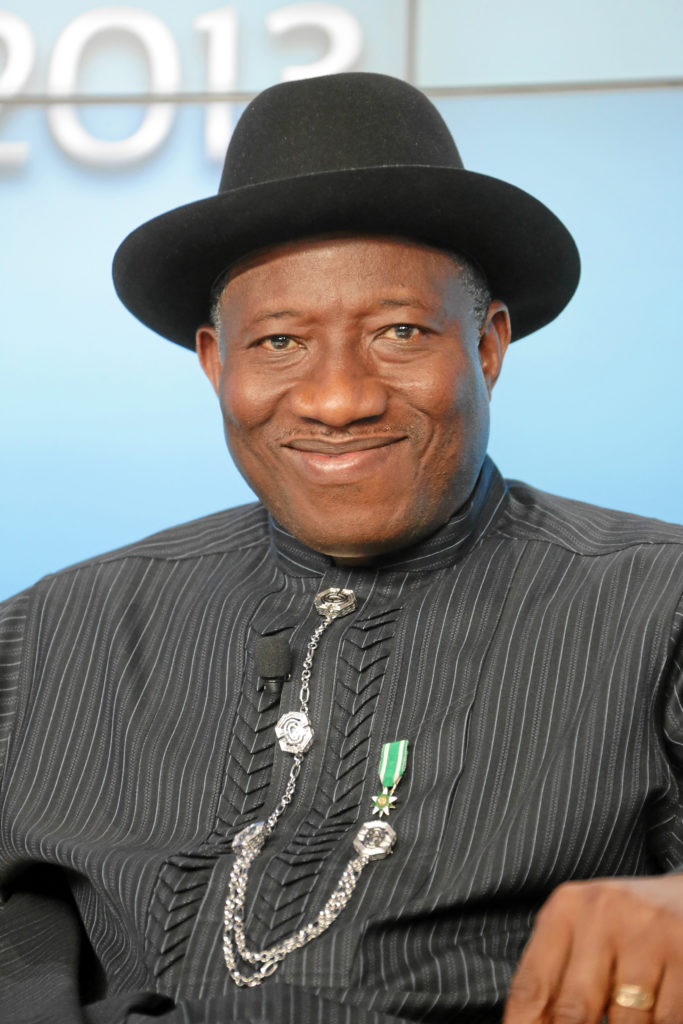
By Abdulrahman Aliagan,
For former President Goodluck Jonathan, politics has always been a story of unlikely ascension. From deputy governor in Bayelsa to governor, vice-president, acting president and eventually elected president in 2011, Jonathan’s political rise remains one of the most dramatic trajectories in Nigeria’s democratic history. More than a decade after leaving office in 2015, the former president is once again being pulled into the nation’s turbulent political calculations — this time through a deeply fractured Peoples Democratic Party (PDP).
The announcement by the Kabiru Turaki-led faction of the PDP that Jonathan had been granted an automatic waiver from screening ahead of the party’s presidential primary was symbolic as much as it was political. According to former Niger State governor Babangida Aliyu, the former president’s long public service record made any screening unnecessary. To party loyalists, the waiver was an acknowledgment of Jonathan’s stature within the PDP. But beyond the ceremonial endorsement lies a more troubling question: can Jonathan rescue a party that appears trapped in legal confusion, shrinking influence, and internal disarray?
The PDP today is far from the formidable political machine that ruled Nigeria for sixteen uninterrupted years. Since losing power to the All Progressives Congress (APC) in 2015, the party has battled serial defections, leadership crises, unresolved zoning disputes, and factional wars that have steadily weakened its national appeal. The emergence of parallel tendencies within the party — including the Turaki faction — has further complicated its identity and legitimacy ahead of the next electoral cycle.
Perhaps more worrying is the PDP’s declining political map across Nigeria. Once dominant in several regions, the party is now reduced to a fragile opposition structure with only one outgoing governor expected to remain in office after the current cycle. This erosion of state-level control has severely diminished the PDP’s bargaining power, financial muscle, and grassroots mobilization capacity. Governors traditionally form the backbone of presidential campaigns in Nigeria, controlling political structures and influencing delegate networks. Without strong gubernatorial anchors, the PDP risks entering the next election season politically underfunded and organizationally vulnerable.
Jonathan’s possible return therefore represents both hope and desperation. Within sections of the opposition, the former president is viewed as one of the few remaining national figures capable of attracting cross-regional support. His post-presidency reputation — particularly his peaceful concession of defeat to Muhammadu Buhari in 2015 — earned him considerable international goodwill and elevated his democratic credentials. Compared to the increasingly bitter and personality-driven politics dominating Nigeria’s opposition landscape, Jonathan still carries the image of a calm, moderate statesman. Yet political nostalgia may not be enough.
Nigeria’s opposition parties are themselves struggling with credibility crises. The Labour Party continues to wrestle with internal leadership disputes after its 2023 electoral surge, while smaller coalition efforts remain fragmented and personality-driven. Rather than presenting a united ideological front against the ruling APC, opposition parties appear locked in separate survival battles. In that atmosphere, Jonathan’s candidacy could either emerge as a rallying point for disillusioned politicians or become another casualty of elite political bargaining.
Another challenge lies in Jonathan’s own political silence. Unlike many Nigerian politicians who maintain active structures between elections, the former president has largely operated as a diplomat and international statesman since leaving office. He has consistently avoided direct partisan confrontation, preferring peace missions and democracy advocacy across Africa. That restraint may strengthen his moral appeal, but it also raises questions about whether he still commands an effective grassroots political machine capable of surviving Nigeria’s fiercely transactional electoral environment.
There is also the constitutional and moral debate surrounding his eligibility and political ambition. Though some legal interpretations argue Jonathan could still contest because his first assumption of office came through succession rather than direct election, critics insist any attempt at a comeback could reopen constitutional controversies that Nigeria can scarcely afford amid rising economic hardship and political distrust.
Still, the PDP appears willing to gamble on his name recognition and perceived acceptability. The waiver granted to Jonathan reflects a party searching for relevance, legitimacy, and perhaps redemption. It also reveals the extent to which the PDP lacks a new generation of nationally unifying political figures capable of inspiring confidence across Nigeria’s deeply divided electorate.
For now, Jonathan remains more of a symbolic possibility than a declared political force. His failure to appear for nomination submission at the Shehu Musa Yar’Adua Centre in Abuja only deepened speculation about whether he truly intends to return to active politics or whether powerful interests within the opposition are merely testing public reaction to his name.
What is clear, however, is that the PDP’s crisis runs deeper than candidate selection. Even a figure with Jonathan’s national profile may struggle to revive a party weakened by defections, legal uncertainty, dwindling state influence, and ideological exhaustion. In many ways, Jonathan’s re-emergence says less about his personal ambition and more about the vacuum of leadership within Nigeria’s opposition politics.
As the 2027 political permutations gather momentum, the former president may yet become a consensus bridge between fragmented opposition blocs. But unless the PDP resolves its structural crises and rebuilds trust among Nigerians, Jonathan’s political resurrection could end up as another chapter in the long decline of a once-dominant party.