


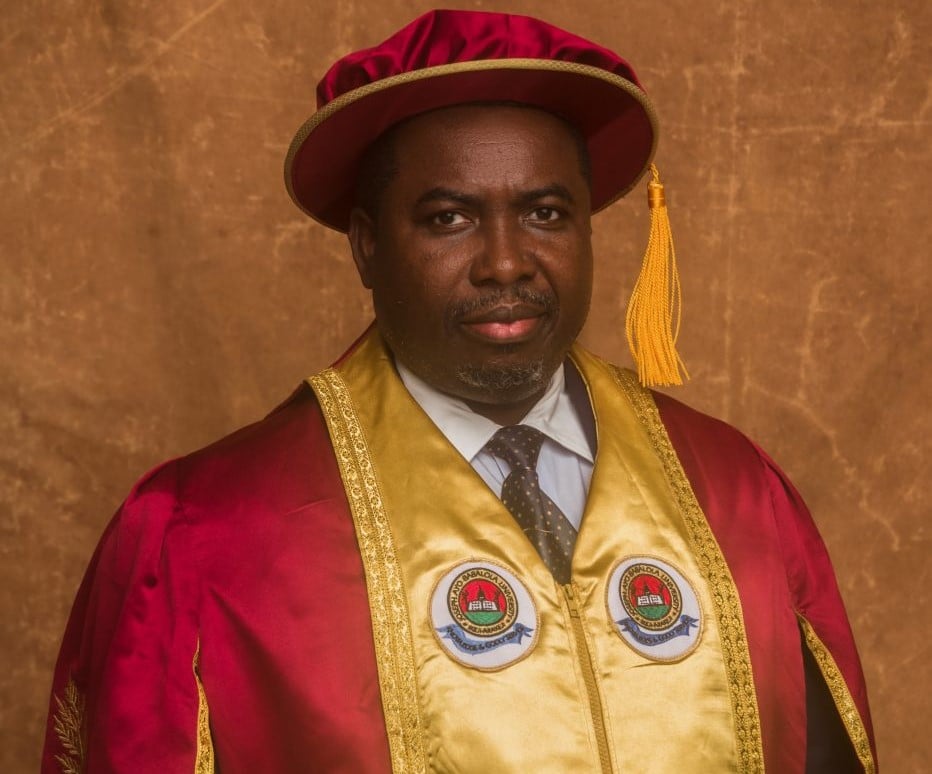
- Council of State gives unanimous nod to Tinubu’s nominee
By Abdulrahman Aliagan,
In a decision that could shape the trajectory of Nigeria’s democracy, the National Council of State has given its unanimous approval to the appointment of Professor Joash Ojo Amupitan, SAN, as the new Chairman of the Independent National Electoral Commission (INEC).
The approval, granted at the Council’s meeting on Thursday, followed the presentation of Amupitan’s nomination by President Bola Ahmed Tinubu, who described the legal scholar as “a man of integrity and deep intellect, with no political baggage.”
The nomination comes on the heels of the completion of Professor Mahmood Yakubu’s eventful tenure, which spanned from 2015 to October 2025 — a decade marked by major electoral reforms and technological innovations that redefined Nigeria’s voting process.
For the first time in the nation’s history, the leadership of INEC will come from Kogi State in the North-Central region — a symbolic recognition of a region that has often been the balancing bridge in Nigeria’s federal structure.
At 58, Professor Amupitan embodies the blend of scholarship, discipline, and administrative experience that President Tinubu says the electoral body needs as it navigates an era of heightened political awareness and digital transformation.
Born on April 25, 1967, in Ayetoro Gbede, Ijumu Local Government Area of Kogi State, Amupitan’s academic and professional journey is a story of steady ascent. From humble beginnings at Kwara State Polytechnic, Ilorin (1982–1984) to earning his LL.B at the University of Jos (1987), and being called to the Nigerian Bar in 1988, his career has been defined by rigor and excellence.
He obtained his Master of Laws (LL.M.) in 1993 and later a Doctorate in Law (Ph.D.) in 2007, both from the University of Jos. His long-standing academic career at the same institution has seen him occupy critical leadership roles — Dean of the Faculty of Law (2008–2014), Chairman of the Committee of Deans and Directors (2012–2014), and Deputy Vice-Chancellor (Administration), a position he currently holds.
Beyond the university walls, Amupitan has served the legal and corporate communities with distinction. He is the Pro-Chancellor and Chairman of Council of Joseph Ayo Babalola University, Osun State, a member of the Council of Legal Education (2008–2014), and a board member of the Nigerian Institute of Advanced Legal Studies. He has also contributed to Nigeria’s private sector through his service on boards such as Integrated Dairies Limited and Riss Oil Limited, Abuja.
Described by peers as “a gentleman jurist with a reformer’s mind,” Amupitan is a Senior Advocate of Nigeria (SAN), conferred in September 2014. His academic work has influenced legal education and practice across the country. Among his notable publications are Corporate Governance: Models and Principles (2008), Documentary Evidence in Nigeria (2008), Evidence Law: Theory and Practice in Nigeria (2013), and Principles of Company Law (2013) — works that have become reference materials in universities and law chambers.
Governor Ahmed Usman Ododo of Kogi State, one of the Council of State members who spoke after the meeting, hailed the nomination as “a victory for merit and national balance,” describing Amupitan as “a man of impeccable character and unblemished record.”
The task ahead is formidable. As the head of INEC, Professor Amupitan will inherit both the successes and controversies of his predecessor’s era — from the introduction of the Bimodal Voter Accreditation System (BVAS) and electronic result transmission to the lingering challenges of electoral logistics and public trust.
Political analysts say his academic neutrality and technocratic reputation may help restore confidence in the commission’s independence. “He comes at a time when Nigeria’s electoral process needs credibility more than anything else,” noted a senior political correspondent in Abuja. “His success will depend on how he manages political pressure and institutional reforms.”
In accordance with the Constitution, President Tinubu will forward Amupitan’s name to the Senate for confirmation. The legislative approval is expected to be swift, given the Council’s unanimous endorsement and the nominee’s clean record.
Should the Senate confirm him, Amupitan will become the fifth substantive INEC Chairman since Nigeria’s return to democracy in 1999. His appointment, many believe, could signal a new phase of reform — one anchored on legal discipline, administrative clarity, and a renewed commitment to transparent elections.
Married and blessed with four children, Professor Amupitan stands at the intersection of law, academia, and public service — a blend of intellect and integrity that may well redefine the future of Nigeria’s electoral system.