


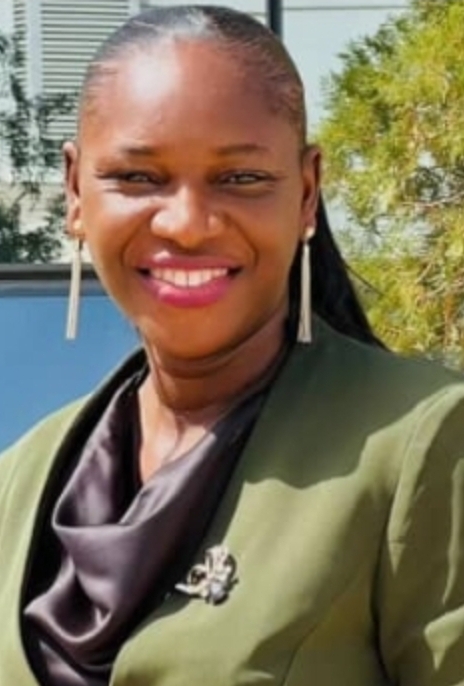
By Omonon Chidi-Nwafor
Nigeria stands at a critical intersection. Our young population with vibrant, ambitious, and brimming potential navigating a landscape marked by economic pressure, identity dislocation, and rising exposure to harmful substances. These forces do not operate in isolation; they reinforce each other, shaping the trajectory of the nation’s future.
To confront this complexity, Nigeria needs more than enforcement. We need resilience, a fusion of patriotism, protection, and national purpose.
NDLEA: A Frontline Shield in Nigeria’s Youth Resilience Strategy
The recent interception of ₦6.7 billion worth of opioids in Lagos including 7.2 million high-dose Tramadol pills and more than 52 million milliliters of codeine syrup, this is far more than an operational victory. It is a national safeguard, a decisive intervention that prevented a wave of chemical harm from sweeping through communities where young Nigerians are already navigating economic uncertainty, climate pressure, and social vulnerability.
This was not just a warehouse raid; it was the disruption of a criminal economy designed to prey on youthful desperation. Every pill seized represents a crisis averted. Every bottle removed from circulation represents a young life given one less hurdle to overcome. In a country where environmental and social shocks already stretch the resilience of millions, NDLEA’s work now forms one of the most critical layers of youth protection.
Brig. Gen. Mohamed Buba Marwa (Rtd), NDLEA Chairman/CEO, captured the magnitude of this breakthrough when he declared that “the days of drug cartels operating with impunity are over.
“The days of drug cartels operating with impunity are over.
— Brig. Gen. Mohamed Buba Marwa
His statement reflects more than enforcement strength—it reflects a deliberate national posture. It signals to criminal networks that Nigeria is no longer a permissive environment for the exploitation of its youth, and that the state is ready to confront this threat with precision, intelligence, and strategic endurance.
This is the kind of institutional courage that developing nations need at their most vulnerable intersections—where public health meets national security, and where youth futures collide with predatory markets. Yet as critical as courage is, Nigeria requires something even deeper: coherence.
Nigeria requires something even deeper: coherence.
Enforcement must speak to civic reorientation. Protection must align with national identity-building. And operational success must feed into long-term resilience.
NDLEA has shown what is possible when an institution stands firmly in its mandate. The task ahead is ensuring that this protective force is woven into a broader ecosystem—one in which schools, communities, and nation-building institutions like the Flag Foundation work in harmony to fortify the next generation.
But courage alone is not enough. Nigeria needs coherence.
Where Enforcement Meets Patriotism: The Role of FLAG Foundation of Nigeria
If NDLEA’s mission is to protect Nigeria from threats that weaken our youth, the Flag Foundation of Nigeria exists to strengthen the internal fabric that holds our nation together.
As a civic, non-partisan, non-governmental organization, FLAG is committed to reawakening patriotism, promoting national pride, and cultivating the mindset of citizenship that keeps a country standing long after policies and governments change.
Our work is rooted in a simple belief: A resilient nation is not built by enforcement alone, but by citizens who feel connected to the nation they are defending.
FLAG serves as a bastion for Nigeria’s National Unity Agenda, reconnecting the ideals of the New Nigeria with the lived experience of ordinary citizens. Through data-backed interventions, civic campaigns, school programs, and national-value reorientation work, we create the conditions where patriotism becomes a social norm — not a ceremonial slogan.
The Missing Link in Nigeria’s Youth Agenda: Patriotism as Prevention
Young Nigerians today face a crisis of identity and belonging.
Where belonging is weak, vulnerability increases.
Where patriotism fades, the ground becomes fertile for drugs, extremism, crime, and despair.
Patriotism, as FLAG Foundations frames it, is not about flags waved at ceremonies.It is national consciousness as protective infrastructure – a shield of identity that stabilizes young minds, strengthens communities, and anchors decision-making.
Enforcement removes the threat. Patriotism removes the temptation.
Together, they produce resilience.
Towards a Unified National Model of Resilienc
Nigeria stands at a moment where the fragmentation of national efforts is no longer sustainable. The threats facing young people—drug exposure, economic shocks, identity loss, social dislocation—are interconnected, and so the nation’s response must be equally interconnected. A unified model of resilience begins with the recognition that different institutions hold different parts of the solution, and that true transformation happens only when these parts operate in synchrony.
At the frontline of protection, the NDLEA is already demonstrating what institutional vigilance looks like. Its recent operations show the power of intelligence-driven enforcement in stopping harmful substances before they reach vulnerable communities. Every successful seizure is not just an operational victory; it is a preventative act that secures the future of young Nigerians.
Complementing this protective shield is the work of the Flag Foundation of Nigeria, which strengthens the cultural and psychological foundations of resilience. Through its mission to reawaken patriotism and deepen national consciousness, FLAG addresses the internal dimension of national security—the values, identity, and sense of belonging that keep citizens anchored. Where the NDLEA safeguards the physical lives of our youth, FLAG safeguards the emotional and civic fabric that binds them to the nation. Together, these efforts form two pillars of a national resilience architecture.
But the ecosystem extends further. Schools remain the early environments where patriotism, discipline, and national pride can be nurtured before negative influences take root. Communities are the first responders in moments of vulnerability—spaces where mentorship, monitoring, and shared responsibility can flourish. Development agencies, with their resources and technical expertise, can help scale successful models and embed them in policy frameworks that endure beyond electoral cycles.
A unified national model of resilience therefore emerges when enforcement, civic reorientation, education, and community systems are not treated as separate silos but as components of a single national project. When the NDLEA’s protective mandate reinforces the Flag Foundation’s patriotic mission, and when both are extended through the reach of schools, communities, and development partners, vulnerability is gradually transformed into national strength.
Resilience, in this sense, is not an event. It is an ecosystem—one that grows stronger only when Nigeria’s institutions move in alignment, not in isolation. This is the pathway to a Nigeria where young people are protected, inspired, and empowered to uphold the values that define the nation’s future.
A National Call to Action
Nigeria’s youth deserve a future unburdened by the chains of addiction, hopelessness, or fractured identity. They deserve institutions committed to protection, and civil organizations committed to purpose.
The NDLEA has shown what decisive action looks like.
The Flag Foundation stands ready to complement this effort by renewing the patriotic spirit that binds nations together.
Our message is clear:
A resilient Nigeria is possible when we protect our youth and inspire our citizens. Patriotism is not the past, it is the path forward.
Omonon serves as the Counselor/Recovery Coach and Head of Programs at the Flag Foundation of Nigeria.
She welcomes engagement from researchers, practitioners, and institutions working at the intersection of youth resilience, mental health, climate stress, and substance-use recovery.
She can be reached via email at omydel@yahoo.com or WhatsApp at 0706 928 8295 for collaboration, program support, or further inquiry