

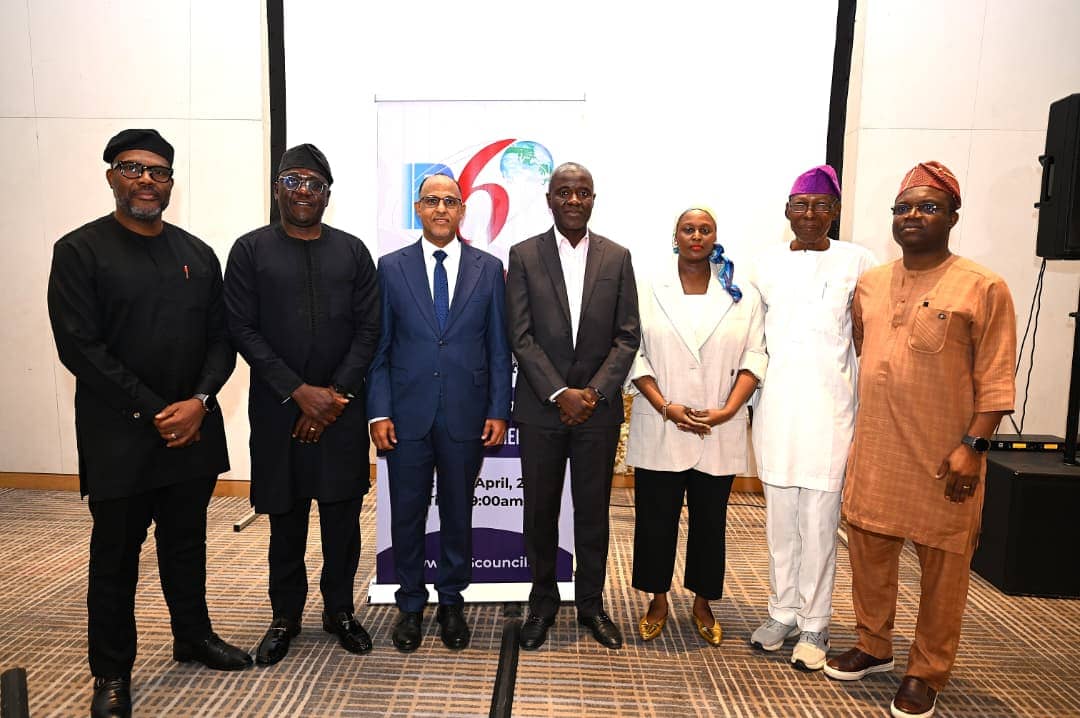
Caption L-R: Tony Emoekpere, Council Member, National Internet Protocol Version 6 (IPv6); Engr. Abraham Oshadami, Executive Commissioner Technical Services, Nigerian Communications Commission, NCC; Mr. Muhammed Rudman, National President, IPv6 Council; Dr. Aminu Maida, Executive Vice Chairman/CEO,NCC; Barr. Rimini Makama, Executive Commissioner Stakeholder Management, NCC; Dr. Chris Uwaje, National Vice President, IPv6 Council; Mr. Adesola Akinsanya, President, National Internet Registration Association, NIRA/ Council Member, during the Inauguration of the National Internet Protocol Version 6, (IPv6) Council Members, at the Marriott Hotel, Ikeja, Lagos State on the 23rd April 2026.
By Abdulrahman Aliagan,
In a decisive move to reposition Nigeria’s digital infrastructure for the future, the Nigerian Communications Commission (NCC) has inaugurated the National Internet Protocol Version 6 (IPv6) Council, signaling a new phase in the country’s transition to next-generation internet technology.
The launch, held at the Marriott Hotel Ikeja on April 23, 2026, brought together key stakeholders across government, telecommunications, and the broader technology ecosystem, underscoring the urgency of coordinated action.
Speaking at the event, the Executive Vice Chairman and Chief Executive Officer of the NCC, Aminu Maida, described the initiative as a critical step toward enhancing Nigeria’s digital competitiveness, strengthening cybersecurity, and safeguarding technological sovereignty. He revealed that Nigeria’s IPv6 adoption currently stands at about five percent, a figure significantly below the global average of over forty percent.
According to him, this gap highlights the need for accelerated efforts, especially as emerging technologies such as 5G, artificial intelligence, cloud computing, and the Internet of Things continue to place increasing demands on existing infrastructure.
IPv6, the latest version of the internet protocol, is designed to replace IPv4, which is gradually running out of available addresses due to the rapid expansion of connected devices and digital services worldwide. Maida emphasized that the transition is no longer optional but a strategic necessity, noting that no single institution can drive the process alone.
He stressed the importance of collaboration among regulators, telecom operators, businesses, academic institutions, and government agencies to achieve meaningful progress.
The newly inaugurated council has been mandated to oversee the implementation of a National IPv6 Deployment Strategy, with the goal of positioning Nigeria among Africa’s leading adopters within the next three years. The NCC has already initiated groundwork through policies and partnerships, including collaboration with the African Network Information Centre to support training and capacity development.
The council is expected to drive adoption across sectors, ensure that government platforms migrate to IPv6-enabled systems, and work with service providers, data centres, and financial institutions to remove barriers to deployment while advising on enabling policies.
Providing industry insight, the Chief Executive Officer of the Internet Exchange Point of Nigeria and President of the IPv6 Council, Muhammed Rudman, noted that one of the major challenges to adoption is the continued reliance on IPv4, which, despite its limitations, remains functional. He explained that many operators depend on Network Address Translation, a workaround that allows multiple users to share limited IP addresses, but one that comes with drawbacks in terms of security, performance, and traceability. Although Nigeria has over 200 Autonomous System Numbers and more than 100 networks with IPv6 allocations, only a small number are actively deploying it at scale.
Rudman disclosed that the council has set clear adoption targets, including achieving at least twenty percent IPv6 compliance in government networks by 2027, twenty-five percent deployment among telecom operators within the same period, and about thirty percent nationwide adoption by 2030.
He also pointed to ongoing efforts to expand technical capacity, with plans to train and certify at least fifty professionals in IPv6 by October. However, he acknowledged that funding constraints and a shortage of skilled personnel, worsened by the migration of trained experts abroad, remain significant obstacles.
In his remarks, renowned technology expert Chris Uwaje called for a broader shift away from outdated systems, urging Nigeria to fully embrace modern digital infrastructure. He stressed that the transition to IPv6 represents more than a technical upgrade; it is a strategic transformation that requires sustained investment in innovation, local talent, and long-term infrastructure development.
The inauguration of the IPv6 Council marks a turning point in Nigeria’s digital journey, reflecting a growing recognition that the country’s economic and technological future depends on robust, scalable, and secure internet infrastructure.
As stakeholders align efforts toward this transition, the effectiveness of implementation will determine how quickly Nigeria can bridge the gap and secure its place in the evolving global digital economy.