


“I did so with a clear goal — to leave a legacy of impact. Rotary has been at the forefront of the global fight against polio, working with international partners to eradicate the disease by 99%. But the job is not yet done. Our mission is to ensure that polio is wiped off the face of the earth completely.”
— Dr. Pat Ifeanyi Oramah
By Abdulrahman Aliagan,
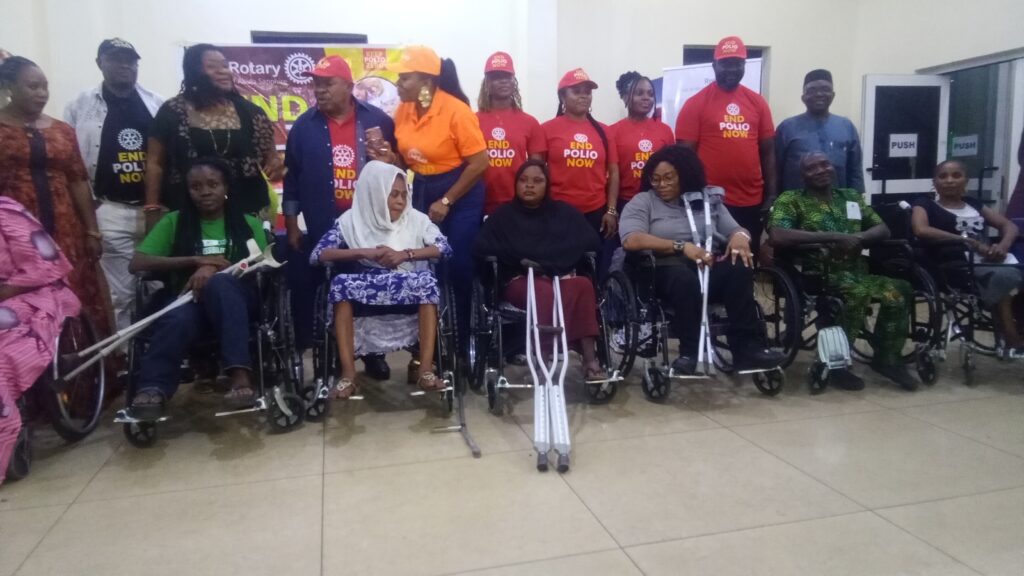
In the heart of Abuja, compassion met commitment as the Rotary Club of Abuja Sapphire, District 9127, hosted a profoundly moving Polio Talk Show on Friday, October 17, 2025, at the Barcelona Hotel, Wuse II. Themed “From Paralysis to Prevention: The Story of Polio,” the event underscored Rotary International’s unrelenting pursuit of a polio-free world — and the human stories that fuel that mission.
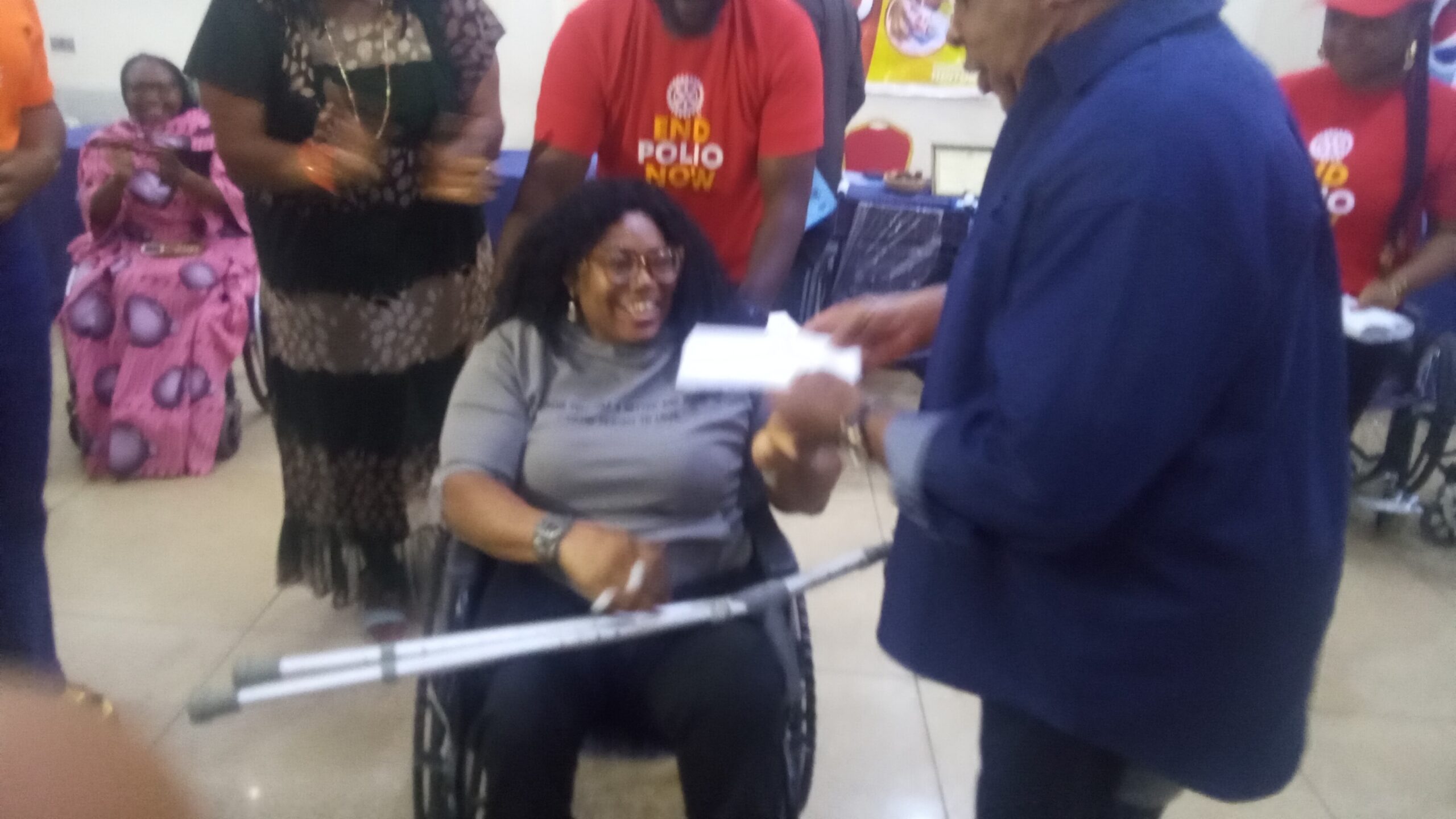
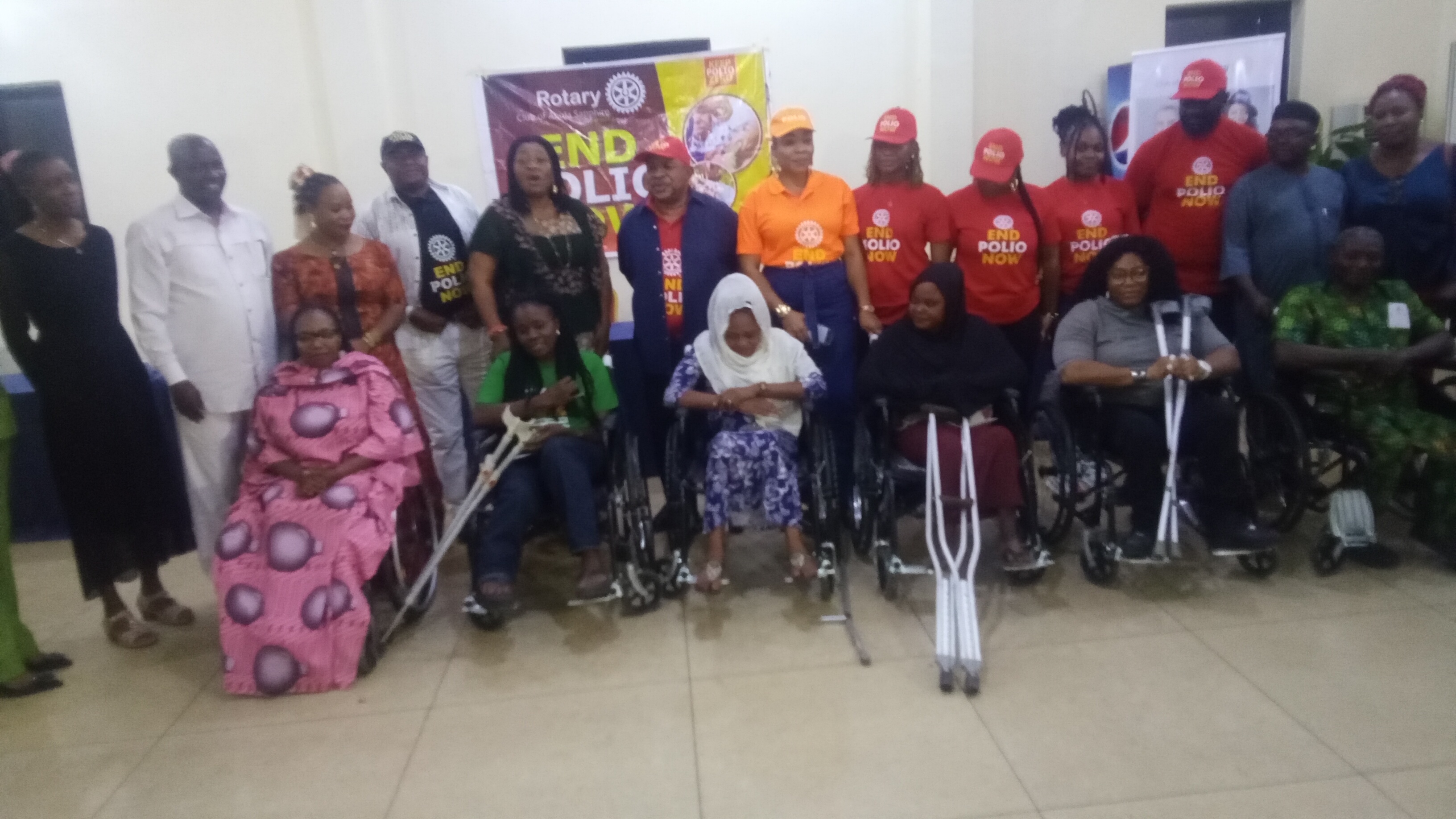
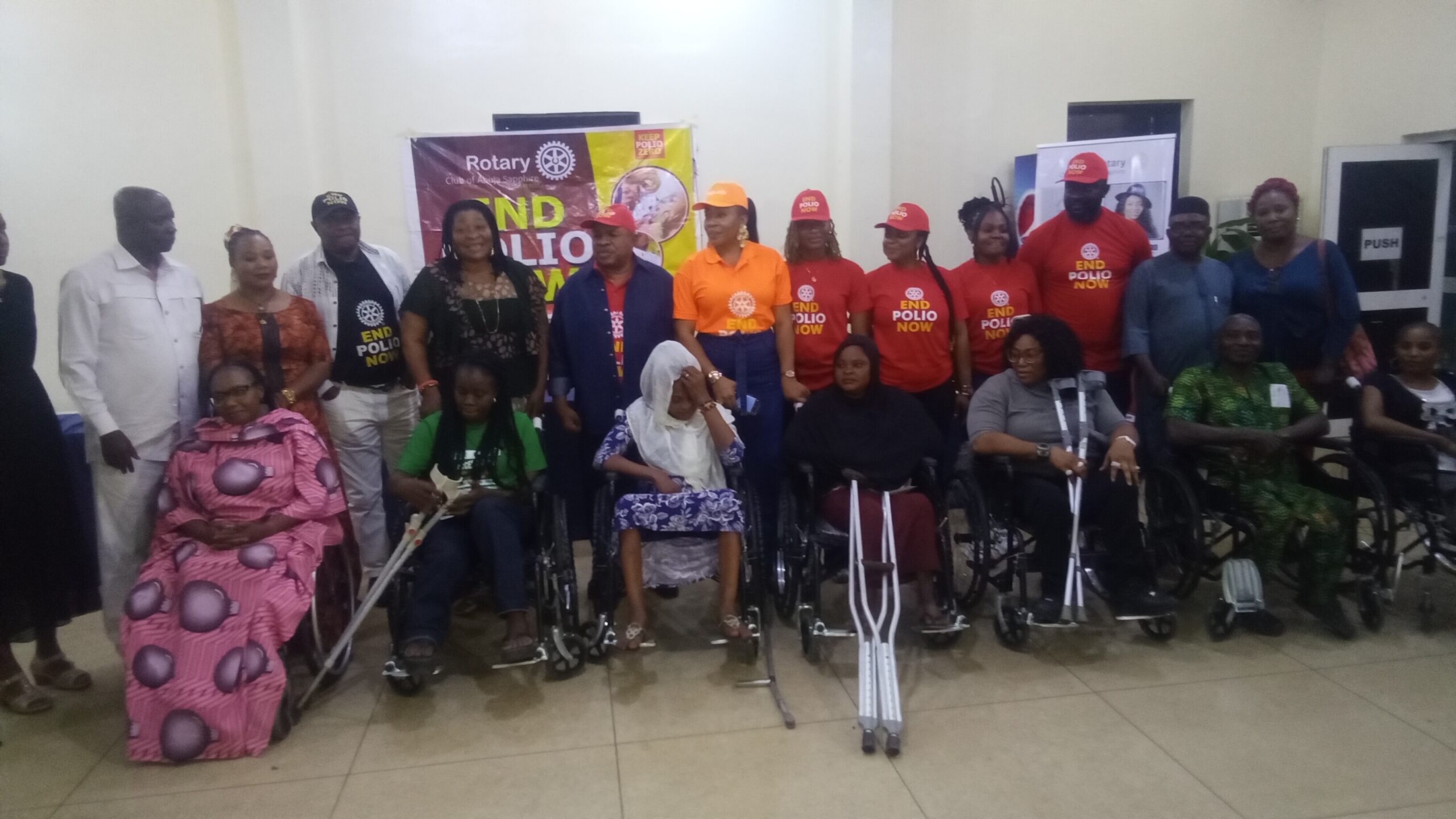
Beyond the emotional speeches and medical insights, the moment that captured the essence of Rotary’s creed of service was the donation of more than ten wheelchairs to polio survivors — a tangible expression of hope, dignity, and inclusion.
In his opening remarks, Dr. Pat Ifeanyi Oramah, President of the Rotary Club of Abuja Sapphire, reaffirmed Rotary’s leading role in the global fight against polio — a fight that has spanned over three decades and achieved a remarkable 99% reduction in global cases.
“When I accepted the honour to serve as the 8th President of this Club,” Dr. Oramah said, “I did so with a clear goal — to leave a legacy of impact. Rotary has been at the forefront of the global fight against polio, working with international partners to eradicate the disease by 99%. But the job is not yet done. Our mission is to ensure that polio is wiped off the face of the earth completely.”
Dr. Oramah, who also announced plans to collaborate with pharmaceutical organizations on diabetes awareness and treatment, emphasized that Rotary’s work goes beyond advocacy — it is about touching lives directly. “We have here polio survivors, parents, medical practitioners, and caregivers — a complete community of people who understand the battle against polio. Together, we will keep working until no child suffers from this preventable disease again,” he added.
Nigeria, once a global hotspot for wild poliovirus, has witnessed an extraordinary turnaround in its public health journey. The nation was officially declared free of wild poliovirus in August 2020 by the World Health Organization (WHO), marking a major milestone after decades of concerted immunization campaigns.
This progress, however, came at the cost of relentless effort — millions of vaccinations, tireless healthcare workers, and the support of organizations like Rotary International, UNICEF, WHO, and the Bill & Melinda Gates Foundation. The Nigerian government, through the National Primary Health Care Development Agency (NPHCDA), continues to collaborate with these partners to sustain surveillance, vaccination coverage, and public awareness.
Yet, experts warn that the war is not entirely over. Circulating vaccine-derived poliovirus (cVDPV) remains a threat, particularly in communities with low immunization coverage. It is against this backdrop that Rotary’s grassroots interventions — such as the Abuja Sapphire wheelchair donation — carry profound importance. They symbolize not only recovery but the continued vigilance needed to protect future generations.
At the Talk Show, healthcare professionals emphasized that eradication goes beyond vaccines — it includes lifelong support for survivors.
Pharm. Sylvia Oluchi Asogwa, a young public health advocate and Medical Sales Representative at Sepat Pharmaceuticals, highlighted the vital role of consistent vaccination and pharmaceutical education.
“Sustained community sensitization remains key. Rotary International has been the backbone of global polio eradication, ensuring that vaccines reach even the most remote areas,” she said.
Dr. Elizabeth Fadahunsi, a pediatrician with the National Hospital, Abuja, drew attention to the long-term medical and emotional needs of polio survivors. “Post-polio syndrome is real,” she noted. “Beyond surviving the virus, many live with physical challenges that require rehabilitation, physiotherapy, and social inclusion. Interventions like Rotary’s wheelchair donations restore not just mobility, but dignity.”
The evening’s most emotional highlight came from Mr. and Mrs. Tanko and ThankGod Bissala, who recounted how they adopted Justine Hassan, a four-year-old polio survivor abandoned by his parents.
“When my wife found him, he was lying helpless, eating and sleeping in his own waste,” Mr. Bissala shared. “God told her, ‘Go and adopt that boy.’ Since 2011, he has been part of our family.”
In a tearful moment that drew applause, Mrs. Bissala added, “After bringing Justine home, my daughter — who had been unable to walk for seven years — suddenly began to walk. That was how God turned our pain into testimony.”
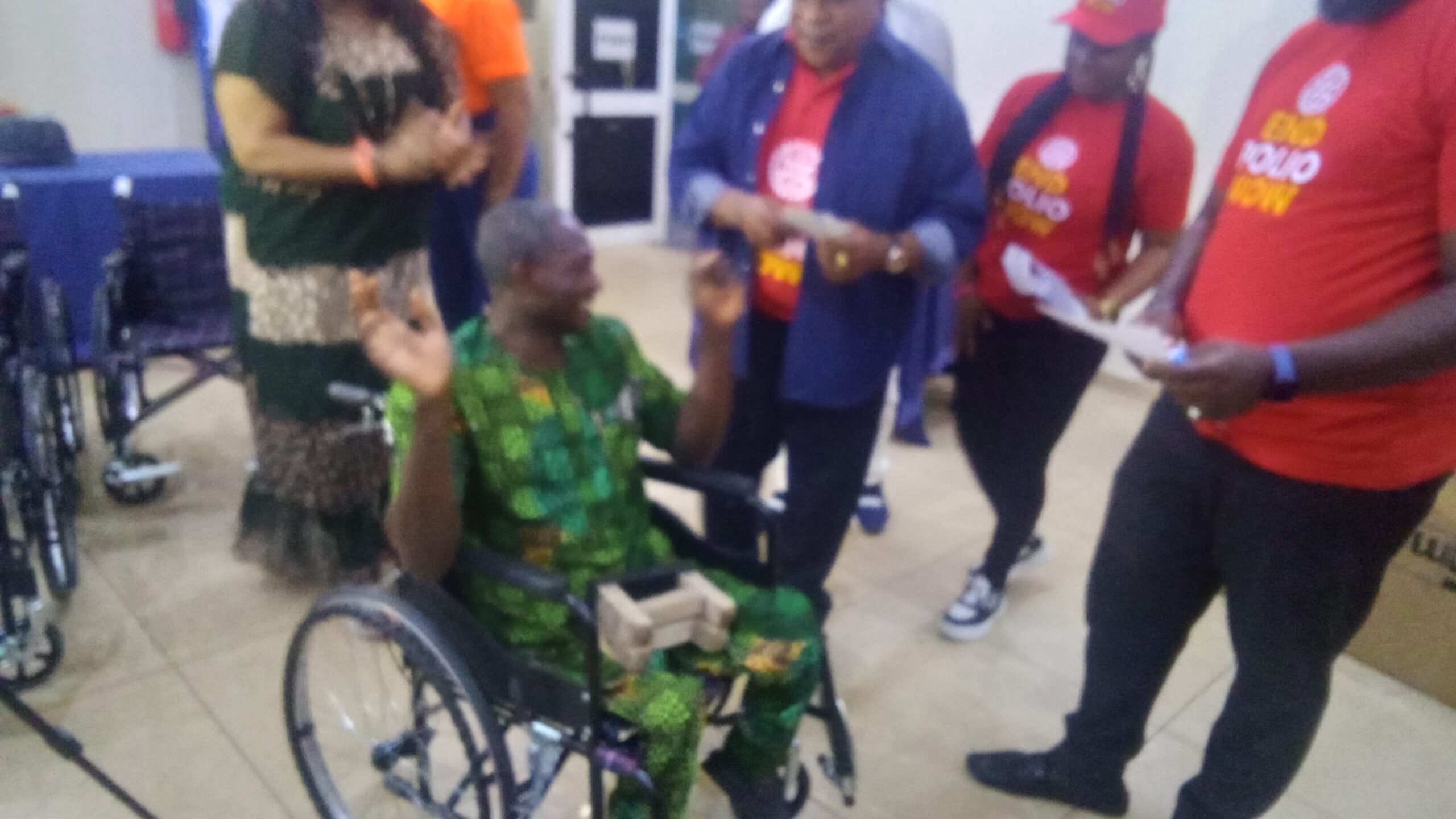
The event, supported by Rotary International and the Unite for Polio Campaign, was more than a ceremony; it was a reaffirmation of humanity’s collective promise. Each wheelchair handed to a survivor was not just a gift of mobility, but a symbol of renewed hope — that paralysis can give way to purpose, and prevention to progress.
As the program drew to a close, Dr. Oramah delivered a stirring message:
“Rotary has come too far to stop now. With collective effort, compassion, and science, we will ensure that no child, anywhere in the world, ever suffers from polio again.”
And as the wheelchairs rolled out to grateful recipients, the hall resonated with applause — a reminder that the fight against polio is not just about vaccines, but about restoring dignity, inspiring hope, and reaffirming the power of service above self.