


In some institutions, we are getting close to N100 million for one person when you convert from pounds to naira,
— Arc. Sonny Echono
By Abdulrahman Aliagan
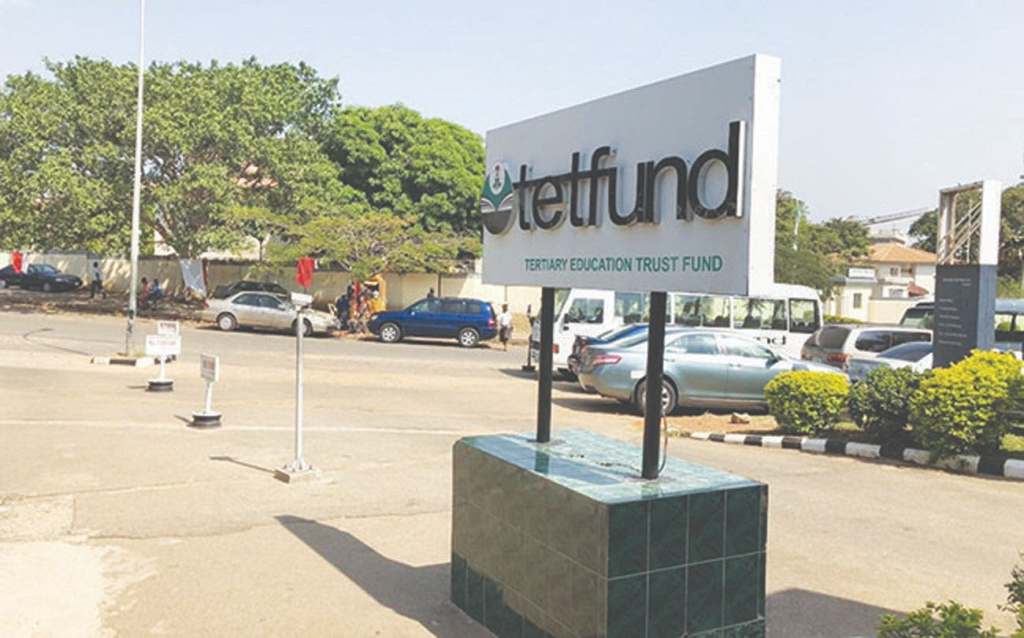
In a decisive policy shift that is already reverberating across Nigeria’s academic circles, the Tertiary Education Trust Fund (TETFund) has suspended its highly regarded foreign scholarship programme for lecturers in public tertiary institutions. The announcement, made by the Executive Secretary of the Fund, Arc. Sonny Echono in an interview he granted TheCable, marks a turning point in Nigeria’s efforts to bolster its human capital through international academic exposure.
Citing soaring costs driven by exchange rate fluctuations and increasing cases of beneficiaries absconding after completing their studies, Echono said the scheme had become unsustainable. “In some institutions, we are getting close to N100 million for one person when you convert from pounds to naira,” he told TheCable in a recent interview. “It’s a double tragedy for the institutions: they lose staff and still pay salaries during the scholar’s absence.”
This development has sparked concern within Nigeria’s higher education sector, raising fundamental questions about the future of academic staff development and the broader implications for knowledge production, global academic competitiveness, and institutional capacity building.
TETFund’s foreign scholarship scheme was, for over a decade, one of the most transformative interventions in Nigeria’s higher education sector. It offered thousands of lecturers an opportunity to study in top-tier institutions across Europe, North America, and Asia. Scholars returned with advanced knowledge, global networks, and exposure to cutting-edge research—benefits that filtered down to students and institutions back home.
The foreign scholarship initiative was a deliberate attempt to bridge the global knowledge gap between Nigerian universities and their international counterparts. However, in an era where the naira has suffered a drastic loss in value and the economic terrain has become increasingly unpredictable, the cost of sustaining the programme has skyrocketed. What was once an investment in national capacity-building has become a financial burden.
According to Echono, the average cost of sponsoring one lecturer abroad has climbed to nearly N100 million, especially in countries like the UK and the US. In the face of limited resources and pressing domestic educational needs, such a figure becomes difficult to justify.
Compounding the financial strain is the alarming rate of abscondment. Many scholars, after earning their degrees, fail to return to their parent institutions in Nigeria. Despite receiving salaries during their time abroad and signing bonds to return and contribute, some either vanish into other countries or transition to different academic systems, exploiting loopholes and weak monitoring mechanisms.
This behavior, seen by many as a betrayal of public trust, has not only drained resources but also left academic departments understaffed and struggling to maintain academic continuity.
TETFund’s pivot towards boosting local postgraduate training presents new opportunities. “We have not reduced our funding for academic staff training; instead, we have increased it,” Echono affirmed. “For each person you send abroad, you can train between eight to ten locally.”
Indeed, the increased funding for local capacity building could spark a renaissance in Nigerian postgraduate education—if properly managed. By investing in local universities, upgrading laboratories, enhancing supervision, and facilitating institutional partnerships, TETFund could stimulate homegrown research ecosystems. This could also empower Nigerian universities to become regional hubs for postgraduate studies in Africa.
Moreover, the exception clause—allowing scholars in fields not offered locally to still access foreign training—ensures that strategic gaps in the country’s academic offering can still be addressed.
Despite its potential, the decision to halt foreign scholarships has its drawbacks. Nigerian lecturers may lose opportunities for global academic engagement, leading to a decline in the internationalization of Nigeria’s higher education system.
Many scholars trained abroad return with not just academic knowledge, but also soft skills—critical thinking, research ethics, grant-writing expertise, and digital literacy—that remain underdeveloped in many local institutions. The exposure to diverse academic cultures, interdisciplinary networks, and access to cutting-edge resources is often irreplaceable.
Without robust local alternatives and partnerships with foreign universities, there is a risk that Nigeria’s academic workforce could become insular, limiting innovation and competitiveness.
The discontinuation of the foreign scholarship scheme is perhaps a necessary response to a new economic reality, but it must not be the end of international academic engagement for Nigerian lecturers. TETFund and the federal government must now explore hybrid solutions—regional partnerships, co-funded scholarships, distance learning programmes, and short-term exchange schemes—to maintain global linkages.
Furthermore, the accountability of sponsored scholars must be improved. Bond enforcement, tracking mechanisms, and collaboration with foreign institutions to ensure return and reintegration of scholars should be strengthened.
TETFund’s decision to halt foreign scholarships is a stark reminder that even the most promising national programmes must evolve in response to economic and policy realities. While the move may boost local training and save resources, it also risks curtailing Nigeria’s global academic visibility. A balanced, transparent, and forward-looking approach is needed to ensure that Nigerian lecturers continue to grow, contribute, and compete on the global stage.
Abdulrahman Aliagan is a journalist, historian, and publisher of Time Nigeria Magazine, The PrimeTimes Newspaper, and ArtsDaily Nigeria.