


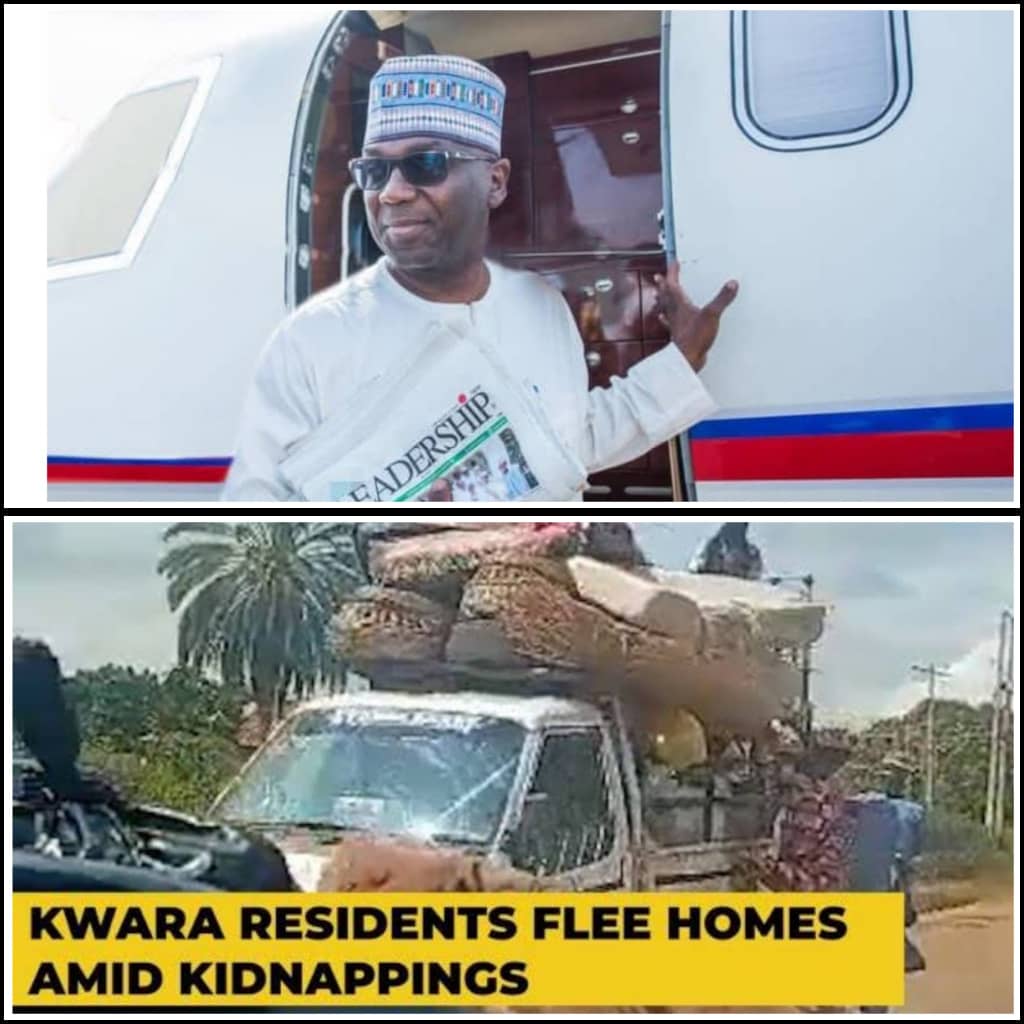
By Wahab Oba
Kwara is under siege. From Igbaja to Patigi, from Offa to Ilesha Baruba, bandits and kidnappers have turned once peaceful towns and communities into graveyards and ransom dens. Farmers are fleeing their fields. Families are burying their loved ones. Entire communities are living under curfews of fear imposed not by government but by outlaws. And yet, Governor AbdulRahman AbdulRazaq is missing in proactive action.
In Igbaja, the Jagun of the town, Chief Lukman Balogun, was killed in cold blood by kidnappers while trying to rescue his people. In Offa and Obbo-Aiyegunle, seven indigenes were abducted, with ransom payments escalating after the first ₦14 million. In Oreke Oke-Igbo, gunmen gunned down police escorts at a mining site, whisking away a Chinese national and his Nigerian colleague for a demanded ₦1 billion ransom. In Babanla, weeks of unchecked attacks displaced over 3,000 residents.
Kwara North has fared no better. In April, six people were murdered in broad daylight at Ilesha Baruba motor park, with coordinated shootings the same day in Kemanji. In Lade, Patigi, a respected community leader, Alhaji Gomina, was shot dead after evening prayers. In Edu, a young mother and her one-year-old baby were abducted in a midnight raid. Even military raids and temporary successes have not deterred the menace; kidnappers return, emboldened by the vacuum of political will.
These are not isolated incidents. They form a pattern of escalating terror that has gone largely unchallenged by the very man elected to protect the people. Instead of decisive leadership, we see a governor consumed by petty political vendettas and open disdain for traditional institutions. Instead of empathy for the bereaved, we see indifference. Instead of sustained support for security agencies, we hear the same tired refrain from an unempathetic government: “consultations are ongoing, solutions are being worked out.” What solutions? No one knows. What empathy? None is mentioned. Meanwhile, people continue to die.
And yet, this same governor is quick to halt genuine development projects like the Pavilion Project at the forecourt of the Emir’s Palace. He is swift to demolish flourishing businesses, to stop life-saving interventions by political opponents such as hospital and road rehabilitation, and to embarrass and harass traditional institutions without restraint. When it comes to vindictiveness, he is decisive; when it comes to protecting lives, he is absent.
The tragedy ravaging Kwara South and North is not confined to those zones; it is a statewide catastrophe in the making. Civil society and lawmakers have already sounded the alarm that, if unchecked, the violence will creep into the Central senatorial district, into Ilorin itself. To deny this looming danger is to gamble recklessly with human lives. Stakeholders must rise above petty politicking and work in unison to halt the bloodletting of innocent souls and prevent its inevitable spread to the centre.
There is no need to reinvent the wheel. Kano once faced similar threats but shut its doors to Boko Haram incursions with a blend of community vigilance, structured funding, and decisive leadership. The state set up a Security Trust Fund to provide resources. It built ward-level community policing committees, merged local hunters and vigilantes into a coordinated framework, and instituted daily joint ops briefings between security agencies and traditional leaders. Beyond the guns, Kano invested in social programs, youth skills, drug rehabilitation, and jobs that starved extremists of easy recruits.
Kwara can, and must, adapt this model. The tools exist. What is missing is the political courage to act. Governor AbdulRahman AbdulRazaq swore an oath to protect lives and property. Today, that oath rings hollow across the forests and highways of Kwara.
If the governor will not lead, then others must. The Ilorin Emirate Descendants Progressive Union (IEDPU), the Ilorin Emirate Youth Development Association (IEYDA), the Ulamas, traditional rulers, and community associations must rise to the challenge. They must not only guard against the spread of insecurity into the Emirate but also liaise with their counterparts across Kwara North and South to forge a collective front. A united community response, rooted in vigilance, intelligence-sharing, and solidarity, is the only way to fill the vacuum left by a government that has seemingly abdicated its responsibility for the security and wellbeing of its people.
The blood of Kwara’s dead is a stain on all of us. But it is on the governor most of all. He can continue to chase political shadows, or he can wake up to his duty. The choice and the judgment are his.
Kwara must not be allowed to become the next theatre of blood.