


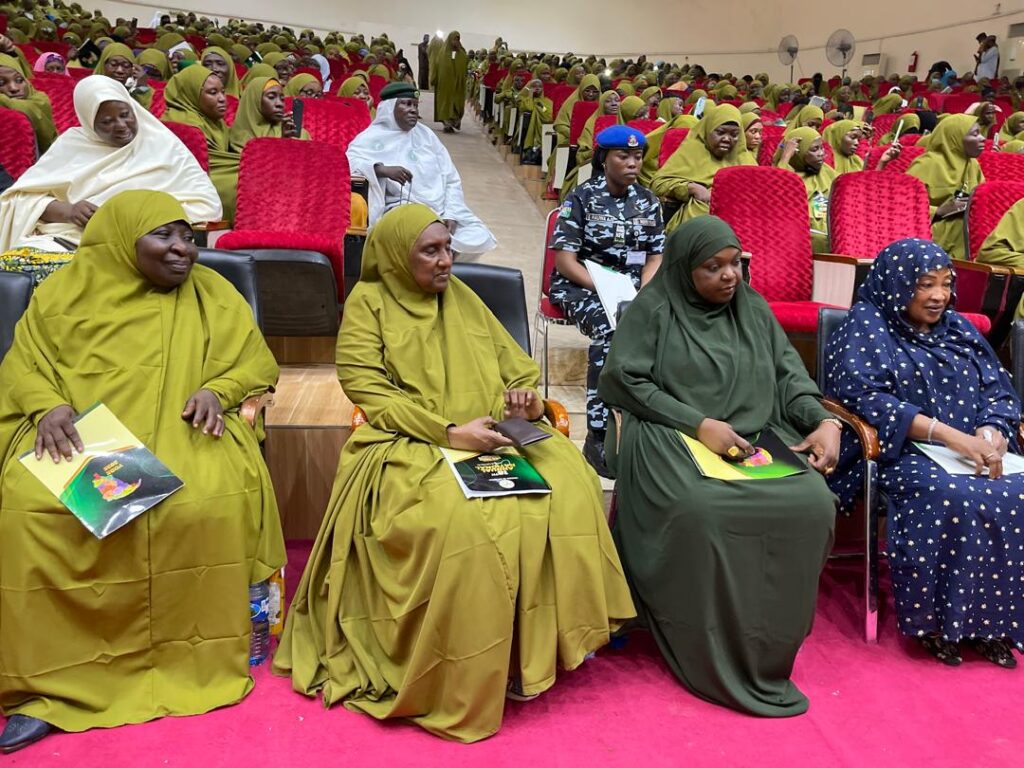
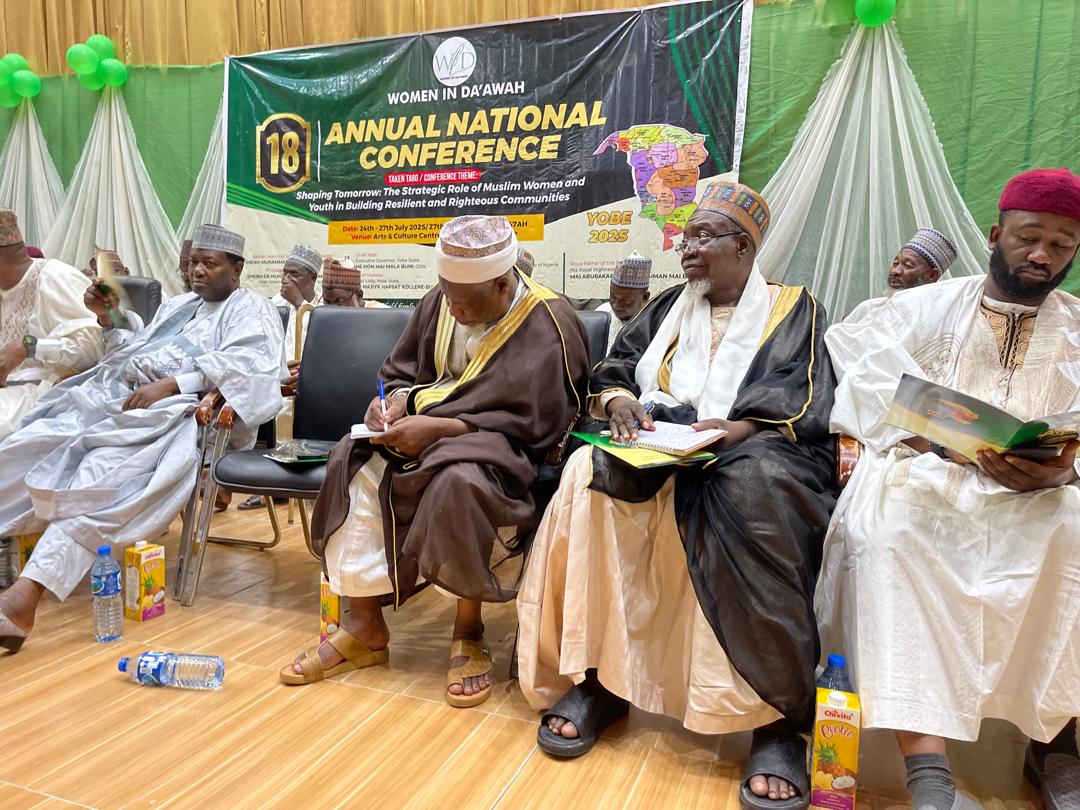
The Women in Da’awah Organization has concluded its 18th Annual Conference in Damaturu, Yobe State, with a strong call for the empowerment of Muslim women and youth as a strategic path toward building resilient and righteous communities in Nigeria.
The four-day conference, held from July 24–27, 2025 (27th–30th Muharram 1446 AH), was themed “Shaping Tomorrow: The Strategic Role of Muslim Women and Youth in Building Resilient and Righteous Communities” and drew 476 registered delegates from 16 Northern states and the FCT, with over 1,000 participants in attendance.
The opening ceremony was chaired by Sheikh (Dr) Muhammad Sulaiman Adam, while the keynote address was delivered by Sheikh Muhammad Mustapha Al-Barnawi. Distinguished Islamic scholars such as Sheikh Muhammad Bn Uthman, Dr. Ibrahim Umar Disina, Dr. Abdullahi Abubakar Lamido, Professor Adam Abubakar, Professor Ali Usman Manzo, Retired DIG Ahmad Abdurrahman, Dr. Muhammad Ardo, and Imam Abdulmuttalib Abdullahi also delivered lectures.
Dignitaries at the event included the Wife of the Vice President, represented by the Wife of Borno State Governor, Dr. Falmata Babagana Zulum; the Governor of Yobe State, Hon. Mai Mala Buni, represented by Commissioner of Education Muhammad Sani Idris; the First Lady of Yobe State, Hafsat Kollere-Buni, represented by Commissioner of Humanitarian Affairs, Dr. Mairo Amshi; the Wife of the Deputy Governor, represented by Hajiya Salamatu Adamu Yahya; as well as traditional rulers including the Emir of Bade, Alhaji Abubakar Umar Sulaiman, the Emir of Damaturu, represented by Mai Sanda Lawan, and the Emir of Jajere, represented by Bukar Modu Jumbam, Chairman of the State Civil Service Commission.
The conference featured ten lecture sessions that addressed critical issues such as economic and security challenges in Northern Nigeria, Islamic approaches to health and wellbeing, the impact of social media, youth unemployment, entrepreneurship, and the role of women in upholding Islamic values in a rapidly changing society.
In its communiqué, the Organization emphasized that Islam remains a timeless way of life, and stressed that justice, security, knowledge, and strong leadership are essential pillars of nation building. It also observed that Muslim women have historically played significant roles as leaders, scholars, and reformers—roles that remain vital in contemporary society.
Key recommendations from the conference included: Integrating Islamic, western, and vocational education to boost enrolment and learning outcomes, prioritizing women’s education and empowerment to ensure sound moral upbringing for future generations, upporting youth with mentorship, skills training, and start-up resources to foster leadership and economic independence, promoting waqf (endowments) as a sustainable tool for community devdevelopment.
Others are to re-strategizing da’awah methodologies to engage young people and foster unity among Muslims, urging governments at all levels to tackle insecurity and corruption with renewed urgency as well as encouraging Muslims to strengthen their faith through prayer, repentance, and resilience in the face of trials.
In her closing remarks, the National Secretary of the Organization, Zainab Umar, reaffirmed the group’s commitment to establishing a Centre of Excellence for Muslim Women as part of its long-term vision to promote learning, empowerment, and community development in Nigeria.