


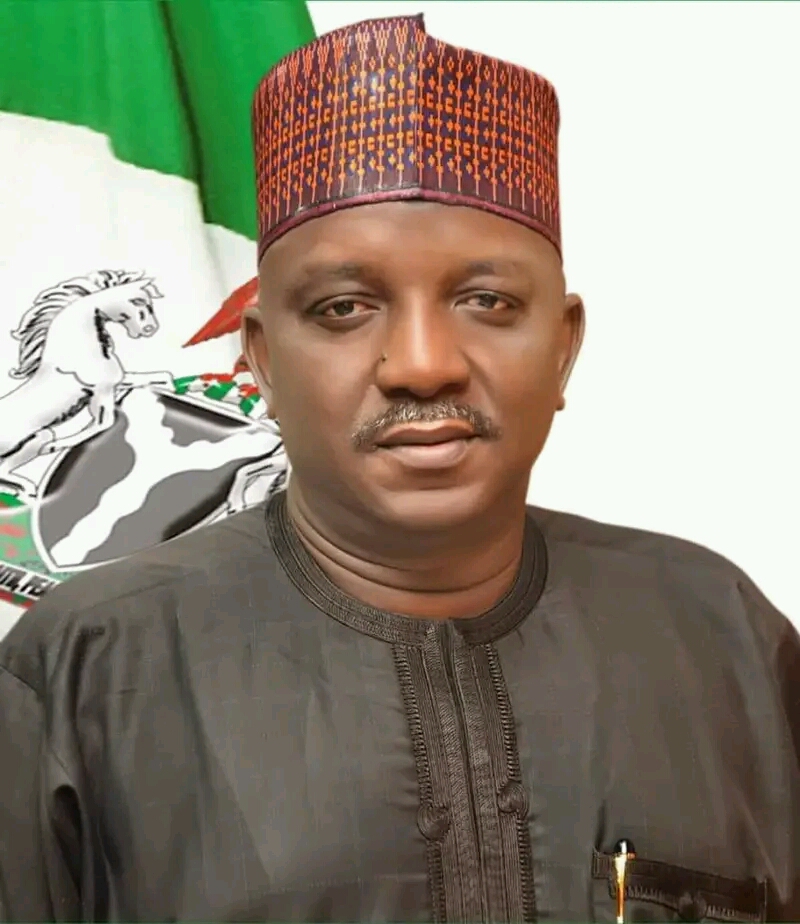
A new twist has emerged in the ongoing trial of former Minister of Power, Engr. Sale Mamman, who is insisting that the Economic and Financial Crimes Commission (EFCC) has no case against him.
Engr. Mamman, through his counsel, S.T. Abba, informed a Federal High Court in Abuja of his intention to file a no-case submission immediately after the EFCC closed its case with its Seventeenth Witness, PW17, Abubakar Gabdo, an investigator with the commission.
The case, which has drawn public attention due to its connection with the multi-billion-naira Mambila-Zungeru power projects, centers on allegations that Mamman conspired to divert funds from the coffers of the Federal Ministry of Power, Works, and Housing through various private companies.
The EFCC claimed that funds were traced through corporate accounts belonging to Breathable Investment, Fullest Utility Concepts, and Golden Bond Nigeria Limited, among others, with alleged involvement of Bureau de Change operators.
However, under cross-examination, the EFCC’s witness, Abubakar Gabdo, admitted key facts that appeared to back Mamman’s decision to file a no-case submission.
He told the court that Mamman was neither the owner nor a signatory to any of the companies mentioned in the charge.
Gabdo further testified that several of the payments being investigated were made before Mamman’s appointment as Minister of Power in 2019, and that other transactions continued even after Mamman left office in 2021.
According to the witness, the investigation covered the period between 2017 and 2023—spanning the tenures of three ministers: Babatunde Fashola, Saleh Mamman, and Abubakar Aliyu.
It was also confirmed that the Mambila-Zungeru Special Project Account, domiciled with the Central Bank of Nigeria (CBN), was under the Office of the Accountant General of the Federation, managed by assigned team of officials led by one Mustapha Abubakar Bida, who is the chief accounting officer.
The Minister of Power or Permanent secretary of the Ministry had no authority to approve or disburse funds from that account. It was only the AGF sole authority.
Further, from the document shown during the proceeding, it was confirmed that some companies such as Fullest Utility Concepts Limited, Platinum Touch Enterprise, Silverline Ocean, and Royal Perimeter Ventures continued to receive large sums from the account even after Mamman’s tenure had ended.
The court proceedings took a defining turn when, after Gabdo’s testimony, the EFCC’s prosecuting counsel, A.O. Mohammed, announced that the Commission had closed its case against the defendant.
In response, Mamman’s counsel informed the court of his client’s plan to file a no-case submission, arguing that the prosecution failed to establish any direct link between Mamman and the alleged financial misconduct.
Justice James Omotosho thereafter adjourned the case to November 27 for the adoption of written addresses.
A no-case submission is a legal move that allows a defendant to argue that the prosecution has not presented sufficient evidence to prove guilt beyond a reasonable doubt.
It is made after the prosecution closes its case, and if the court agrees, the defendant is discharged and acquitted without needing to present a defence.
If the submission fails, the defence is required to proceed with its case.
Mamman’s move to file a no-case submission mirrors a growing trend in Nigeria’s anti-corruption trials.
In recent years, several high-profile defendants have used the same strategy in their cases against the EFCC.
Former Ekiti State Governor Ayodele Fayose, for instance, successfully secured a no-case ruling when a court found that the EFCC failed to prove its allegations against him.
In contrast, socialite Ismaila Mustapha, popularly known as Mompha, lost his no-case submission when the court ruled that there was sufficient evidence for him to enter a defence.
Similarly, former Acting Accountant-General of the Federation, Chukwunyere Nwabuoku, has filed a no-case submission in an ongoing ₦868 million fraud trial, with judgment pending.
The outcome of Mamman’s application will be closely watched, not only because of the personalities involved but also because of its potential implications for the EFCC’s credibility and strategy in handling corruption prosecutions.
The EFCC, in recent times, has faced growing criticism for allegedly filing charges without sufficient evidence to sustain conviction, while defence lawyers increasingly exploit procedural opportunities to challenge the Commission’s case.
For Mamman, the testimonies so far appear to tilt in his favor.
The witness admitted that the alleged fraudulent transactions predated his tenure and persisted long after he left office, suggesting that the EFCC are not usually thorough in their investigations or adopting selective prosecution of allegations of fraud, which does not augur well for the fight against graft.
Put under consideration, the facts speak for itself as neither Raji Fashola who was Mamman’s predecessor and Abubakar Aliyu who succeeded him are being asked similar questions by the EFCC though payments from those accounts to some companies in question took place under their watch.
Yet, the EFCC is expected to argue that the companies involved acted as conduits to siphon public funds, potentially benefiting individuals connected to the ministry during Mamman’s leadership.
As the court prepares to hear arguments on November 27, observers and legal analysts are keenly watching how Justice Omotosho will interpret the evidence—or lack thereof—presented by the prosecution.
If the no-case submission succeeds, it will mark another high-profile setback for the EFCC and if it fails, the case will proceed to the defence stage, where Mamman will have to prove his innocence.
Whatever the outcome, the trial underscores a larger narrative about Nigeria’s anti-corruption framework—its procedural complexities, evidentiary challenges, and the delicate balance between public expectation and judicial discretion.
For now, Saleh Mamman maintains his innocence, declaring emphatically that the EFCC has no case against him.