



BankingBusinessFinanceSpotlight

A Night, UBA Celebrates Integrity

4 Mins read

By Abdul Rahman Aliagan

Contentment is the neuro-physiological experience of satisfaction and being at ease in one’s situation, no matter what! It is equally not only the fulfillment of what one wants but realization of how much you already have.

In another parlance contentment is described as a treasury that never goes bankruptcy and one of the prerequisites for happiness in life. Unfortunately, many don’t have it. But when we identify a contented one, we tend to appreciate and celebrate them.

The story of a security staff of the United Bank for Africa Plc. (UBA) Oba Akran branch, Lagos, Ibrahim Ogbanagbo better illustrates the above submissions. Ogbanagbo who demonstrated a highest level of integrity and honesty, found $10,000 cash belonging to a customer, he defied all the temptations and returned it to the customer without given it a second thought! Even at the scorching-sun of economic recession in the country that could have given a good and justifiable ground for him to think otherwise. Ibrahim stood tall and above greed as he allowed integrity to speak volume!

No doubt, Ogbanagbo will forever be grateful and thankful to his organisation, the UBA Group who did not allowed the story gone untold. What can the poor man do, if integrity means nothing to UBA management? But to management, integrity means much and one of the core values where the Bank drives her strength.

For this singular reason, Ogbonagbo was honoured with the Excellence Award for his display of honesty and integrity among other staffs who distinguished themselves in the course of their duties.

At the prestigious annual event that took place on 8th April 2017 at Eko Hotel Expo Centre, Lagos, where UBA gathered customers, captains of industry, dignitaries from politics and diplomacy, staff and Board members from its 19 African country network, to witness the 2017 UBA CEO Awards that also sought to the celebration of the Distinguished securityman, Ogabanagbo.

For making the Bank proud and in adherence strictly to its core value, the Group Chairman, Mr Tony Elumelu mounted stage to congratulate Ogbanagbo personally. Elumelu said that Ogbanagbo exemplified someone who is committed to the hallmarks of Excellence in the execution of his duties.
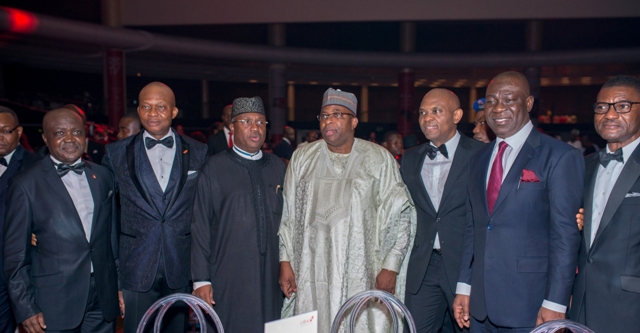
According to the Group Chairman of UBA, he said, “This is an example to us all. How anyone, no matter their position in our Group can distinguish themselves and set an example. Today, we stand here to celebrate a junior UBA staff member, who returned money that was misplaced and who through this action, gained much more than he could ever have imagined. As a leading pan-African bank, this is what we stand for and we commend Ibrahim Ogbonagbo for living the principle of integrity.”

The event that was first established in 2008 to celebrate outstanding performance within the UBA Pan-African family, showcasing excellence, significant innovation and service in key areas of the Group’s business.

2017 episode reignited the burning spirit that fires UBA on, as she again demonstrated its commitment to excellence in customer service, by celebrating staff who have strived to implement the Bank’s core values of Enterprise, Excellence and Execution.

In one of his remarks, Ogbonagbo thanked God for his upbringing and how much the UBA’s core value which is INTEGRITY inspires him to back-down on the evil thought.  “When I think of how the $10,000 could have changed my life and how I could have taken it without anybody’s knowledge, but how my upbringing as well as UBA’s value and focus on Integrity did not allowed him to do so”. He confirmed.
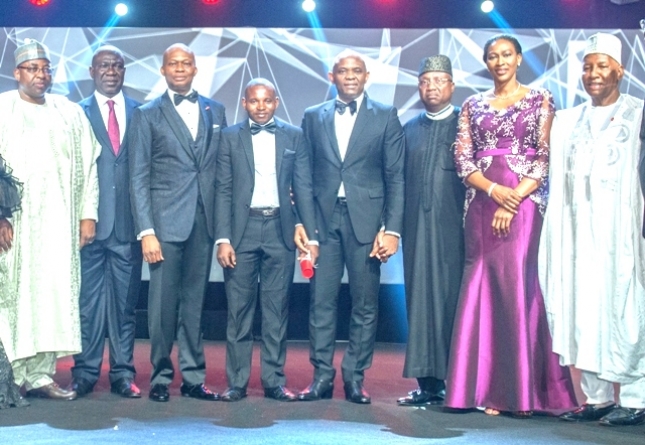
On the faithful night, integrity distinguished Ogbonagbo as all other dignitaries at the occasion honoured him with a standing ovation, as well as rewards from dignitaries in the attendance that came on stage to acknowledge him. The Governor of Adamawa State in Nigeria, Alhaji Bindo Jibrilla pledged the sum of $5,000 and he also received a personal commitment of $10,000 from the Governor of Bauchi state, Alhaji Mohammed Abdullahi Abubakar. The Deputy Senate president, present at the event, Senator Ike Ekwerenmadu said that Ogbanagbo’s name will be announced at the floor of the Senate during plenary and will be given the sum of N5, 000, 000 by the Senate.

Over 10 Awards were given, of each award category, the GMD, Kennedy Uzoka said “We recognise and appreciate that there are so many staff members who have demonstrated aspects of each of our core values, but we have had to single out the very best. We celebrate our Lions and Lionesses who used their ingenuity and creativity, as well as their industry experience and passion, to work tirelessly to deliver excellent service to our customers and to continue to achieve exceptional results within the Group”.

There were winners who had excelled in innovation and execution across Africa. There were also those who were rewarded for their entrepreneurial abilities. The CEO of UBA Ghana, Mrs Abiola Bawuah was chosen in the special award category of “Business Leader who defied all odds and opened up new opportunities for the Bank”. Mrs Bawuah was described by the GMD as “a relentless CEO who breaks barriers, extends the horizon and motivates, inspires and encourages others.”

The event themed, “the Journey of UBA”, brought to life by an African entertainment concept, crisscrossing the length and breadth of Africa and highlighting UBA’s Pan-African vision, starting with its oldest region, West Africa and showcasing East and Southern Africa, as well as the significant presence of an African Bank in New York, London and Paris. There was dance and prose, rhythm and theatre. There were also loved artistes including Dare Art-Alade who opened the show with a terrific rendition of the Nigerian National Anthem, Adekunle Gold, Dr. Sid, Flavor N’abania, P-Square, Awilo Longomba from the Congo and the undisputed King of Juju music, King Sunny Ade. Guests and dignitaries, management and staff of UBA found themselves letting their hair down and throwing protocol to the wind.

The Bank was honoured by the presence of their Excellencies, the Governors of Adamawa and Taraba States, Deputy Senate President, Senator Ekweremadu, Governor Donald Duke, Alhaji Abdul- Samad Rabiu and many others. The ceremony also witnessed the presence of key industry players, diplomats, ministers and key influencers in Nigeria, as well as the CEOs and Board Chairmen of the 19 African countries in which UBA operates.

A night which can be best described as a night full of lesson; a UBA’s Night of Integrity will continue to linger in the memories of the management, staffs as well as audience at the occasion. For sure, the celebrants of the night, particularly, Mr Ibrahim Ogbonagbo will never go without rededicating their lives for better optimisation on their jobs with more vigour, dedications and commitments to the organisation that celebrates them that much!


   

About author
Time Nigeria is a modern and general interest Magazine with its Headquarters in Abuja. The Magazine has a remarkable difference in editorial philosophy and goals, it adheres strictly to the ethics of Journalism by using the finest ethos of the profession to promote peace among citizens; identifying and harnessing the nation’s vast resources; celebrating achievements of government agencies, individuals, groups and corporate organizations and above all, repositioning Nigeria for the needed growth and development. Time Nigeria gives emphasis to places and issues that have not been given adequate attention by others. The Magazine is national in outlook and is currently being read and patronized both in print and on our vibrant and active online platform (www.timenigeria.com).
Articles
Related posts
Abuja FileDevelopmentEconomyEnergyFinanceInside LagosOpinionPerspective

The Missing Middle of Infrastructure Finance: Why Capital Still Fails to Become Infrastructure

6 Mins read
  By Chidi Nwafor  In October 2023, a Gulf sovereign wealth fund quietly closed a $2 billion allocation to global infrastructure, earmarked in part for emerging-market energy and transport assets. The announcement drew the usual applause: another sign, commentators said, that institutional capital was finally waking up to the infrastructure opportunity in the Global South. Eighteen months later, less than a tenth of that allocation had actually left the fund’s balance sheet. Not because the mandate had changed. Not because the fund had lost appetite. According to two people familiar with the portfolio, the constraint was simpler and more uncomfortable: there were not enough investable projects to put the money into. This is not a story about a reluctant investor. It is a story about capital that wants to move, cannot find enough places willing and able to receive it in a form it can underwrite, and quietly waits instead. Multiply that fund by the hundreds of pension schemes, sovereign wealth vehicles, commercial banks and infrastructure funds now carrying dedicated allocations for emerging-market infrastructure, and a pattern emerges that rarely makes it into a headline: the world is not short of capital for infrastructure. It has capital in historic abundance, sitting adjacent to a historic infrastructure gap, unable to cross the distance between the two. The Comfortable Explanation  The explanation on offer at every major infrastructure summit is a familiar one. Global infrastructure investment needs run into the tens of trillions of dollars over the coming decade; committed capital falls well short; therefore, the problem is one of insufficient funding, and the solution is more of it: more pledges, more blended-finance facilities, more climate funds, more multilateral capital increases. It is a comfortable explanation because it assigns responsibility clearly to governments who under-fund, institutions who under-commit, and it offers a clean remedy: raise more. It is also, on close inspection, not what the evidence shows. Pension funds globally hold trillions in assets under management with explicit infrastructure allocations that remain structurally underweight, not because trustees have rejected the asset class but because deal flow meeting their risk and governance thresholds has not materialised at the pace their mandates assume. Sovereign wealth funds report the same pattern. Commercial banks with dedicated project finance desks describe pipelines that look full at the term-sheet stage and thin dramatically by financial close. Development finance institutions, whose entire purpose is to absorb risk that commercial capital will not, routinely report that their binding constraint is not capital adequacy but the volume of bankable transactions their teams can originate and structure in a given year. None of this fits the scarcity narrative. All of it fits a different one. Availability Is Not Deployability  Capital availability and capital deployability are not the same condition, and the conflation of the two is doing real damage to how the world thinks about the infrastructure gap. Availability asks whether money exists somewhere with a mandate that could, in principle, be pointed at infrastructure. Deployability asks something much narrower and much harder: whether a specific project, at a specific moment, has been engineered, structured, documented and de-risked to the point where an investment committee can approve it without exception. The first condition is met, overwhelmingly, across nearly every category of capital that matters to infrastructure. The second is met by only a small fraction of the projects competing for it. The result is a market that looks, from the outside, like a financing gap, and functions, from the inside, like a conversion problem: an abundance of capital on one side, an abundance of infrastructure need on the other, and an underbuilt set of mechanisms in between capable of turning one into the other at any meaningful scale. Where the Conversion Breaks  The break does not happen at the ends of the process. It happens in the middle, in the unglamorous sequence of work that turns a plausible concept into an instrument a fiduciary can sign. A promising transmission project needs a feasibility study rigorous enough to survive institutional scrutiny rather than optimistic enough to attract early interest. It needs offtake arrangements that hold up under real counterparty and currency risk, not the counterparty risk assumed in a base case. It needs environmental and social documentation calibrated to the standards of the institutions being asked to fund it, not the standards of the jurisdiction hosting it. It needs a legal and commercial structure that allocates risk in ways a commercial lender, not only a development financier, will accept. It needs a sponsor capable of executing what has been proposed, not merely capable of proposing it. Each of these is ordinary project finance discipline. None of it is exotic, and in mature infrastructure markets it happens as a matter of course, absorbed into systems built over decades: specialist advisers, standard-form contracts, established procurement norms, deep pools of transaction expertise. What is missing in the markets where the infrastructure gap is largest is not the standard itself but the machinery that meets it. Projects arrive at investment committees with ambition intact and preparation incomplete, and that gap is treated, again and again, as an individual project’s failure rather than what it actually is: a structural absence in the systems responsible for producing investable transactions at scale. The Missing Middle  This is the Missing Middle of Infrastructure Finance: the institutional architecture that sits between capital that wants to move and infrastructure that needs building, and whose incompleteness explains far more of the global infrastructure gap than any shortfall in committed funds. It consists of project preparation facilities able to fund feasibility and structuring work before commercial viability has been proven. Transaction advisers capable of building deals that satisfy development mandates and commercial return thresholds at once, rather than treating the two as separate constituencies to be managed sequentially. Risk-sharing and guarantee instruments that convert political, regulatory and currency risk into something a commercial balance sheet can underwrite. Aggregation platforms that bundle smaller, individually sub-scale projects into portfolios large enough to justify institutional transaction costs. Standardised documentation that reduces the bespoke legal cost of every new deal. And coordination across ministries, regulators and financiers robust enough that a technically sound project does not die in bureaucratic sequencing after the money has already been found. None of these are new ideas in isolation. What is missing is their assembly into a coherent system, deliberately funded and institutionally accountable, rather than scattered across donor-funded pilots that end when the grant does. The African Dimension  Africa makes this dynamic unusually visible, and consequently offers an unusually clear opportunity to correct it. The continent’s infrastructure financing need, by any measure, is vast. Less understood is that the shortfall is disproportionately one of preparation rather than capital. Nigerian gas-to-power, off-grid solar and mini-grid developers have each demonstrated that individual projects can clear the bankability bar; what has not emerged is systemic pipeline scale, a steady stream of comparably prepared projects large enough to absorb the capital already circling the sector. The pattern repeats, with local variation, from grid infrastructure in East Africa to transport corridors in West Africa. Interested capital is rarely the scarce input. Investment-ready projects are. The Global Comparison  Mature markets solved this problem gradually and mostly invisibly, through decades of institution-building that predates the current infrastructure conversation: specialist project finance units inside banks, standardised PPP frameworks, established regulatory playbooks, deep benches of transaction lawyers and engineers who move between deals rather than between one-off assignments. Emerging and frontier markets are not being asked to meet a lower standard. They are being asked to meet the same standard without having built the same machinery, and then being told, when deals fail to close, that the problem is insufficient funding….
BusinessCover StoryNews

PAT Appeals Amida Severance Ruling as Questions Mount Over Unanswered Claims

2 Mins read
The legal battle between Pan African Towers Limited (PAT) and its former Managing Director and Chief Executive Officer, Azeez Amida, has moved…
BusinessCover StoryDevelopmentDiplomatic NewsEconomyForeign NewsMarketsNewsPower and Energy

Ajia Joins Global Leaders at Royal African Society's 125th Anniversary, Advocates Stronger Africa-Global Partnerships

5 Mins read
By Abdulrahman Aliagan with Agency The President and Chief Executive Officer of Funab Group of Companies Limited, Alhaji (Dr.) Ibrahim Mohammed Ajia,…
Stay on the loop!

Subscribe to our latest news.

Leave a Reply

WP2Social Auto Publish Powered By : XYZScripts.com