



EntrepreneurshipOpinionPerspective

How Katsina State is Repositioning MSMEs Sector, Building Synergies

4 Mins read

As part of its efforts to build synergy, the council paid courtesy working visits to Ministries, Departments, and Agencies (MDAs) and other Stakeholders in Abuja to gain support and also conducted sensitization and awareness campaigns on the council members activities.

There is no doubt that Micro, Small and Medium Enterprises (MSMEs) play significant role, particularly in developing countries, where, according to available statistics, they account for about 90% of businesses and create over 50% of employment.

In its 2017 National Survey of MSMEs, which covered enterprises in Nigeria employing below 200 persons (that is, micro, small and medium enterprises – MSMEs), and was conducted in all the 36 States of the Federation and FCT, the National Bureau of Statistics (NBS) identified the number of businesses in the sector.

The NBS put the total number of MSMEs in the country as at December, 2017 at 41,543,028, with components as follows, viz: micro enterprises – MEs: 41, 469,947 (or 99.8 percent), small and medium enterprises – SMEs: 73,081 (or 0.2 percent).
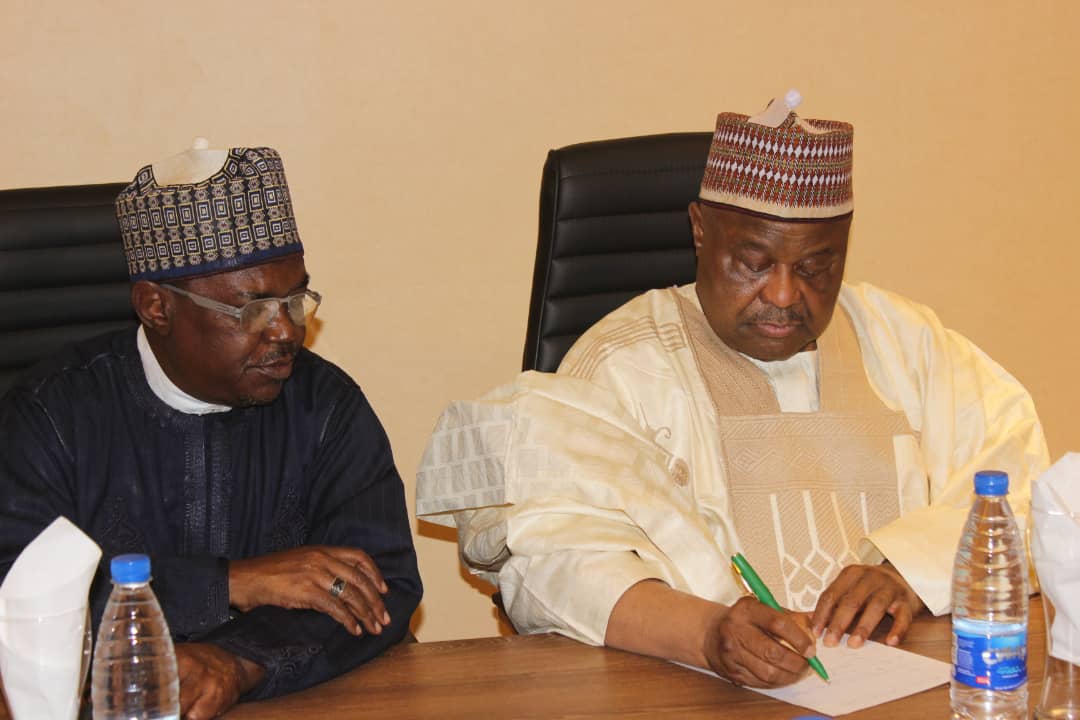
From the survey, while Lagos State had the highest numbers of enterprises across all classes, only three (3) States, viz: Katsina (36.4 percent), Rivers (21.7 percent) and Kaduna (18.1 percent) recorded significant increases in enterprise numbers.

Despite the growth and developmental impact of MSMEs, in Katsina State in particular and Nigeria in general, several challenges have continued to impact negatively on the sector, notwithstanding the fact that the sector is said to be responsible for about 59.6million jobs in the country.

Understanding this and the overall important contributions of MSMEs in developing economies like Nigeria, the Katsina State Micro, Small And Medium Enterprises (KTS-MSMEs) Council under the Chairmanship of the state Deputy Governor, Qs. Mannir Yakubu, has since began deliberate moves aimed at boosting the MSMEs in Katsina State.
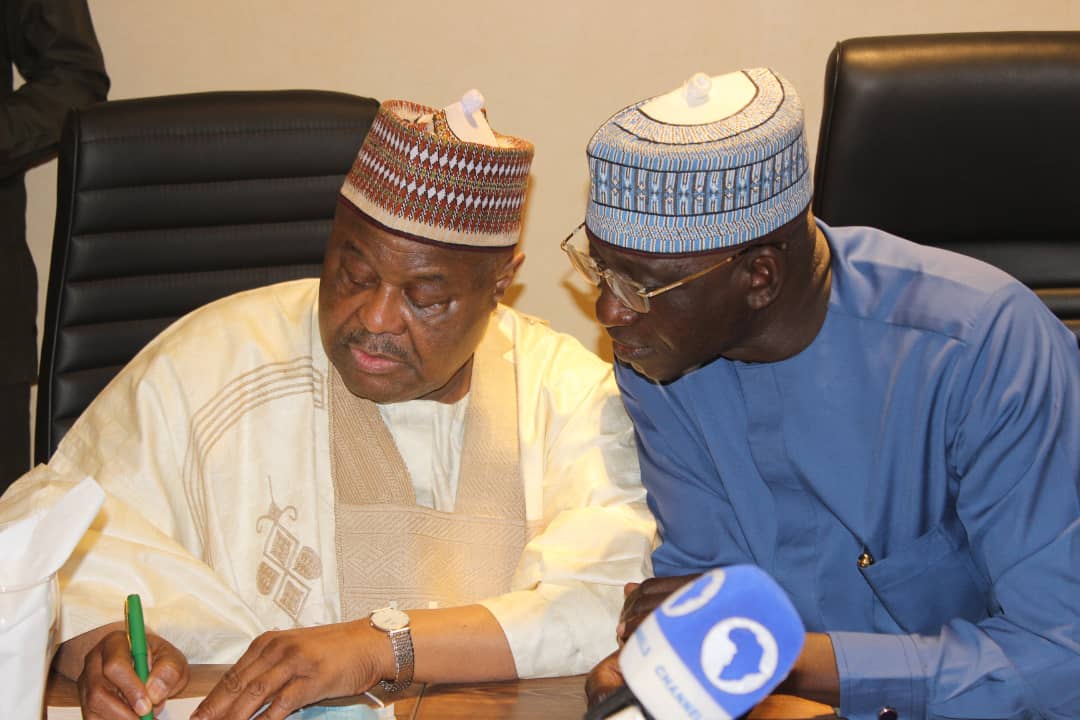
In a bid to improve on the states ratings on MSMEs growth and development, the KTS-MSMEs Council has in the past two years taken more steps to revolutionise the state MSMEs sector under Qs. Yakubu’s leadership based on the mandate of the state Governor, Rt. Hon. Aminu Bello Masari.

Armed with the understanding of the importance of statistical data, the Council embarked on the printing and distribution of
MSMES Data Capturing Forms aimed at generating and documenting basic information on existing MSMEs in the state.

It also initiated a major sensitization campaigns in Katsina, Funtua and Daura to create awareness on the existence and functions of the Council in the three Senatorial Districts of the state. The first stage of the campaign was completed between November 26 and 28, 2019.

As part of its efforts to build synergy, the council paid courtesy working visits to Ministries, Departments, and Agencies (MDAs) and other Stakeholders in Abuja to gain support and also conducted sensitization and awareness campaigns on the council members activities.

The relevant stakeholders captured in its first working visits to the Standard Organization of Nigeria (SON), the Raw Materials Research and Development Council (RMRDC), National Directorate on Employment (NDE).
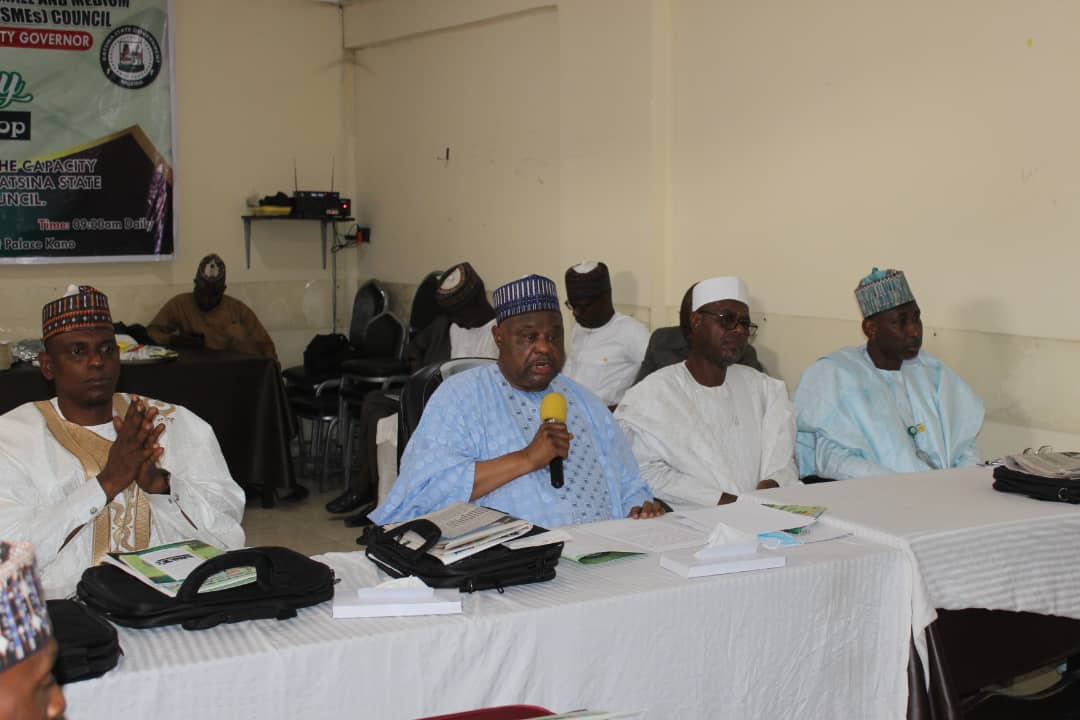
The visits, which commenced on December 5, 2019 was aimed at soliciting for increase activities of the targeted organizations in Katsina State and to request for specific intervention/programme peculiar to the State.

It was also initiated to abreast the state MSME Council of the emerging opportunities that abound in the targeted organizations and to explore areas of collaboration, cooperation and partnership for the development of MSMEs in the state as well as to establish a working relationship with the targeted organisations.

Again, between January 9 and 10, 2020, the Council embarked on its second working visit covering the Federal Ministry of Finance,
Budget and National Planning, the Federal Ministry of Industries,
Trade and Investment, the Federal Ministry of Agriculture and rural Development, the Corporate Affairs Commission (CAC), and Small and Medium Enterprises Development Agency of Nigeria (SMEDAN), all in Abuja.

The Council also facilitated a meeting between the representatives of the Katsina State Government, the Minister of Industry, Trade and Investment and her delegation and reinvigorated continued discussions on the establishment of Funtua Integrated Textiles and Garment Park.

This culminated in inspection of the proposed Integrated Textiles and Garment Park site at Funtua on February 21, 2020 with the aim of reassuring of the state government’s commitment to the project and to share other details with the Technical team of the Federal Ministry of Industry, Trade and Investment.

To boost its exposure to the residents of the state, stakeholders, and the general public, the Council initiated a media and publicity, including the production and airing of radio and television jingles, production and airing of recorded radio and television programs, appearances at live radio and television programs, Town Hall Meeting and production and distribution of pamphlets. The Town Hall Meetings with MSMEs Stakeholders were held in the three Senatorial District of the state.
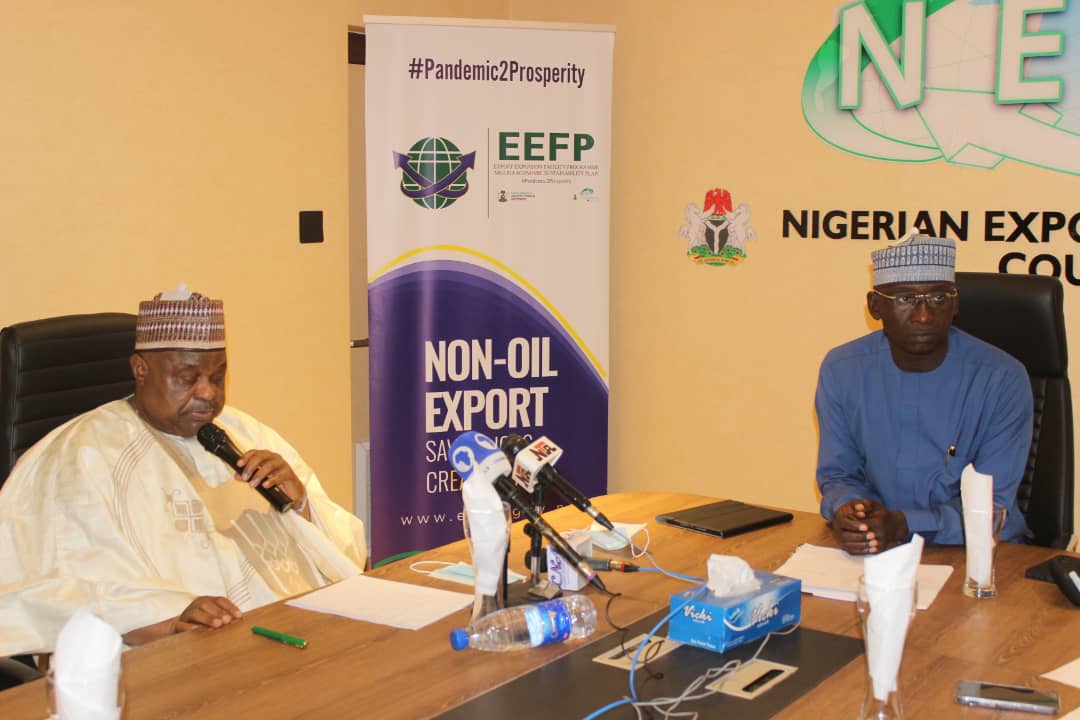
These were carried out in oder to create massive awareness on the existence and functions of the Council and to carry along other MSME stakeholders in the state.

The Council and other relevant stakeholders initiated workshop on investment opportunities in some strategic crops and safe use of pesticides and agro-chemicals by farmers. This was carried out by by the Raw Materials Research And Development Council (RMRDC) in collaboration with the KTS-MSME Council.

The objectives of the workshop, which held on February 3, 2020, were essentially to enable the participants understand the investment opportunities and agronomic practices in the value chains of sweet sorghum, sugar beet and cashew as well as on how best to use pesticides and agro-chemicals for crops.

The council has also collaborated with the RMRDC towards the establishment of a Digital Resource Center in the Katsina State.

To consolidate on the gains of its collaboration with relevant stakeholders, the Council in February 2020 held joint meeting with RMRDC aimed at strengthening their working relationship and chart course(s) of action.

Such strategic relationships enabled the council to secure 2,000 improved variety of cashew seedlings from the RMRDC which were distributed to farmers for propagation. The Council went ahead to also secure cotton seed from RMRDC and distributed them to Katsina State farmers.

Other activities carried out include facilitating the conduct of a two-day training for Members of the Katsina
State Economic Planning Development Commission.

It also facilitated the establishment of a Certificate Collection Center in Funtua in conjunction with the Corporate Affairs Commission (CAC) and in collaboration with SON, the Council is facilitating the certification of SMEs on standards in the state.

It also facilitated the state Government’s expression of interest to participate in Employment and Expenditure for Results (SEEFOR) Project and facilitated the allocation of a plot of land to SON for The establishment of their permanent Office Building and a Laboratory in Katsina State.

This just as the council has collaborated with Raw Materials Research and Development Council (RMRDC) and organized a Training of Trainers (TOT) on tiger-nut value chain for women in Katsina State.

   

About author
Time Nigeria is a modern and general interest Magazine with its Headquarters in Abuja. The Magazine has a remarkable difference in editorial philosophy and goals, it adheres strictly to the ethics of Journalism by using the finest ethos of the profession to promote peace among citizens; identifying and harnessing the nation’s vast resources; celebrating achievements of government agencies, individuals, groups and corporate organizations and above all, repositioning Nigeria for the needed growth and development. Time Nigeria gives emphasis to places and issues that have not been given adequate attention by others. The Magazine is national in outlook and is currently being read and patronized both in print and on our vibrant and active online platform (www.timenigeria.com).
Articles
Related posts
Cover StoryDevelopmentOpinion

Pedestrian Bridges: Rising Symbols of Renewed Hope in Abuja

2 Mins read
  By Ogefila Bayo Adewale Every morning, parents watch their children leave for school along Abuja highways, their hearts race each time…
Abuja FileDevelopmentEconomyEnergyFinanceInside LagosOpinionPerspective

The Missing Middle of Infrastructure Finance: Why Capital Still Fails to Become Infrastructure

6 Mins read
  By Chidi Nwafor  In October 2023, a Gulf sovereign wealth fund quietly closed a $2 billion allocation to global infrastructure, earmarked in part for emerging-market energy and transport assets. The announcement drew the usual applause: another sign, commentators said, that institutional capital was finally waking up to the infrastructure opportunity in the Global South. Eighteen months later, less than a tenth of that allocation had actually left the fund’s balance sheet. Not because the mandate had changed. Not because the fund had lost appetite. According to two people familiar with the portfolio, the constraint was simpler and more uncomfortable: there were not enough investable projects to put the money into. This is not a story about a reluctant investor. It is a story about capital that wants to move, cannot find enough places willing and able to receive it in a form it can underwrite, and quietly waits instead. Multiply that fund by the hundreds of pension schemes, sovereign wealth vehicles, commercial banks and infrastructure funds now carrying dedicated allocations for emerging-market infrastructure, and a pattern emerges that rarely makes it into a headline: the world is not short of capital for infrastructure. It has capital in historic abundance, sitting adjacent to a historic infrastructure gap, unable to cross the distance between the two. The Comfortable Explanation  The explanation on offer at every major infrastructure summit is a familiar one. Global infrastructure investment needs run into the tens of trillions of dollars over the coming decade; committed capital falls well short; therefore, the problem is one of insufficient funding, and the solution is more of it: more pledges, more blended-finance facilities, more climate funds, more multilateral capital increases. It is a comfortable explanation because it assigns responsibility clearly to governments who under-fund, institutions who under-commit, and it offers a clean remedy: raise more. It is also, on close inspection, not what the evidence shows. Pension funds globally hold trillions in assets under management with explicit infrastructure allocations that remain structurally underweight, not because trustees have rejected the asset class but because deal flow meeting their risk and governance thresholds has not materialised at the pace their mandates assume. Sovereign wealth funds report the same pattern. Commercial banks with dedicated project finance desks describe pipelines that look full at the term-sheet stage and thin dramatically by financial close. Development finance institutions, whose entire purpose is to absorb risk that commercial capital will not, routinely report that their binding constraint is not capital adequacy but the volume of bankable transactions their teams can originate and structure in a given year. None of this fits the scarcity narrative. All of it fits a different one. Availability Is Not Deployability  Capital availability and capital deployability are not the same condition, and the conflation of the two is doing real damage to how the world thinks about the infrastructure gap. Availability asks whether money exists somewhere with a mandate that could, in principle, be pointed at infrastructure. Deployability asks something much narrower and much harder: whether a specific project, at a specific moment, has been engineered, structured, documented and de-risked to the point where an investment committee can approve it without exception. The first condition is met, overwhelmingly, across nearly every category of capital that matters to infrastructure. The second is met by only a small fraction of the projects competing for it. The result is a market that looks, from the outside, like a financing gap, and functions, from the inside, like a conversion problem: an abundance of capital on one side, an abundance of infrastructure need on the other, and an underbuilt set of mechanisms in between capable of turning one into the other at any meaningful scale. Where the Conversion Breaks  The break does not happen at the ends of the process. It happens in the middle, in the unglamorous sequence of work that turns a plausible concept into an instrument a fiduciary can sign. A promising transmission project needs a feasibility study rigorous enough to survive institutional scrutiny rather than optimistic enough to attract early interest. It needs offtake arrangements that hold up under real counterparty and currency risk, not the counterparty risk assumed in a base case. It needs environmental and social documentation calibrated to the standards of the institutions being asked to fund it, not the standards of the jurisdiction hosting it. It needs a legal and commercial structure that allocates risk in ways a commercial lender, not only a development financier, will accept. It needs a sponsor capable of executing what has been proposed, not merely capable of proposing it. Each of these is ordinary project finance discipline. None of it is exotic, and in mature infrastructure markets it happens as a matter of course, absorbed into systems built over decades: specialist advisers, standard-form contracts, established procurement norms, deep pools of transaction expertise. What is missing in the markets where the infrastructure gap is largest is not the standard itself but the machinery that meets it. Projects arrive at investment committees with ambition intact and preparation incomplete, and that gap is treated, again and again, as an individual project’s failure rather than what it actually is: a structural absence in the systems responsible for producing investable transactions at scale. The Missing Middle  This is the Missing Middle of Infrastructure Finance: the institutional architecture that sits between capital that wants to move and infrastructure that needs building, and whose incompleteness explains far more of the global infrastructure gap than any shortfall in committed funds. It consists of project preparation facilities able to fund feasibility and structuring work before commercial viability has been proven. Transaction advisers capable of building deals that satisfy development mandates and commercial return thresholds at once, rather than treating the two as separate constituencies to be managed sequentially. Risk-sharing and guarantee instruments that convert political, regulatory and currency risk into something a commercial balance sheet can underwrite. Aggregation platforms that bundle smaller, individually sub-scale projects into portfolios large enough to justify institutional transaction costs. Standardised documentation that reduces the bespoke legal cost of every new deal. And coordination across ministries, regulators and financiers robust enough that a technically sound project does not die in bureaucratic sequencing after the money has already been found. None of these are new ideas in isolation. What is missing is their assembly into a coherent system, deliberately funded and institutionally accountable, rather than scattered across donor-funded pilots that end when the grant does. The African Dimension  Africa makes this dynamic unusually visible, and consequently offers an unusually clear opportunity to correct it. The continent’s infrastructure financing need, by any measure, is vast. Less understood is that the shortfall is disproportionately one of preparation rather than capital. Nigerian gas-to-power, off-grid solar and mini-grid developers have each demonstrated that individual projects can clear the bankability bar; what has not emerged is systemic pipeline scale, a steady stream of comparably prepared projects large enough to absorb the capital already circling the sector. The pattern repeats, with local variation, from grid infrastructure in East Africa to transport corridors in West Africa. Interested capital is rarely the scarce input. Investment-ready projects are. The Global Comparison  Mature markets solved this problem gradually and mostly invisibly, through decades of institution-building that predates the current infrastructure conversation: specialist project finance units inside banks, standardised PPP frameworks, established regulatory playbooks, deep benches of transaction lawyers and engineers who move between deals rather than between one-off assignments. Emerging and frontier markets are not being asked to meet a lower standard. They are being asked to meet the same standard without having built the same machinery, and then being told, when deals fail to close, that the problem is insufficient funding….
Abuja FileAll The NewsCover StoryEducationEntrepreneurshipFeaturesNews

2026/2027 Admission Begins @ AAT University: Where Modern Facilities, Academic Excellence and Global Citizenship Meet

7 Mins read
Why Abdulrasaq Abubakar Toyin University is emerging as a compelling destination for the next generation of Nigerian undergraduates By Abdulrahman Aliagan For…
Stay on the loop!

Subscribe to our latest news.

Leave a Reply

WP2Social Auto Publish Powered By : XYZScripts.com