


Time Nigeria Magazine’s editorial team led by the Editor, Abdulrahman Aliagan is honoured to have the opportunity to interview Hon. Aminu Suleiman, the Founder and National Coordinator of the Tinubu Support Organisation (TSO). Hon. Suleiman is a man of many facets who is known for his charming character, exceptional leadership qualities and his inclusive approach that transcends tribal boundaries. His optimism and unwavering dedication to hard work have positioned him as a believer in overcoming any obstacle, no matter how insurmountable it may seem.
Hon. Suleiman’s belief in achieving the impossible is best reflected in his conviction that water can indeed be fetched from a dry well. It is no surprise that he has gained recognition as a notable philanthropist, greatly impacting his immediate community and attracting individuals to him.
Through his vast experience and exceptional leadership, Hon. Suleiman has garnered a loyal following from various corners of the country. This has led to calls from concerned citizens for President Bola Tinubu to consider him for a position in his administration. These individuals assert that Hon. Suleiman’s intelligence and profound thinking make him a perfect fit for the current government, leaving no room for his invaluable qualities to go to waste.
During this interview, we are privileged to delve into critical issues that currently plague Nigeria, particularly the economic hardship and insecurity that afflict the nation. Additionally, we seek insight into the reason why Hon. Suleiman was not included in the ministerial list. This discussion promises to shed light on the challenges faced by Nigeria and the potential solutions that Hon. Suleiman, with his extensive knowledge and experience, can offer.
Without further ado, let us begin this captivating conversation with Hon. Aminu Suleiman, a man of many dimensions, who stands at the forefront of bringing about positive change in Nigeria in these times of great need. Excerpt!
Given the background of President Bola Ahmed Tinubu, as a former Governor of Lagos, Nigerians expected better standards of living than what they are currently experiencing, particularly in the areas of economy and security. What can you say about this?
Yeah, I want to agree with you and I equally want to agree with Nigerians and I share their pains. For any country to become great on this earth, there must be a prize, Nigeria’s case may not be different from other great nations that we are seen today, I equally want to tell you that no nation becomes great without passing through one trying time or the other. We are paying our own prize as far as I can understand.
Trust President Bola Ahmed Tinubu, he is a conscientious person, who will definitely not derive any joy seeing Nigerians going through ppainsor sufferings. You can equally bear with me that, since assumption of duty as the President of the Federal Republic of Nigeria, just nine month in the saddle, we can all see him and his Vice, Senator Kashimu Shettima have been going from one country to another, to woo investors, attracting Foreign Direct Investment, chatting new economic course and above all to ensure that Nigeria is not taking a back seat in the area of economic growth and development.
More importantly, this present situation we are passing through has been predicted long ago, by the former Minister of Finance and Coordinating Economy, Prof Ngozi Okonjo Ewealla, during the time of former PPresident Goodluck Ebele Jonathan, that if care is not taken, Nigeria will slide into economic recession. This even came before president Buhari and unfortunately, President Buhari was misled, particularly on former Governor of Central Bank, Mr. Godwin Emefiele, you can bear Mr President witness that the first person to be arrested was the former CBN Governor and the case is in the court and a lot of investigations is also going on. What of the stolen of crude Oil in the Niger Delta? This, former President Olusegun Obasanjo recently gave credence to. What of the jaw-breaking corruption in oil sector particularly the Fuel subsidy that became a conduit pipe for siphoning Nigeria money? So, there are many factors that culminated into this hardship.
But there is one thing that I can assure Nigerians, with President Tinubu lives of Nigerians are safe. I will just implore Nigerians to be patience with Mr. President, there would be light at the end of the tunnel. We should all help Mr President in prayer and we should also have hope in the country called Nigeria, it is going to be great!
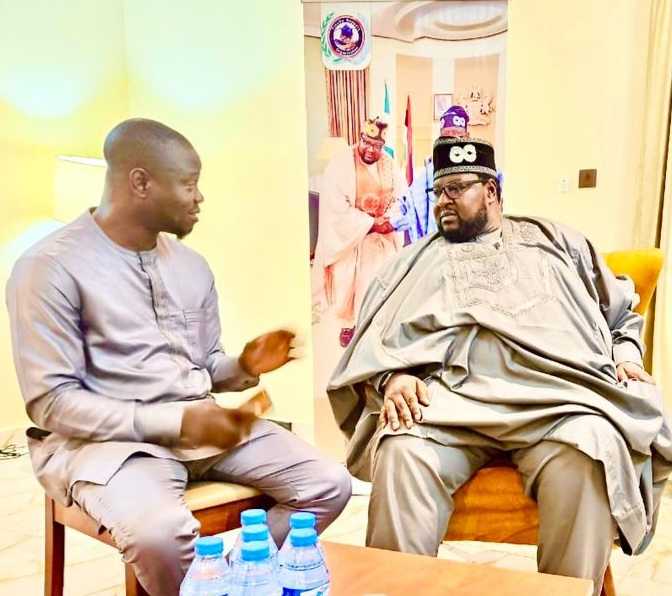
Managing Editor, Time Nigeria Magazine in an interview session with Hon. Aminu Suleiman on issue bothering on National concerns in Abuja.
With the kind of zeal, doggedness and confidence Mr. President displayed during the campaign. Nigerians believed that he is familiar with Nigeria’s terrain and has a blueprint on how to fix the country. Do you think Nigerians would take any excuse from Mr. president?
Remember, Tinubu was two term governor of Lagos state and we all know the type of foundation of development he laid down in Lagos, up till date, successive governments have been building on that foundation of development. Don’t also forget that the kind of rotten economic situation he met on ground cannot be hurriedly fixed unless we are deceiving ourselves and if you understand what Mr President is doing, you won’t but agree with him. He doesn’t want to build a castle in the air, he want Nigeria to live her original status, at least we all know the health status of our nation today, particularly in the area of economy. Tinubu Inherits a nation that cannot be fixed in a hurry. If you pay attention during the campaign, almost all the Presidential candidates attested to the fact that subsidy has to go. We must come to the reality that, subsidy is no longer feasible in Nigeria economic situation and the earlier it goes the better. It is obvious that it is going to be part of prize Nigerians will pay to be one of the greatest countries of the world.
I am equally aware that Asiwaju wanted to be part of the Economic team during Buhari’s tenure, so as to assist the former President to chat a new economic course and gain ground before he comes on board. You cannot take it away from Buhari that he loved Nigeria and Nigerians as well. He wanted Nigeria to be great but the people around him misled him.
Apart from bad economy, the issue of security is another problem, the security situation has got worsen before President came on board, we all know that one of the consequences of bad economy is insecurity. So as insecurity resulted in bad economy. Critically looking into this situation, you will agree with me that Tinubu inherited bad economy and insecurity. The beauty of it all is that Mr President is not shying away from it. He is ready to face it. He has sworn to an Oath to take responsibility and he is doing is best to get Nigeria out of economic hardship and insecurity. I want to plead with Nigerians to be patience with Mr President. He will definitely live up to his promises to Nigerians.
What is your message to Nigerian youth and Nigerians in general?
I have said it several times that Nigerians should be patient with Mr President, he is a human being, he feels our pains. He solicited Nigerians support to be the President, today, to the glory of God he is the President of the Federal Republic of Nigeria. He knew it was not by accident, that Nigerians gave him the support, he is conversant with the Nigerians situation, he is aware of the enormous burden accompanied the responsibility on his shoulders. He will sure live up to the billings. I want to assure Nigerians that everybody will be happy with Mr. President at the end of the day.
To Nigerian youth in particular, we have to rededicate ourselves to the project called Nigeria, we have to do our best possible to ensure that we are good ambassadors of this great country. Let us shun crime and criminality, let us shun violence, let us shun everything that can let the youth sector down. We should bear in mind that we are the future of this country, and the future is not far-fetch we can testify to the number of youths in the President Tinubu’s cabinet, that is to say, the future we are talking about is now and we should not do anything to jeaopadise that confidence in us. We are the asset of Nigeria; we should not become liability to the country again. Some years back, our president was following late Obafemi Awolowo and Chief MKO Abiola but today, he is our father and somebody we are looking up to, definitely they will retire to us. I want to solicit the support of Nigerian youth for Mr. President for him to take Nigeria to the promised land.
Owing to your support for Mr. President during the election campaign and courtesy of the organization you founded and coordinated Tinubu Support Group (TSO) people, particularly the Nigerian youth expected that you were going to make one of the names on the ministerial list. But why that did not happened?
Yes, you see, me, I have passion for this movement and my vision, mission and goal is to ensure that Asiwaju Bola Ahmed Tinubu becomes the President of this country, Alhamdulilah! Today he is, for that alone am fulfilled. I am a practicing Muslim and I believe in God and I believe in destiny that whatever plan God have for one it is going to come to be. I have unflinching access to Mr President, if I want to see him, I see him, and then what else do I want? I equally know Asiwaju did not forget me. Becoming a minister is not my priority but if God says I will be minister, even I myself cannot stop it. I equally believe that everything is timed and time is everything, I believe God time is just the best. My prayer is that God should give Asiwaju the right team to work with him.
Giving this economic hardship coupled with insecurity in the land, I know this must have placed much pressure on you, request from families, friends and member of your constituency. How are you managing this?
Frankly speaking, it is not easy, the pressures are much, first, I help people with prayer that God should intervene and bring succor to our land particularly on the issue of insecurity, because, it is resulting shortage of food. In a situation where farmers could not access their farms, it is worrisome.
The point is that pressures are much but I do assist people within my capacity and I pray for our leaders and the led. I prayed to God to guide our leader’s right and help our youth the truth to know in love and honesty to grow and living just and true, great lofty heights attain, to build a nation where peace and justice shall reign.
I think we all need to say the prayer contained in the second stanza of our National Anthem now because, it is more needed at this point in time. I strongly believe that God is going to see us through and make all Nigerians to be proud of Asiwaju that they did not choose the wrong candidate.
Thank you!