



All The NewsArt and CultureCover StoryCultureEconomyEntertainmentLife & StyleNewsThe King and the KingdomTourism

Ekinrin-Adde Day 2025: Community Rallies for ₦600m Development Drive, Heritage Festival Goes Global

5 Mins read

Ekinrin-Adde Day, like the renowned Ojude Oba Festival of Ijebu and Lisabi Day in Abeokuta, has evolved into a symbol of cultural pride and developmental self-determination for the people of this iconic community in the western senatorial district of Kogi State. Nestled within the heart of Ijumu Local Government Area, Ekinrin-Adde is no ordinary town. It is a trailblazer, a pacesetter in grassroots-driven development, and a model for other Nigerian communities.
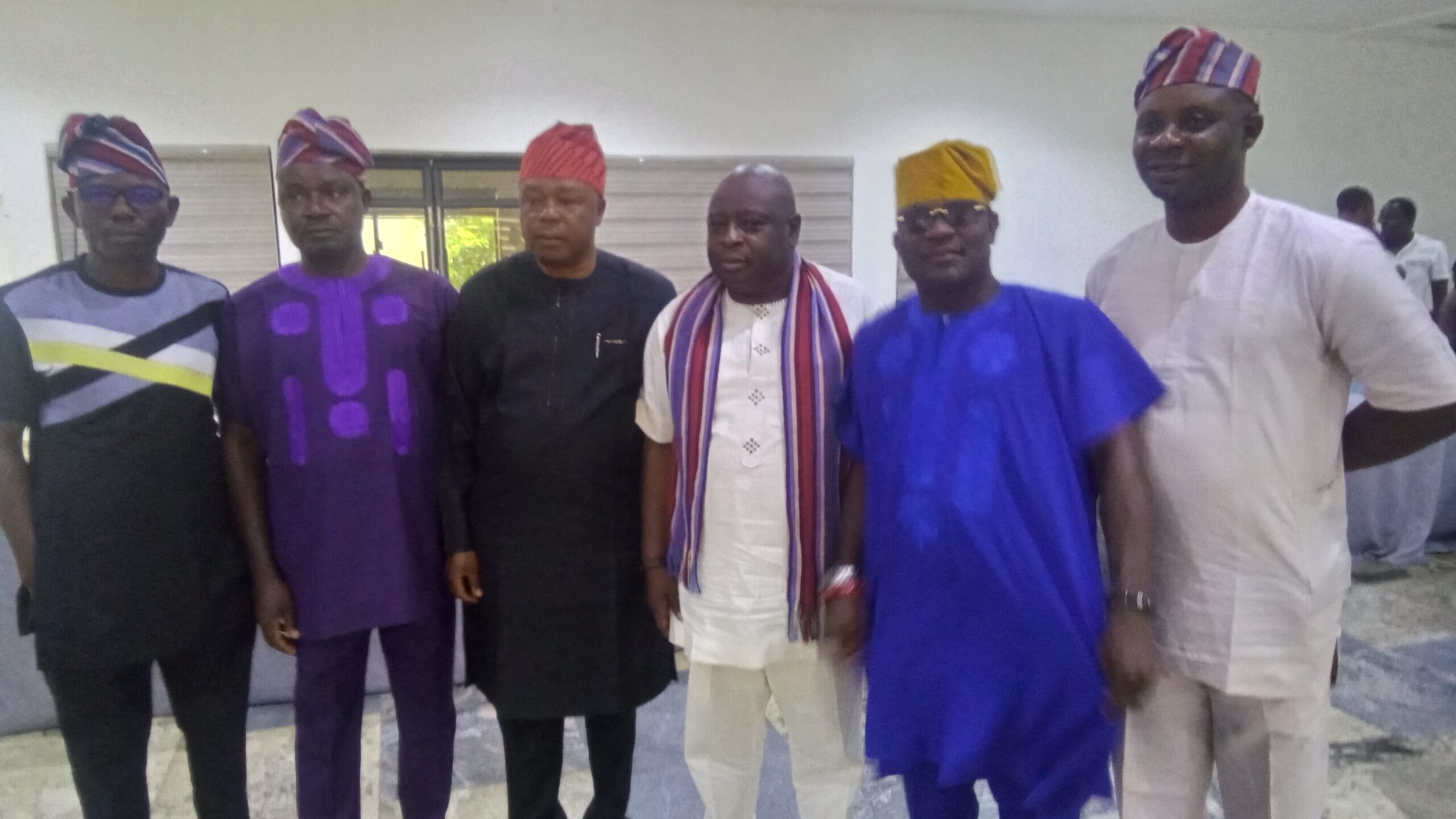
The Ace Broadcaster, Babajide Kolade Otitoju of TVC (Middle) to his right is the National President of EACDA, Dr. Deinde Komolafe and the National Publicity Secretary SDP, Mr Araba Rufus and Prof. Gbenga Ibileye, Provost College of Postgraduate studies, Federal University, Lokoja and Member, National Organising Committee and Chairman Essay Written Competition and othe members of the National EXCO of EACDA

By Abdulrahman Aliagan, Abuja

As the lush green hills of Ekinrin-Adde prepare to echo with the sounds of drums, chants, laughter, and the vibrant presence of its sons, daughters, and friends from across the globe, the stage is set for what promises to be the most historic edition yet of the Ekinrin-Adde Day Festival. Scheduled for Saturday, June 21, 2025, the 32nd edition of this annual cultural and development celebration stands out—not just as a commemoration of heritage but as a bold step toward the future.

Ekinrin-Adde Day, like the renowned Ojude Oba Festival of Ijebu and Lisabi Day in Abeokuta, has evolved into a symbol of cultural pride and developmental self-determination for the people of this iconic community in the western senatorial district of Kogi State. Nestled within the heart of Ijumu Local Government Area, Ekinrin-Adde is no ordinary town. It is a trailblazer, a pacesetter in grassroots-driven development, and a model for other Nigerian communities.

This year, the festival carries a deeper significance with the official launch of a ₦600 Million Infrastructural Development Fund. This ambitious community-driven initiative seeks to accelerate critical projects across the town, reinforcing Ekinrin-Adde’s long-standing tradition of self-help and collective responsibility.

At a pre-event World Press Briefing held in anticipation of the grand celebration, Dr. Deinde Komolafe, the National President of the Ekinrin-Adde Community Development Association (EACDA), captured the spirit of the event with solemn pride. He described the annual festival as “a sacred meeting point between our past, our present responsibilities, and our collective future.” He stressed that Ekinrin-Adde Day is not just a cultural festival but a reaffirmation of resilience, innovation, unity, and shared purpose. Dr. Komolafe extended a passionate call to all sons and daughters of the land, as well as well-wishers and development partners, urging them to support the fundraising campaign that will shape the town’s next chapter.

Indeed, Ekinrin-Adde is no stranger to milestones. Historically, it holds the enviable record of being the first community in Ijumu LGA to establish a secondary school, a maternity centre, a postal agency, a community bank in 1985—known then as IBWA, later evolving into Afribank and ultimately Ekinrin-Adde Community Bank in 1992—and the first to host two secondary schools. These achievements underscore the community’s unrelenting spirit of progress through collective action.

Adding her voice to the ongoing preparations, Dr. (Chief) Mrs. Bukola Olorundami Ayeni, the National Vice President 3 of the EACDA, emphasized the critical role of women in shaping the community’s fortunes. She noted that from the earliest days of self-help movements to present-day development strategies, women have remained the pillars of strength and commitment. “The Ekinrin-Adde Day gives us a platform to showcase our cultural beauty and to remind the world that women are central to our community’s renaissance,” she stated.

In a tone that blended administrative clarity with cultural pride, Engr. Babalola Kayode Sunday, the National General Secretary of EACDA, spoke on the importance of preserving Ekinrin-Adde’s evolving story. “We are not just celebrating heritage—we are making history. This festival gives us the opportunity to document our legacy, build stronger unity, and inspire the next generation. What we do now will echo in generations to come,” he affirmed.

The 2025 festival is set to be richer in content and more engaging than ever. For the first time, a structured essay writing competition will feature as part of the event. Designed to stimulate intellectual engagement among the youth, the competition is championed by Professor Gbenga Ibileye, the Provost of the College of Postgraduate Studies at the Federal University, Lokoja. As the Chairman of the Essay Competition Sub-Committee and a respected scholar from the community, Prof. Ibileye sees this initiative as a crucial bridge between culture and intellect. “It’s about teaching our young people that tradition and critical thinking go hand in hand. This competition allows them to write themselves into history,” he said.

The festival will also feature traditional food exhibitions, vibrant cultural fashion displays, processions by community branches from home and abroad, re-enactments of native marriage rites, clan-based oral poetry, and numerous cultural contests—all set to enthrall guests and dignitaries. These elements are expected to not only elevate the aesthetic of the festival but also deepen the understanding and preservation of Ekinrin-Adde’s rich heritage.

Prince Babajide Kolade Otitoju, the ace broadcaster with TVC News and a proud son of Ekinrin-Adde, spoke emotionally about the festival’s broader significance. Known for his incisive commentary on the popular “Journalists’ Hangout,” Otitoju reflected: “Ekinrin-Adde Day shows what is possible when communities take ownership of their development. It is a story worth telling and an example the world should see.”

From the media frontlines to the pulse of public mobilisation, Emmanuel Ogungbuyi, the National Publicity Secretary of the EACDA, shared insights into the festival’s expansive reach. “We’re bringing home the sons and daughters of Ekinrin-Adde from across continents. From North America to Europe, from Lagos to Lokoja, this festival is becoming a global movement. This year’s celebration will redefine cultural tourism in Kogi State and Nigeria as a whole,” he declared with conviction.

Araba Rufus Aiyenigba, a proud son of the land and the National Publicity Secretary of the Social Democratic Party (SDP), added a thoughtful reflection on the transformative potential of the festival. He described Ekinrin-Adde as a grassroots model of what can be achieved through unity and vision. “This community is a living testament to what development looks like when driven from within. What we have here is not just heritage—it’s a strategy, and the world should come and learn from us.”

This year’s edition will also honour the accomplishments of notable figures from Ekinrin-Adde who have made indelible marks on national development and many others friends of the community from across the country whose their contributions will continue to uplift the name of the community.

As the countdown to June 21 begins, the excitement across the community is palpable. Preparations are in full swing, with hospitality arrangements, rehearsals, and logistics being fine-tuned. But beyond the fanfare lies a deeper aspiration—the dream of a better, stronger, more united Ekinrin-Adde that thrives through its people’s collective vision.

To tourists, cultural enthusiasts, investors, and development partners across the world, the Ekinrin-Adde Community Development Association extends an open invitation to witness a festival that promises not only colour and music but meaning, inspiration, and a window into one of Nigeria’s most progressive indigenous communities.

Ekinrin-Adde Day 2025 is not just another cultural event. It is a powerful narrative of identity, achievement, and collective ambition. For those seeking to witness culture in motion and development in practice, this small town in Ijumu is the place to be.

On June 21, come to Ekinrin-Adde – where heritage meets hope, and culture becomes a call to greatness.


   

About author
Time Nigeria is a modern and general interest Magazine with its Headquarters in Abuja. The Magazine has a remarkable difference in editorial philosophy and goals, it adheres strictly to the ethics of Journalism by using the finest ethos of the profession to promote peace among citizens; identifying and harnessing the nation’s vast resources; celebrating achievements of government agencies, individuals, groups and corporate organizations and above all, repositioning Nigeria for the needed growth and development. Time Nigeria gives emphasis to places and issues that have not been given adequate attention by others. The Magazine is national in outlook and is currently being read and patronized both in print and on our vibrant and active online platform (www.timenigeria.com).
Articles
Related posts
All The NewsCover StoryNewsPolitics

Musa Tsoken Congratulates Kalu on Daily Times’ Lawmaker of the Year Award

1 Mins read
The National Coordinator of the Asiwaju Again Renewed Hope Support Initiative 2027 and National President of the APC Initiative for Good Governance…
Abuja FileDevelopmentEconomyEnergyFinanceInside LagosOpinionPerspective

The Missing Middle of Infrastructure Finance: Why Capital Still Fails to Become Infrastructure

6 Mins read
  By Chidi Nwafor  In October 2023, a Gulf sovereign wealth fund quietly closed a $2 billion allocation to global infrastructure, earmarked in part for emerging-market energy and transport assets. The announcement drew the usual applause: another sign, commentators said, that institutional capital was finally waking up to the infrastructure opportunity in the Global South. Eighteen months later, less than a tenth of that allocation had actually left the fund’s balance sheet. Not because the mandate had changed. Not because the fund had lost appetite. According to two people familiar with the portfolio, the constraint was simpler and more uncomfortable: there were not enough investable projects to put the money into. This is not a story about a reluctant investor. It is a story about capital that wants to move, cannot find enough places willing and able to receive it in a form it can underwrite, and quietly waits instead. Multiply that fund by the hundreds of pension schemes, sovereign wealth vehicles, commercial banks and infrastructure funds now carrying dedicated allocations for emerging-market infrastructure, and a pattern emerges that rarely makes it into a headline: the world is not short of capital for infrastructure. It has capital in historic abundance, sitting adjacent to a historic infrastructure gap, unable to cross the distance between the two. The Comfortable Explanation  The explanation on offer at every major infrastructure summit is a familiar one. Global infrastructure investment needs run into the tens of trillions of dollars over the coming decade; committed capital falls well short; therefore, the problem is one of insufficient funding, and the solution is more of it: more pledges, more blended-finance facilities, more climate funds, more multilateral capital increases. It is a comfortable explanation because it assigns responsibility clearly to governments who under-fund, institutions who under-commit, and it offers a clean remedy: raise more. It is also, on close inspection, not what the evidence shows. Pension funds globally hold trillions in assets under management with explicit infrastructure allocations that remain structurally underweight, not because trustees have rejected the asset class but because deal flow meeting their risk and governance thresholds has not materialised at the pace their mandates assume. Sovereign wealth funds report the same pattern. Commercial banks with dedicated project finance desks describe pipelines that look full at the term-sheet stage and thin dramatically by financial close. Development finance institutions, whose entire purpose is to absorb risk that commercial capital will not, routinely report that their binding constraint is not capital adequacy but the volume of bankable transactions their teams can originate and structure in a given year. None of this fits the scarcity narrative. All of it fits a different one. Availability Is Not Deployability  Capital availability and capital deployability are not the same condition, and the conflation of the two is doing real damage to how the world thinks about the infrastructure gap. Availability asks whether money exists somewhere with a mandate that could, in principle, be pointed at infrastructure. Deployability asks something much narrower and much harder: whether a specific project, at a specific moment, has been engineered, structured, documented and de-risked to the point where an investment committee can approve it without exception. The first condition is met, overwhelmingly, across nearly every category of capital that matters to infrastructure. The second is met by only a small fraction of the projects competing for it. The result is a market that looks, from the outside, like a financing gap, and functions, from the inside, like a conversion problem: an abundance of capital on one side, an abundance of infrastructure need on the other, and an underbuilt set of mechanisms in between capable of turning one into the other at any meaningful scale. Where the Conversion Breaks  The break does not happen at the ends of the process. It happens in the middle, in the unglamorous sequence of work that turns a plausible concept into an instrument a fiduciary can sign. A promising transmission project needs a feasibility study rigorous enough to survive institutional scrutiny rather than optimistic enough to attract early interest. It needs offtake arrangements that hold up under real counterparty and currency risk, not the counterparty risk assumed in a base case. It needs environmental and social documentation calibrated to the standards of the institutions being asked to fund it, not the standards of the jurisdiction hosting it. It needs a legal and commercial structure that allocates risk in ways a commercial lender, not only a development financier, will accept. It needs a sponsor capable of executing what has been proposed, not merely capable of proposing it. Each of these is ordinary project finance discipline. None of it is exotic, and in mature infrastructure markets it happens as a matter of course, absorbed into systems built over decades: specialist advisers, standard-form contracts, established procurement norms, deep pools of transaction expertise. What is missing in the markets where the infrastructure gap is largest is not the standard itself but the machinery that meets it. Projects arrive at investment committees with ambition intact and preparation incomplete, and that gap is treated, again and again, as an individual project’s failure rather than what it actually is: a structural absence in the systems responsible for producing investable transactions at scale. The Missing Middle  This is the Missing Middle of Infrastructure Finance: the institutional architecture that sits between capital that wants to move and infrastructure that needs building, and whose incompleteness explains far more of the global infrastructure gap than any shortfall in committed funds. It consists of project preparation facilities able to fund feasibility and structuring work before commercial viability has been proven. Transaction advisers capable of building deals that satisfy development mandates and commercial return thresholds at once, rather than treating the two as separate constituencies to be managed sequentially. Risk-sharing and guarantee instruments that convert political, regulatory and currency risk into something a commercial balance sheet can underwrite. Aggregation platforms that bundle smaller, individually sub-scale projects into portfolios large enough to justify institutional transaction costs. Standardised documentation that reduces the bespoke legal cost of every new deal. And coordination across ministries, regulators and financiers robust enough that a technically sound project does not die in bureaucratic sequencing after the money has already been found. None of these are new ideas in isolation. What is missing is their assembly into a coherent system, deliberately funded and institutionally accountable, rather than scattered across donor-funded pilots that end when the grant does. The African Dimension  Africa makes this dynamic unusually visible, and consequently offers an unusually clear opportunity to correct it. The continent’s infrastructure financing need, by any measure, is vast. Less understood is that the shortfall is disproportionately one of preparation rather than capital. Nigerian gas-to-power, off-grid solar and mini-grid developers have each demonstrated that individual projects can clear the bankability bar; what has not emerged is systemic pipeline scale, a steady stream of comparably prepared projects large enough to absorb the capital already circling the sector. The pattern repeats, with local variation, from grid infrastructure in East Africa to transport corridors in West Africa. Interested capital is rarely the scarce input. Investment-ready projects are. The Global Comparison  Mature markets solved this problem gradually and mostly invisibly, through decades of institution-building that predates the current infrastructure conversation: specialist project finance units inside banks, standardised PPP frameworks, established regulatory playbooks, deep benches of transaction lawyers and engineers who move between deals rather than between one-off assignments. Emerging and frontier markets are not being asked to meet a lower standard. They are being asked to meet the same standard without having built the same machinery, and then being told, when deals fail to close, that the problem is insufficient funding….
Cover StoryNewsSports

Union Bank, AIICO Multishield, Checkers Custard, Others Back 5th Cycling Lagos

2 Mins read
Union Bank of Nigeria Plc, AIICO Multishield, Checkers Custard and other corporate organisations have thrown their weight behind the 5th Cycling Lagos,…
Stay on the loop!

Subscribe to our latest news.

Leave a Reply

WP2Social Auto Publish Powered By : XYZScripts.com