


All The News

Abba Yusuf’s APC Defection Sparks Mixed Reactions, Reopens Debate on Loyalty, Power and the Future of Kano Politics

2 Mins read

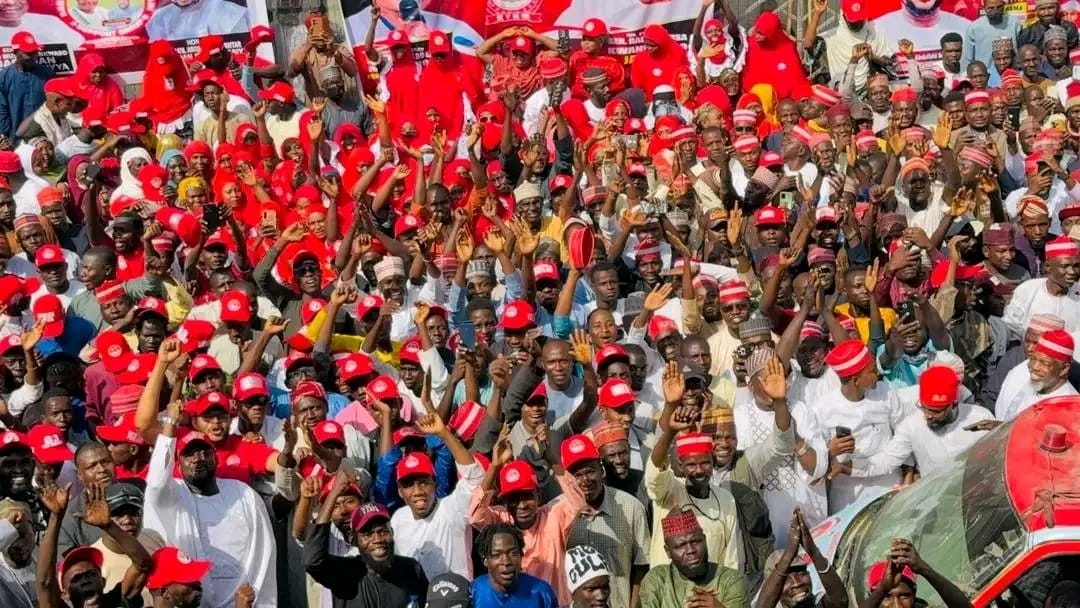
Members of NNPP who are loyal to Governor Abba Yusuf of Kano joined the defection to APC

By Aliyu Gerengi, Gombe

The defection of Kano State Governor, Abba Kabir Yusuf, from the New Nigeria People’s Party (NNPP) to the All Progressives Congress (APC) has sent shockwaves across the state’s political landscape, drawing mixed reactions, reopening old wounds, and reshaping calculations ahead of the 2027 general elections.

While the move has been welcomed by some political heavyweights as a strategic realignment, others have described it as yet another episode in Kano’s long history of political betrayals, alliances of convenience, and shifting loyalties.

Defending the governor’s decision, prominent political figures including Professor Rufa’i Ahmed Alkali, former National Chairman of the NNPP; Senator Sulaiman Othman Hunkuyi, former National Organising Secretary of the party; and Professor Bem Angwe, former National Legal Adviser, argued that Yusuf’s exit was neither impulsive nor treacherous.

According to them, the defection was a calculated response to deep-rooted internal crises that have plagued the NNPP since the 2023 elections—ranging from factional disputes and leadership tussles to weak institutional structures at the state and national levels.

They maintained that governing Kano, a politically sensitive and populous state, requires stability and freedom from endless party infighting. In their view, Yusuf’s move to the APC offers him a broader platform, stronger federal alignment, and political breathing space to focus on governance.

However, the defection has also reignited a broader conversation about politics, loyalty, and betrayal within the famed Kwankwasiyya movement led by former Kano State Governor and NNPP presidential candidate, Senator Rabiu Musa Kwankwaso.

Critics argue that Kwankwaso, once celebrated as a political godfather who built a mass movement of loyalists, has over the years lost several key allies who rose to prominence under his political structure—only to later part ways under bitter circumstances. They point to the defection of Abdullahi Ganduje to the APC, the eventual fallout with Abba Yusuf, and the exit of other former protégés as evidence of a recurring pattern of strained relationships and political divorce.

To these critics, Yusuf’s defection is not an isolated incident but part of a longer trajectory in which Kwankwasiyya allies, once firmly united, eventually drift away—often accusing the movement of excessive central control, intolerance of dissent, and personality-driven politics.

Supporters of Kwankwaso, however, reject this narrative, insisting that defections are driven more by personal ambition than ideological differences. They argue that political loyalty must be grounded in principles, not convenience, and that history will judge those who abandon platforms that brought them to power.

As reactions continue to pour in, analysts agree on one point: Abba Yusuf’s defection has significantly altered Kano’s political equation. With the governor now aligned with the APC, the ruling party stands to consolidate power in the state, potentially weakening the NNPP ahead of 2027. The move could also trigger further defections, redraw alliances, and intensify competition between APC and NNPP loyalists across Kano’s political structures.

For Kano voters, the coming months will test whether the defection translates into improved governance, stronger federal support, and political stability—or whether it deepens cynicism about elite politics, where party platforms are often secondary to personal survival.

As Nigeria’s political history has repeatedly shown, defections are rarely the end of a story. In Kano, Abba Yusuf’s move to the APC may well be the opening chapter of a new, more intense struggle for power as 2027 draws closer.

   

About author
Time Nigeria is a modern and general interest Magazine with its Headquarters in Abuja. The Magazine has a remarkable difference in editorial philosophy and goals, it adheres strictly to the ethics of Journalism by using the finest ethos of the profession to promote peace among citizens; identifying and harnessing the nation’s vast resources; celebrating achievements of government agencies, individuals, groups and corporate organizations and above all, repositioning Nigeria for the needed growth and development. Time Nigeria gives emphasis to places and issues that have not been given adequate attention by others. The Magazine is national in outlook and is currently being read and patronized both in print and on our vibrant and active online platform (www.timenigeria.com).
Articles
Related posts
All The News

Onuigbo Takes over as GLOBE President, Pledges Stronger Parliamentary Action on Climate Change

3 Mins read
  Sponsor of Nigeria’s Climate Change Act, Rt. Hon. Sir Sam Onuigbo, has been inaugurated as President of GLOBE Legislators, a global…
All The News

Echoes of Dr. Lateef Olaniyan’s Final Journey

6 Mins read
By Sunday Oyinloye   A deep sense of loss mixed with gratitude filled the atmosphere at the Generations Church, 431 Brown Ave, Moses Lake, WA on June 6, 2026, as family members, friends, colleagues and community leaders gathered to pay their final respects to Dr. Lateef Olaniyan, founder of the Moses Lake Medical Team, and owner of Southgate Pharmacy, Moses Lake, and Benton Southgate Pharmacy in Prosser, both in Washington State. For many in attendance, the occasion was not merely a funeral but a celebration of a life dedicated to service, compassion and the wellbeing of others. Since 2008, Dr. Lateef Olaniyan faithfully led the Moses Lake Medical Team on annual free medical missions to Nigeria bringing compassionate healthcare to communities. As speaker after speaker took turns to honour his memory, a common theme emerged: Dr. Olaniyan was a man who lived for others. Whether through his commitment to providing healthcare for the underserved, his generosity to those in need, or his unwavering dedication to community service, the late pharmacist left an indelible mark on the lives of thousands. Speaking at the funeral service, a representative of the Moses Lake Medical Team, Francie Irwin described the passing of Dr. Lateef Olaniyan as a painful loss. The representative traced the formation of the Moses Lake Medical Team to 2007, when Dr. Olaniyan conceived the idea. According to her, through the team, Dr. Olaniyan was able to provide medical care to more than 100,000 people during his lifetime, stressing that he literally saved countless lives. Also paying tribute, Tanya Valdez, who worked for Dr. Olaniyan in his pharmacy for 16 years, described the late pharmacist as a father figure who eventually became her best friend. In her words: “Dr. Lateef was more than a boss; he was a father figure and my best friend. Even when his health was failing, he remained focused on helping others with health challenges. He often called me his daughter. He was the father figure I needed, and I do not know how I will live my life without him.” For Michael, the eldest son of Dr. Lateef Olaniyan, memories of his father are defined not only by professional accomplishments but by the simple, enduring values that shaped his life. Describing his father as a hardworking man, Michael recalled spending countless hours driving around town with him and playing basketball together. Yet, what stood out most was his father’s extraordinary ability to connect with people. According to him, a quick trip anywhere with Dr. Olaniyan was almost impossible. “He was a man of the people,” Michael recalled. “Everywhere we went, he knew someone. He would stop to greet people, ask about their families and spend time talking with them.” Those interactions reflected a philosophy that guided Dr. Olaniyan throughout his life. He believed that every individual had a story worth hearing and deserved to be treated with dignity and respect. That same wisdom shaped his relationship with his children. Michael recounted a particularly difficult period after graduating from college and relocating to San Francisco. As he struggled to find his footing professionally, he turned to his father for guidance. “I called him because things were not going the way I expected and I was looking for advice,” he said. “His response was simple: ‘Just do your best.’” It was a phrase that became a defining principle in the family. Rather than offering easy solutions, Dr. Olaniyan shared stories of his own journey after arriving in the United States in 1981 and the obstacles he had overcome through perseverance, hard work and faith. To his son, those conversations revealed a man whose success was built on resilience and determination. Despite spending decades in the United States, Dr. Olaniyan never lost touch with his roots. Family trips to Nigeria often became lessons in humility and belonging. Michael recalled that whenever they visited, his father would make it a point to stop and greet relatives, friends and acquaintances, no matter how busy the schedule. “He never forgot where he came from,” he said….
All The News

Building a Generation of Peace Ambassadors: How Faith and Freedom Africa is Advancing Religious Freedom in Nigeria 

5 Mins read
By Abdulrahman Aliagan, At a time when religious misunderstanding, stereotypes, misinformation, and identity-based tensions continue to challenge social cohesion in many parts…
Stay on the loop!

Subscribe to our latest news.

Leave a Reply

WP2Social Auto Publish Powered By : XYZScripts.com