



In Nigeria’s deeply rooted emirate traditions, a turbaning is never a mere formality. It is a sacred act—a bestowal reserved for those whose character, conduct, and commitment reflect age-old values of integrity, loyalty, and service. This was evident at the Emir’s Palace in Fune, where over 30 esteemed traditional rulers assembled
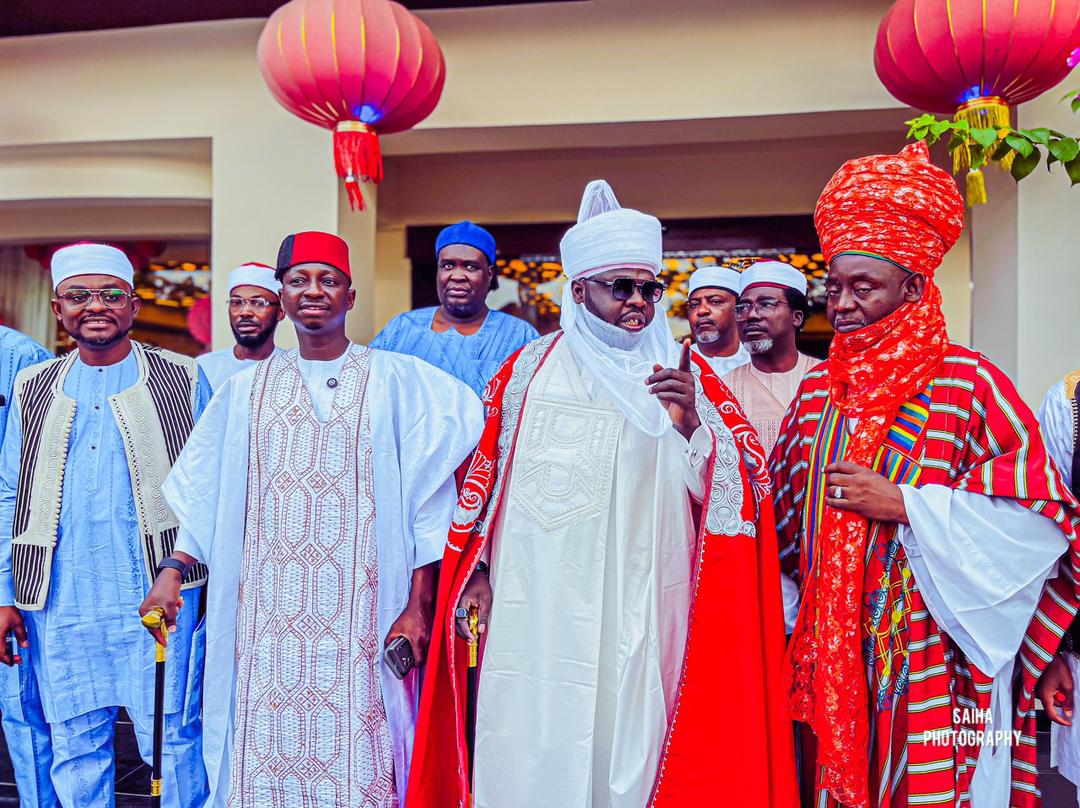
Dan Amanar Fune, Alhaji Ibrahim Mohammed Ajia and Alhaji Haliru Mohammed Magaji Ngeri Gusau Zamfara state
By Mahamud Abdulganiyu Ajetunmobi
When the sun rose over the ancient town of Damagum in Yobe State on Saturday, June 28, 2025, it illuminated more than just a traditional ceremony—it lit up a moment of profound historical justice. That morning, a man of uncommon purpose and unwavering integrity, Alhaji Ibrahim Mohammed Ajia, stood before the Emir and gathered dignitaries—not to plead for honour, but to receive what his journey had long earned: the revered title of Dan Amana, meaning Custodian of Trust, of the Fune Emirate.
Much like the biblical Joseph or the Qur’anic Yusuf (AS), who said in Surah Yusuf 12:55, “Appoint me over the storehouses of the land. Indeed, I will be a knowing guardian,” Ajia’s elevation was not an aspiration—it was an affirmation. He had already played the part, quietly serving, building, and protecting long before any public recognition.
In Nigeria’s deeply rooted emirate traditions, a turbaning is never a mere formality. It is a sacred act—a bestowal reserved for those whose character, conduct, and commitment reflect age-old values of integrity, loyalty, and service. This was evident at the Emir’s Palace in Fune, where over 30 esteemed traditional rulers assembled, including the representative of His Eminence, Dr. Sa’ad Abubakar III, Sultan of Sokoto; the Shehu of Borno, Shehu Garbai Alamin El-Kanemi; the Emir of Zazzau, Ambassador Ahmad Nuhu Bamalli; the Emir of Bauchi, Alhaji Rilwan Suleiman Adamu; and the Emir of Lafia, Justice Idris Barde Muhammad (rtd) among many others.
In the words of the Emir of Fune, Alhaji Sa’idu Ibn Uthman:
“This title is a recognition of trustworthiness, loyalty, and selfless service to humanity.”
Born in Kwara State, Ajia did not rise through flamboyance but through decades of quiet, resolute service. As a Security Aide to the late Governor of Yobe State, Senator Mamman Ali, he did far more than safeguard lives. He forged crucial bridges between the state government and the traditional institutions, particularly with the Fune Emirate. Those who worked with him recall not just a protector, but a builder of peace and a unifier of communities.
Even after retiring from the Nigeria Police Force, Ajia did not retreat into obscurity. He advanced—investing in Nigeria’s economy, supporting the vulnerable, and promoting youth empowerment through his MAI Foundation. Whether by funding education, assisting widows, or advocating for national unity, Ajia has consistently demonstrated that true leadership lies in service.
The turbaning ceremony echoed with tributes from royalty and citizens alike.
“He is a patriotic and detribalised Nigerian,” the Emir declared.
“He creates solutions with wisdom and diplomacy. He has written his name in gold.”
Malam Abubakar Barde of Saiah Network added:
“This is the right time to honour Ajia. The crowd that followed him from Abuja and Ilorin says everything.”
Barrister A.T. Ibrahim, observing the reception, simply noted:
“This is a man who has planted good seeds. Today is his harvest.”
Wearing his new turban with humility, Ajia’s words struck a resonant chord:
“This is not just a title; it is a sacred trust. I will continue to work for the good of the Emirate, Yobe State, and our great country, Nigeria.”
This is the soul of the Dan Amana title: the belief that those entrusted with the welfare of others must never betray that trust. As the Qur’an reminds us in Surah Ar-Rahman 55:60:
“Is the reward for good [anything] but good?”
Some lives merely pass through time. Others, like Ajia’s, illuminate it. Like Mansa Musa—celebrated not for his wealth but for the schools and communities he built—or Nelson Mandela—immortalized for his forgiveness and justice—Ajia’s legacy is one of purpose, not privilege.
When the drums faded and the crowd dispersed, what endured was not just the image of a man wearing a turban, but the reaffirmation of a principle: that goodness is never wasted, and that trust—when honored—becomes a legacy.
Alhaji Ibrahim Mohammed Ajia did not seek honour. He lived a life that made it inevitable.
And now, as the Dan Amana of the Fune Emirate, he reminds us that
the crown will always find the head that has earned it.