


By Sunday Oyinloye
Dr. Lateef Olaniyan lived the kind of life that makes death feel unbearably unfair. His passing in the United States is not merely the loss of a pharmacist, businessman, or philanthropist; it is the silencing of a rare humanitarian spirit whose life became a bridge between privilege and suffering, between the diaspora and home, between medicine and mercy.
At a time when many professionals abroad are consumed by personal advancement, Dr. Olaniyan chose a different path. He chose service. He chose sacrifice. He chose humanity.
For nearly two decades, this Nigerian-born pharmacist devoted his life to healing people he owed nothing except compassion. Through the Moses Lake Medical Team (MLMT), the nonprofit organization he founded in 2008, Dr. Olaniyan mobilized doctors, pharmacists, dentists, surgeons, nurses, laboratory scientists, optometrists, and volunteers from across the United States and beyond to embark on annual medical missions to Nigeria and other underserved communities. What he built was not charity for applause; it was compassion institutionalized.
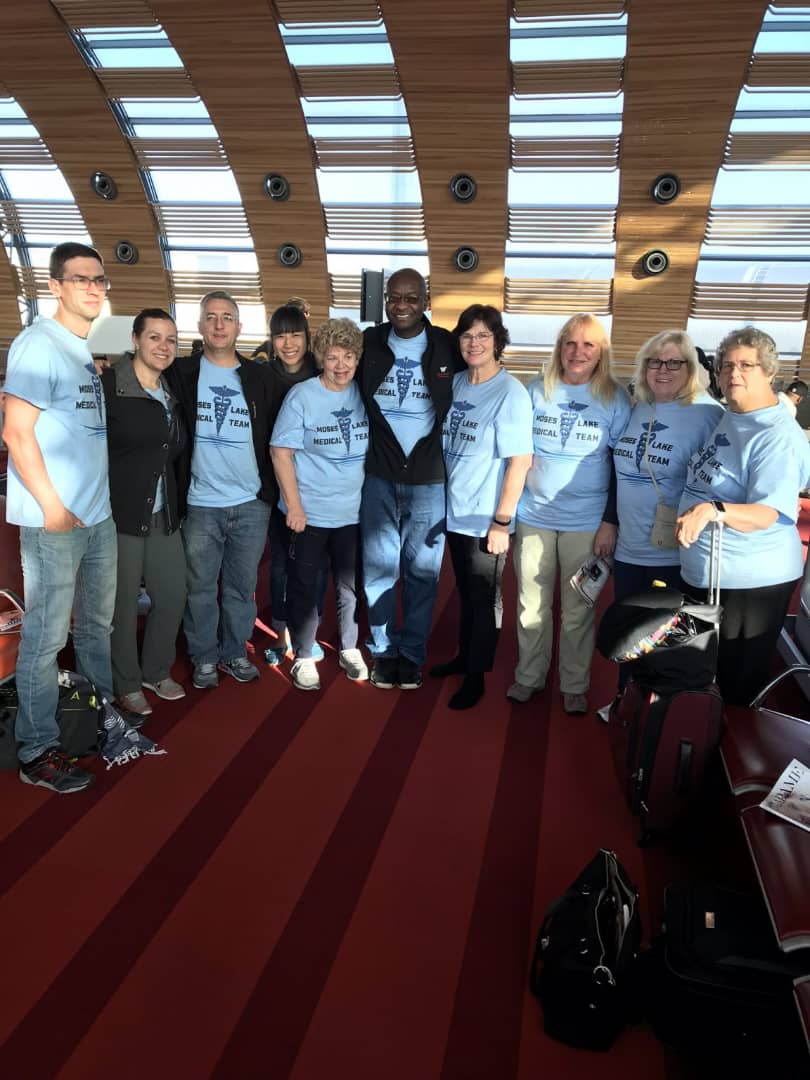
His intervention in Nigeria became one of the most remarkable privately-driven humanitarian healthcare efforts by any Nigerian in the diaspora. Beginning in 2008, the Moses Lake Medical Team moved from one state to another, bringing free medical care to thousands who otherwise had little or no access to treatment. The first mission took place at Sobi Specialist Hospital in Ilorin and Pategi General Hospital in Kwara State. It was followed by missions in Lafiagi, Lagos, Ibadan, Ogbomoso, Benin, and later multiple large-scale outreaches in Kebbi State between 2016 and 2019.
These were not symbolic visits staged for photographs. They were full medical operations.
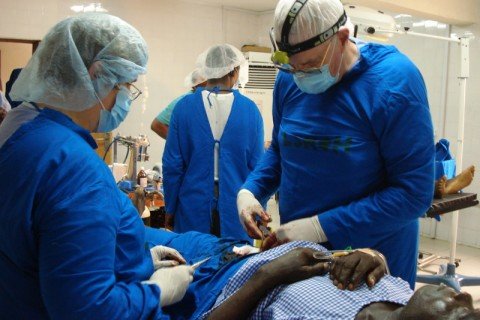
During the missions, communities witnessed something rare in Nigeria’s healthcare landscape: completely free and professionally coordinated healthcare services delivered with international standards. Patients received consultations, surgeries, dental procedures, laboratory investigations, physiotherapy, eye examinations, and prescription medications without paying a kobo. Dr. Olaniyan and his team transported most of their medications, surgical tools, and medical supplies from the United States, ensuring quality care in places where basic supplies were often unavailable.
The numbers alone are staggering. On average, the team attended to nearly 30,000 patients during each two-week medical mission. Over the years, MLMT treated more than 90,000 patients, performed over 1,000 surgeries, extracted more than 2,000 severely decayed teeth, dispensed tens of thousands of prescriptions, conducted over 22,000 laboratory tests, provided more than 7,000 prescription glasses, and carried out hundreds of physiotherapy sessions.
But statistics cannot fully capture the depth of Dr. Olaniyan’s impact. One must imagine the exhausted mother who finally received treatment after sleeping overnight in a queue. One must picture the elderly farmer seeing clearly again because of a pair of glasses handed to him by volunteers. One must think about rural communities where access to quality healthcare was almost mythical until the Moses Lake Medical Team arrived. For many of those patients, Dr. Olaniyan was not simply a pharmacist from America. He was hope arriving in human form.
Accounts from those missions remain unforgettable. In many communities, desperate patients arrived before dawn and slept outside mission grounds simply to secure a place in line. Clinics overflowed daily with people suffering from untreated infections, cataracts, hypertension, diabetes, hernias, dental decay, and chronic illnesses that poverty had forced them to endure silently for years. Yet despite the overwhelming crowds, Dr. Olaniyan insisted on professionalism, dignity, and patience in the treatment of every patient.
What made his humanitarian work extraordinary was not only its scale but its consistency. Year after year, he returned. From Kwara to Kebbi, from Lagos to Ogbomoso, from Benin to Pategi, he carried medicine where government neglect had created suffering. He understood that poverty should never become a death sentence.
Even after each mission ended, his compassion continued. Unused medications were routinely handed over to local healthcare providers so patients could continue receiving treatment after the team departed. He was not interested in temporary publicity; he cared about continuity of care and long-term impact.
Dr. Olaniyan’s professional accomplishments were equally remarkable. Armed with a Bachelor of Science in Pharmacy from Idaho State University and a Doctor of Pharmacy degree from the University of Florida, he built a successful career in the United States healthcare system. From his early years as a community pharmacist in Walla Walla, Washington, to serving at Samaritan Hospital in Moses Lake and later becoming the owner of Southgate Pharmacy in Moses Lake and Benton Southgate Pharmacy in Prosser, he demonstrated excellence in business and healthcare leadership while creating jobs and opportunities for others.
Yet he never allowed success to distance him from his roots. That is perhaps why the recognition bestowed on him by the Kwara State Government as the “Most Outstanding Kwara State Indigene in the World” felt not only deserved but inevitable. It was an acknowledgment of a man who represented the best ideals of the Nigerian diaspora: excellence abroad, responsibility at home.
Even beyond medicine, Dr. Olaniyan quietly invested in education and community development. He remodeled classrooms at St. Paul’s School in Omu-Aran, equipped several classrooms with desks and benches, provided boreholes for communities, distributed hundreds of backpacks and educational materials to schoolchildren, and supported scholarships for University of Ilorin students through the Seattle chapter of the Kwara State Association of Nigeria in North America (KSANG). He practiced philanthropy not as performance but as duty.
His humility remained intact despite global recognition. In one interview, after receiving a prestigious award, he dedicated the honor not to himself but to fellow Kwarans in the diaspora and to the vulnerable members of society. Those words now carry even greater emotional weight. They reveal a man who understood that true greatness lies in lifting others.
Indeed, Nigeria has lost one of its finest ambassadors. The tragedy of Dr. Olaniyan’s passing also forces difficult reflection. Why should citizens depend so heavily on the goodwill of individuals and nonprofit medical missions for basic healthcare? Why must people wait overnight in endless lines for treatments that should ordinarily be accessible? Men like Dr. Olaniyan filled a painful vacuum created by systemic failure. Yet he never weaponized that reality for political grandstanding. He simply worked tirelessly to ease suffering wherever he found it.
There are people whose wealth is measured in bank accounts, and there are people whose wealth is measured in human gratitude. Dr. Lateef Olaniyan belonged firmly to the latter category. Across Nigeria today are countless individuals who may never appear in newspaper tributes but whose lives were transformed because one man refused to ignore their pain.
His death leaves a void, but his legacy leaves a challenge. The challenge is for professionals in the diaspora to remember home. The challenge is for leaders to invest seriously in healthcare. The challenge is for society to celebrate selfless service while those who embody it are still alive. Above all, the challenge is to continue the humanitarian mission to which Dr. Olaniyan dedicated his life.
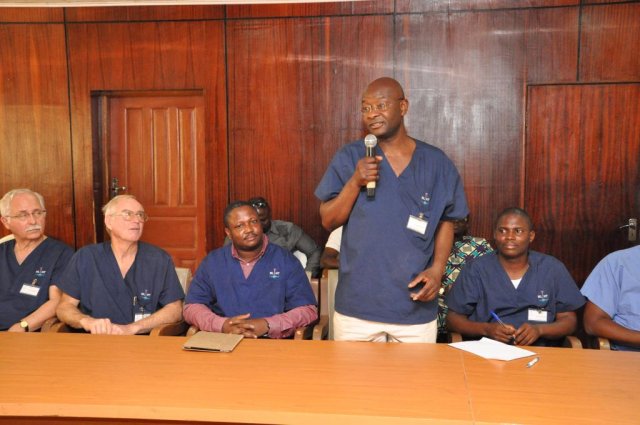
Some people pass through the world unnoticed. Others leave footprints too deep for time to erase. Dr. Lateef Olaniyan belongs to the latter. He lived not only successfully, but meaningfully. And in the final analysis, that is the highest tribute any human being can earn.