



Abuja FileAll The NewsCover StoryEconomyForeignNews

Tanzania Leads Countries To Fall Extreme Poverty Rate By 36.9 Percent

3 Mins read

By Abdulrahman Aliagan, Abuja

Tanzania has been identified as one of the countries that have led his people out of extreme poverty and hunger in the world, particularly, in developing and sub-Saharan African countries. The World Bank Group has said.

It added further that, “Between 2000 and 2011, the extreme poverty rate fell by 36.9 percentage points in Tanzania, from 86.0% to 49.1%, for an annual average rate of reduction of 3.2 percentage points, which led to a reduction of 5.3 million in the number of Tanzanians living in extreme poverty.”

The Bank noted that there has been tremendous progress in the reduction of extreme poverty in the world. “We know that the world has seen tremendous progress in reducing extreme poverty since 1990. So, where in the world has poverty reduction been most successful?”

In a graphical analysis, 15 countries that experienced the largest annual average percentage point declines in extreme poverty rate between about 2000 and 2015, out of the 114 countries for which it can measure poverty in a comparable way over this period.

The release further stated that, “In each of these countries, an average of at least 1.6% of the population moved out of extreme poverty every year. This meant 802.1 million fewer people were living in extreme poverty in these 15 countries between 2000 and 2015.”

“For example, between 2000 and 2011, the extreme poverty rate fell by 36.9 percentage points in Tanzania, from 86.0% to 49.1%, for an annual average rate of reduction of 3.2 percentage points, which led to a reduction of 5.3 million in the number of Tanzanians living in extreme poverty. Tajikistan, Chad, and the Republic of Congo had average reductions in poverty of around 3 percentage points per year.

“While extreme poverty remains endemic in low-income and conflict-affected countries, many of which are in Sub-Saharan Africa, there is cause for optimism even in these countries. Seven of the top 15 countries are in Africa, and two are on the World Bank Group’s Harmonised List of Fragile Situations for FY19.

“Some of the 15 countries (China, Kyrgyz Republic, Moldova, Vietnam) effectively eliminated extreme poverty by 2015. In others (e.g. India), low rates of extreme poverty in 2015 still translated to millions of people living in deprivation. In some of the countries in Sub-Saharan Africa (e.g. Democratic Republic of Congo, Tanzania, Burkina Faso), extreme poverty rates, even after rapid reduction, remain above 40%.”

These 15 high performers make up a diverse group of countries—by geographic location, average income levels, poverty rates, and size of the population and the economy:

“Two of these countries were lower middle-income countries in 2000 and rose to upper middle-income status by 2015; eight were low-income countries in 2000 and rose to lower middle-income status by 2015; and five remained low-income countries over the entire period.

“The countries had vastly different poverty rates at the turn of the century—the extreme poverty rate ranged from 94.1% in DRC (2004) to 28.6% in Pakistan (2001).

“Their populations ranged from 2 million for Namibia (2003) to 1.3 billion for China (1999).

“ The size of their economy ranged from $861 million for Tajikistan to $1.2 trillion for China in 2000, in current U.S. dollars.
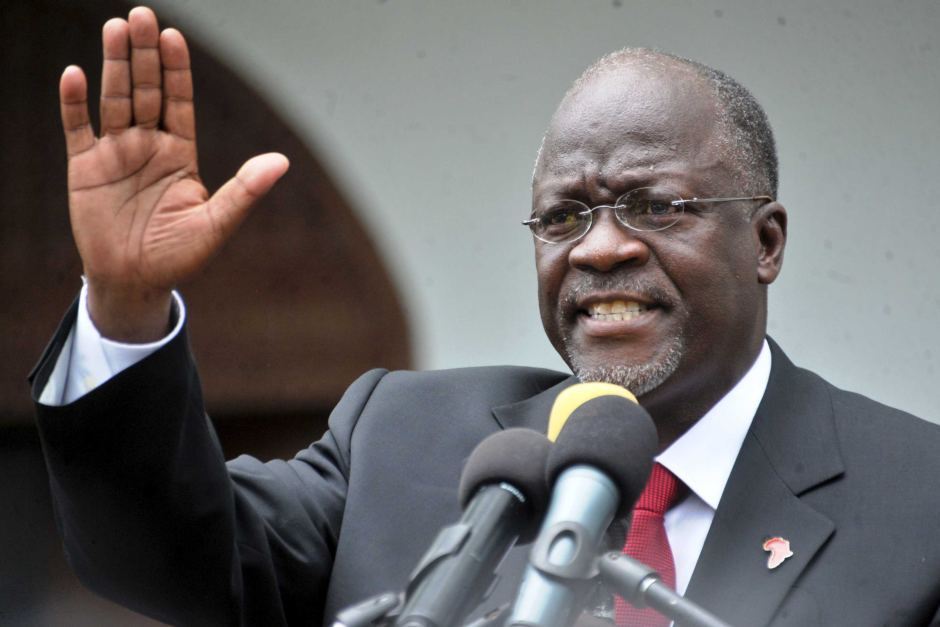
It would be recalled that Magufuli has not brought continuity, but dramatic change in Tanzania, just few days after his inauguration. He made a snap unannounced visit to the Ministry of Finance on his first day as president to pulled funds intended for Independence Day celebrations and redirected them to anti-cholera operations. He began a shake-up of the Tanzania Port Authority, and extended it to the Tanzania Revenue Authority as he launched a tax collection drive. An audit of the public payroll led to a purge of “ghost workers”. Magufuli genuinely waging war on corruption in the Tanzanian.

There is a strategic thread that ties together Magufuli’s actions. Tanzania’s fifth Five Year Plan restores industrialization to the heart of government policy in a way unseen since the 1970s. Domestic processing and tax revenue is central to that plan. So is government discipline, thrift and tax collection. The closure of political space keeps CCM in power to implement it, and suffocates internal opposition to his reforms.

But the definitive feature of Magufuli’s first two years has been a talent for pursuing his program of reform while pursuing domestic popularity at the same time. His taste for the dramatic has caught public attention and his willingness to disturb the status quo has convinced many that his intentions are more sincere than those of his predecessors. Perhaps more than any other president since Tanzania’s founding father, Julius Nyerere, Magufuli is seen as a man of integrity.

While Magufuli has skillfully coupled popular politics with fundamental reform, he has also precipitated a series of unintended changes which may be slipping beyond his control.


   

About author
Time Nigeria is a modern and general interest Magazine with its Headquarters in Abuja. The Magazine has a remarkable difference in editorial philosophy and goals, it adheres strictly to the ethics of Journalism by using the finest ethos of the profession to promote peace among citizens; identifying and harnessing the nation’s vast resources; celebrating achievements of government agencies, individuals, groups and corporate organizations and above all, repositioning Nigeria for the needed growth and development. Time Nigeria gives emphasis to places and issues that have not been given adequate attention by others. The Magazine is national in outlook and is currently being read and patronized both in print and on our vibrant and active online platform (www.timenigeria.com).
Articles
Related posts
All The News

Onuigbo Takes over as GLOBE President, Pledges Stronger Parliamentary Action on Climate Change

3 Mins read
  Sponsor of Nigeria’s Climate Change Act, Rt. Hon. Sir Sam Onuigbo, has been inaugurated as President of GLOBE Legislators, a global…
All The News

Echoes of Dr. Lateef Olaniyan’s Final Journey

6 Mins read
By Sunday Oyinloye   A deep sense of loss mixed with gratitude filled the atmosphere at the Generations Church, 431 Brown Ave, Moses Lake, WA on June 6, 2026, as family members, friends, colleagues and community leaders gathered to pay their final respects to Dr. Lateef Olaniyan, founder of the Moses Lake Medical Team, and owner of Southgate Pharmacy, Moses Lake, and Benton Southgate Pharmacy in Prosser, both in Washington State. For many in attendance, the occasion was not merely a funeral but a celebration of a life dedicated to service, compassion and the wellbeing of others. Since 2008, Dr. Lateef Olaniyan faithfully led the Moses Lake Medical Team on annual free medical missions to Nigeria bringing compassionate healthcare to communities. As speaker after speaker took turns to honour his memory, a common theme emerged: Dr. Olaniyan was a man who lived for others. Whether through his commitment to providing healthcare for the underserved, his generosity to those in need, or his unwavering dedication to community service, the late pharmacist left an indelible mark on the lives of thousands. Speaking at the funeral service, a representative of the Moses Lake Medical Team, Francie Irwin described the passing of Dr. Lateef Olaniyan as a painful loss. The representative traced the formation of the Moses Lake Medical Team to 2007, when Dr. Olaniyan conceived the idea. According to her, through the team, Dr. Olaniyan was able to provide medical care to more than 100,000 people during his lifetime, stressing that he literally saved countless lives. Also paying tribute, Tanya Valdez, who worked for Dr. Olaniyan in his pharmacy for 16 years, described the late pharmacist as a father figure who eventually became her best friend. In her words: “Dr. Lateef was more than a boss; he was a father figure and my best friend. Even when his health was failing, he remained focused on helping others with health challenges. He often called me his daughter. He was the father figure I needed, and I do not know how I will live my life without him.” For Michael, the eldest son of Dr. Lateef Olaniyan, memories of his father are defined not only by professional accomplishments but by the simple, enduring values that shaped his life. Describing his father as a hardworking man, Michael recalled spending countless hours driving around town with him and playing basketball together. Yet, what stood out most was his father’s extraordinary ability to connect with people. According to him, a quick trip anywhere with Dr. Olaniyan was almost impossible. “He was a man of the people,” Michael recalled. “Everywhere we went, he knew someone. He would stop to greet people, ask about their families and spend time talking with them.” Those interactions reflected a philosophy that guided Dr. Olaniyan throughout his life. He believed that every individual had a story worth hearing and deserved to be treated with dignity and respect. That same wisdom shaped his relationship with his children. Michael recounted a particularly difficult period after graduating from college and relocating to San Francisco. As he struggled to find his footing professionally, he turned to his father for guidance. “I called him because things were not going the way I expected and I was looking for advice,” he said. “His response was simple: ‘Just do your best.’” It was a phrase that became a defining principle in the family. Rather than offering easy solutions, Dr. Olaniyan shared stories of his own journey after arriving in the United States in 1981 and the obstacles he had overcome through perseverance, hard work and faith. To his son, those conversations revealed a man whose success was built on resilience and determination. Despite spending decades in the United States, Dr. Olaniyan never lost touch with his roots. Family trips to Nigeria often became lessons in humility and belonging. Michael recalled that whenever they visited, his father would make it a point to stop and greet relatives, friends and acquaintances, no matter how busy the schedule. “He never forgot where he came from,” he said….
Cover StoryFeatures

Effective PR Mirrors, Doesn’t Make Up!

4 Mins read
  By Ugochukwu Ugwuanyi While makeup is usually worn by women to enhance beauty, it is a public relations anathema for an…
Stay on the loop!

Subscribe to our latest news.

Leave a Reply

WP2Social Auto Publish Powered By : XYZScripts.com